Three of Swords — Tarot Card Meaning
- Upright
- Heartbreak, sorrow, grief, betrayal, painful truth
- Reversed
- Recovery, forgiveness, releasing pain, lingering grief, emotional numbness
- Yes/No
- No (Reversed: Likely no)
- Correspondences
- Element Air
Upright Meaning
Upright, the Three of Swords speaks of heartbreak and disappointment. Something hurtful has happened: a breakup, a betrayal, cutting words, or bad news. The illusions are gone, and you see the situation without any softening, however hard that may be.
Most often the card appears in a moment of acute pain. This is a fresh wound rather than an old grievance. Something has just broken, and you can still feel each of the three swords. The card does not try to comfort you; it names things plainly and truthfully.
The Three of Swords is frequently tied to a painful truth you had to learn. An affair came to light, words were spoken that make pretending impossible, a hope you leaned on collapsed. The hurt here flows from clarity, and clarity is the mind stripping away the last illusion.
The core message of the upright card is that pain must be lived through, not buried. The storm will pass and the clouds will part. Acknowledging the wound and allowing yourself to grieve is healthier and more honest than pretending nothing happened.
Reversed Meaning
The reversed Three of Swords most often signals the beginning of healing. The sharpest moment is behind you, and the swords are slowly leaving the heart. You are learning to live with what happened, releasing the grievance and breathing easily again.
But the reversed card has a shadow side. Sometimes it shows pain pushed deep inside and never properly processed. A person pretends everything is fine while the wound keeps bleeding under a mask of indifference. This kind of numbness gets in the way of truly letting go.
In another reading, the reversed Three of Swords points to lingering resentment and an unwillingness to forgive. Hurt has hardened into anger, and you hold on to it, replaying what happened again and again. The card hints that it is time to end this, before the old wound poisons the future too.
The reversed position can also speak of a fear of new pain. After a painful breakup it is hard to open up again, so you defend yourself in advance. The card advises against turning caution into a wall that leaves no room for closeness.
Love and Relationships
Upright position.
In love the Three of Swords almost always speaks of pain and rupture. The card points to separation, infidelity, or a hurtful truth that has surfaced. The heart is wounded, and pretending all is well no longer works.
For a couple the card often means a painful argument or an affair, after which rebuilding the relationship feels impossible. Sometimes it is a love triangle, where a third person becomes the very sword that cuts. The card advises against bottling up the hurt and in favour of honestly naming what causes the pain.
For single people the Three of Swords speaks of an unhealed wound from the past. You are still grieving an old breakup and are afraid to trust again. The card suggests that new relationships are unlikely to heal you until the earlier pain has been worked through.
A partner's feelings show up as turmoil and heartache. The person is torn between head and heart, and their words wound even when they wish you no harm. Behind the sharpness there is often their own confusion.
Reversed position.
The reversed card speaks of slowly coming to terms with what happened. The pain of separation fades, and you are ready to forgive and let go. Sometimes the card shows a relationship recovering after a hard period, provided both people have learned something.
Yet the same card warns of coldness and distance. The feelings have not healed but simply frozen, and partners live side by side without intimacy. The reversed Three of Swords advises thawing those emotions and deciding whether it makes sense to move forward together.
Feelings, Thoughts and Intentions
Upright position.
Feelings. The Three of Swords upright expresses deep heartbreak, sharp disappointment, and sorrow. These feelings arise from a recent breakup, betrayal, or a painful truth that has just surfaced. It feels like a fresh wound, each sting causing suffering, with illusions shattered and only a harsh, unpleasant reality left.
Thoughts. Thoughts focus on recognizing the painful truth and the collapse of previous beliefs. The person sees the situation clearly, understanding that something has broken beyond repair. This clarity comes through pain as the mind sheds its last illusions and allows things to be seen as they really are.
Intentions. Intentions involve the need to fully experience this pain rather than suppress it. The card encourages acknowledging the wound and giving yourself time to grieve, cleanse, and move forward. There is no wish to pretend or avoid reality; instead, there is an understanding that healing begins with acceptance.
Reversed position.
In reverse, feelings may show the start of healing and a readiness to let go of resentment, or alternatively, emotional numbness and pain pushed inward. Lingering anger or fear of new vulnerability might block openness.
Career and Work
Upright position.
At work the Three of Swords speaks of conflict and disappointment. There may be clashes with management, a battle of values within the team, or stinging criticism. The card warns of the risk of dismissal, a collapsed deal, or the failure of a project you had pinned your hopes on.
The card often reveals a harsh truth about the work situation. Office politics behind your back come to light, deceit in an agreement surfaces, expectations of a role fall apart. It is unpleasant, but the clarity finally lets you make a sober decision.
In a job search the upright Three of Swords warns of rejections and a drawn-out streak of setbacks. This is not the best time to launch new ventures, since the ground is still shaky. The card advises waiting out the storm rather than investing in doubtful schemes.
Reversed position.
The reversed card speaks of climbing out of a work crisis. The sharpest conflict has been settled, and team relationships are gradually evening out. Still, the card warns of gossip and behind-the-scenes maneuvering that are not fully extinguished. Sometimes it shows disillusionment with a profession, when work that once inspired you has gone flat and it is time to look for new meaning.
Finances
Upright position.
In money matters the Three of Swords warns of losses and unexpected expenses. There may be financial setbacks, a failed investment, or debts that pile up all at once. The card advises against risking money right now and in favour of trimming unnecessary spending while the situation is unstable.
Reversed position.
The reversed card speaks of a slow financial recovery. The worst is over, and with due care you can recover part of what was lost. Stability is not here yet, so it is wiser to move calmly, without sudden moves or new risky spending.
Health
Upright position.
In health questions the Three of Swords often points to the heart and circulation, as well as to pain caused by stress and emotional strain. Heavy emotions take a toll on the body, and insomnia, low energy, or the flare-up of chronic conditions are all possible. The card advises against neglecting symptoms or numbing the pain inside.
Reversed position.
The reversed card speaks of the start of recovery after a difficult period. Strength returns and the body restores itself. Sometimes, though, it warns that a problem has reached an acute stage and calls for medical attention rather than self-treatment and wishful thinking.
Situation and Question
Upright position.
In a reading about a situation the Three of Swords speaks of a painful turn that has already happened or is about to. Something will break, an uncomfortable truth will surface, hopes will collapse. The card advises meeting this honestly and not clinging to what can no longer be saved.
Reversed position.
The reversed card shows that the hardest stage is drawing to a close. The pain is easing, and you are slowly putting yourself back together. The card suggests taking the lesson from what you lived through and not carrying the old grievance into a new chapter.
Reading the Card by Question
Depending on the question, the Three of Swords can point to the source of pain or the way to overcome it.
Why did this happen? | |
|---|---|
| UprightBecause of a painful truth, a breakup, or deep disappointment that shattered illusions. | ReversedBecause of suppressed grief, lingering resentment, or unwillingness to forgive past hurt. |
What gets in the way? | |
|---|---|
| UprightAcute heartbreak, inability to accept unpleasant truth, and the need to grieve get in the way. | ReversedFear of new pain, emotional numbness, or unwillingness to release old resentment and forgive. |
What helps? | |
|---|---|
| UprightHonestly acknowledging the pain, allowing yourself to grieve, and accepting the bitter truth will help. | ReversedBeginning the healing process, letting go of resentment, and gradually moving out of crisis will help. |
What should I do? | |
|---|---|
| UprightAllow yourself to feel the pain, don’t hide it, but don’t let despair control your decisions. | ReversedIt’s time to finally release resentment, forgive, and stop old pain from poisoning your future. |
How might this turn out? | |
|---|---|
| UprightIt may end with realizing a painful truth, a bitter breakup, and a period of deep sorrow. | ReversedIt may end with gradual healing, making peace with the past, and moving beyond a difficult phase. |
Example Reading
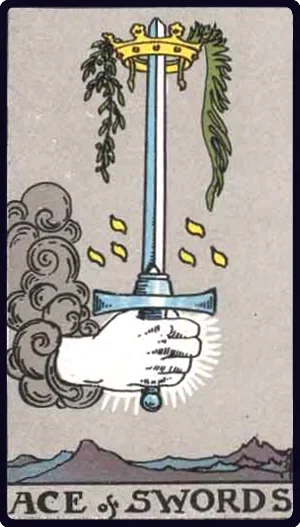
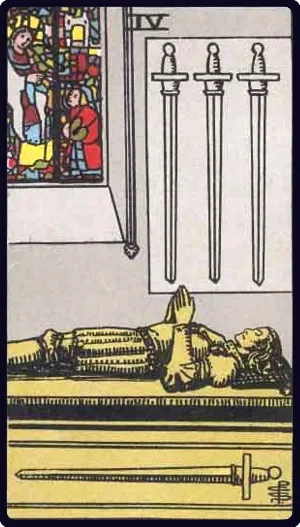
For this example, we’ll use “Emotional State”. You poured all your energy into a challenging project for a long time, but it was recently shut down unexpectedly. Now you feel empty, lost, and unsure how to move forward. It seems all your efforts were in vain, and this thought constantly troubles you. All three cards in this example are upright.
The Ace of Swords answers "What helps?" It advises clarifying what happened to the project and what you feel you lost when it closed. A logical explanation may help you make sense of the experience.
The Three of Swords answers "What gets in the way?" It describes the pain and disappointment in this example. Thoughts about unfulfilled plans and seemingly wasted effort may be making it hard to consider your next steps.
The Four of Swords answers "What should I do?" It advises taking a pause to recover. Give yourself time to rest and reflect on the loss before taking on new work. Begin with a break without immediately planning the next project.
Card of the Day
Upright position.
Upright, the Three of Swords warns of a difficult day that may bring bad news, an argument, or disappointment. Something will cut close to the bone or expose an inconvenient truth. Try not to make sharp decisions in the heat of the moment, and protect yourself from needless confrontation.
- What inconvenient truth or disappointment might I face today?
- How can I avoid hasty decisions or needless confrontation today?
- What painful news or argument demands my attention today?
Reversed position.
Reversed, the card promises a day of gradual relief. The weight of recent days lifts, and a wish to reconcile or to close the book on an old grievance appears. It is a good time to rest, exhale, and let yourself recover.
- What old grievance am I ready to let go of today?
- How can I best use this day for rest and recovery?
- What reconciliation or closure am I open to today?
Card Advice
Upright position.
Upright, the card advises living the pain honestly rather than hiding it behind a mask. Acknowledge the wound and allow yourself to grieve, but do not let despair drive your decisions. The storm clears the air, and clarity follows.
Reversed position.
Reversed, the advice is to finally release the grievance. Forgive those who hurt you, and forgive yourself for not staying safe. Holding on to old pain means driving the swords into your own heart again and again.
Card Symbolism
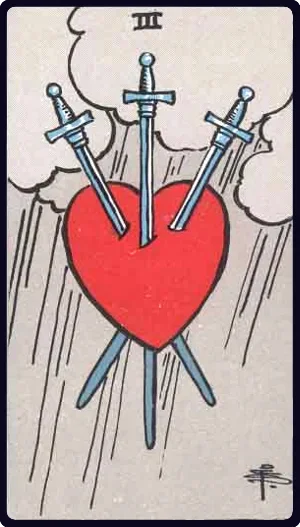
The classic Rider-Waite card shows a bright red heart pierced by three swords. Behind it hang heavy grey clouds and slanting rain. There are no people on the card, only this stark and almost clinical image of pain. The Three of Swords strikes straight at the feelings and leaves no room for illusion.
The heart stands for love and the emotional world, while the three swords represent thoughts and words that wound. Swords belong to the element of Air, the realm of the mind, logic, and communication. The pain on this card is born of words and decisions, of a harsh truth spoken aloud, of a separation that happened in the head long before it happened in reality.
The rain and clouds show that tears and heavy thoughts are unavoidable right now. Yet a storm clears the air, and that is the card's second meaning. The pain the Three of Swords carries is honest. It does not deceive or pull you into fantasy. Instead it forces you to see the situation exactly as it is.
The number three in tarot numerology means growth and a first result. In the suit of Swords that result turns into the awareness of an unwelcome truth. The Two of Swords kept its eyes closed and held balance through denial; the Three removes the blindfold. Clarity arrives, and with it comes pain.
Combinations With Other Cards
Major Arcana
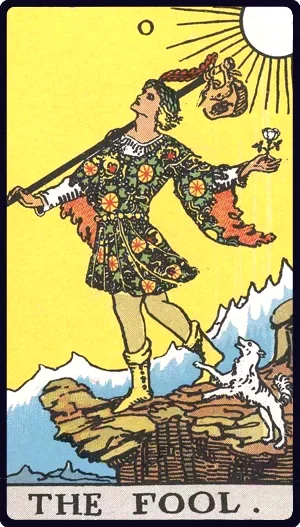
- The Fool · a chance to start over after a painful break
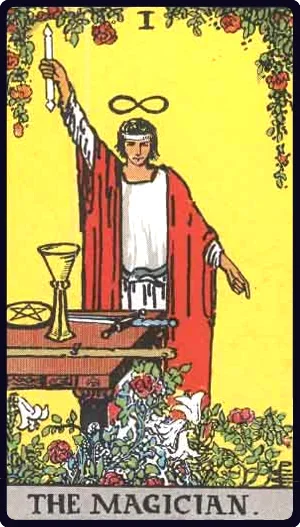
- The Magician · the right words help heal the wound
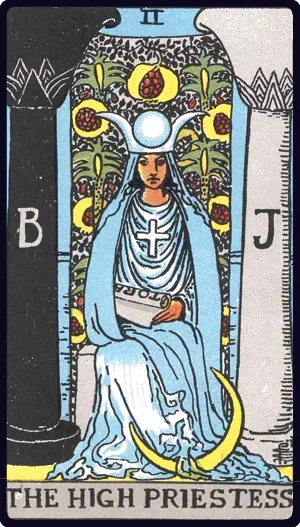
- The High Priestess · a hidden truth becomes the source of pain
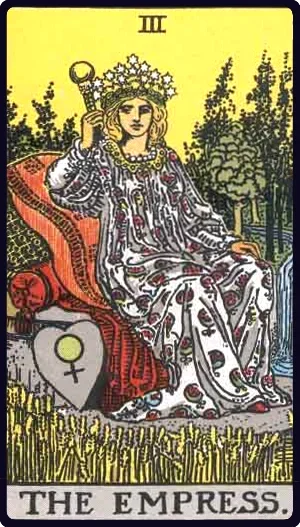
- The Empress · care and warmth soften the grief
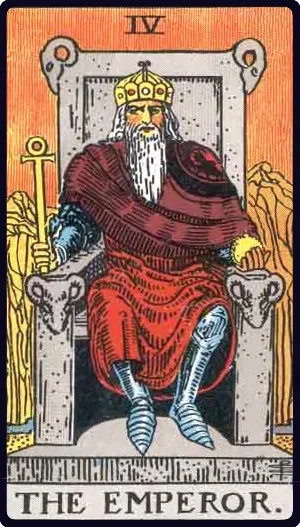
- The Emperor · a cold decision, divorce or a final break
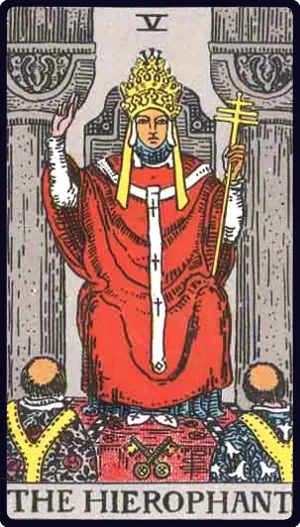
- The Hierophant · the rupture touches marriage or family ties
- The Lovers · a painful choice between two people
- The Chariot · time to leave the pain behind and move on
- Strength · enough resilience to survive a hard blow
- The Hermit · solitude helps you process and heal the wound
- Wheel of Fortune · a painful change arrives suddenly
- Justice · a breakup or divorce through courts and cold reckoning
- The Hanged Man · getting stuck in pain blocks letting go
- Death · the final close of a painful story
- Temperance · healing comes through balance
- The Devil · the grievance turns into a thirst for revenge
- The Tower · a sudden rupture shatters the familiar world
- The Star · hope returns after the tears
- The Moon · deceit and fears deepen the heartache
- The Sun · pain gives way to relief and joy
- Judgement · forgiveness and the closing of an old wound
- The World · the end of a hard cycle and a return to peace
Wands
- Ace of Wands · a new spark breaks through the pain
- Two of Wands · the rupture forces you to rethink your plans
- Three of Wands · a chance to set things right lies ahead
- Four of Wands · a celebration clouded by a quarrel or loss
- Five of Wands · open conflict and mutual blows
- Six of Wands · victory won at the cost of pain
- Seven of Wands · you must stand your ground in a dispute
- Eight of Wands · sharp news wounds unexpectedly
- Nine of Wands · exhaustion from a long defense and pain
- Ten of Wands · the burden of grief weighs on the shoulders
- Page of Wands · unpleasant news disturbs the calm
- Knight of Wands · a flash of anger fuels the quarrel
- Queen of Wands · a strong woman lives through a breakup
- King of Wands · a blunt man delivers a hurtful blow
Cups
- Ace of Cups · a new feeling replaces the pain
- Two of Cups · reconciliation after a hard quarrel
- Three of Cups · friends help you through the grief
- Four of Cups · apathy and retreat into resentment
- Five of Cups · deep sorrow and regret over a loss
- Six of Cups · an old wound from the past resurfaces
- Seven of Cups · illusions shatter against a harsh truth
- Eight of Cups · walking away from what causes pain
- Nine of Cups · happiness returns after the setbacks
- Ten of Cups · family warmth heals the wound
- Page of Cups · a timid attempt to open up again
- Knight of Cups · an offer of reconciliation arrives
- Queen of Cups · compassion and support from someone close
- King of Cups · wise counsel helps you cope with the pain
Swords
- Ace of Swords · the truth comes out sharply and clearly
- Two of Swords · the blindfold drops, denial gives way to pain
- Four of Swords · a respite to recover after the blow
- Five of Swords · pain after a quarrel and defeat
- Six of Swords · a passage to a calmer shore after grief
- Seven of Swords · deceit and betrayal deepen the wound
- Eight of Swords · a sense of being trapped amid the pain
- Nine of Swords · anxiety and sleepless nights from worry
- Ten of Swords · the final, painful end
- Page of Swords · sharp words pick at the wound
- Knight of Swords · a swift break leaves bitterness behind
- Queen of Swords · a clear-eyed view of the pain endured
- King of Swords · cold analysis helps you let go
Pentacles
- Ace of Pentacles · a new foundation after a painful loss
- Two of Pentacles · trying to keep balance through a hard time
- Three of Pentacles · support from colleagues aids recovery
- Four of Pentacles · fear of new pain makes you shut down
- Five of Pentacles · loss compounded by a lack of money
- Six of Pentacles · help arrives at a difficult moment
- Seven of Pentacles · disappointment in the fruits of your labor
- Eight of Pentacles · work distracts you from heavy thoughts
- Nine of Pentacles · comfort softens the pain of separation
- Ten of Pentacles · family and home give support in grief
- Page of Pentacles · a new pursuit distracts from the hurt
- Knight of Pentacles · slow but steady recovery
- Queen of Pentacles · caring for loved ones brings you back to life
- King of Pentacles · a reliable anchor helps you weather the blow
Your Birth Card
Everyone has cards that walk with them through life. Enter your date of birth to meet yours: one speaks of your character, the other of what your soul is seeking.