Death and Three of Swords Combination in Tarot
The Death and Three of Swords tarot combination meaning: general sense, in love and work, every reversed variant, and advice.
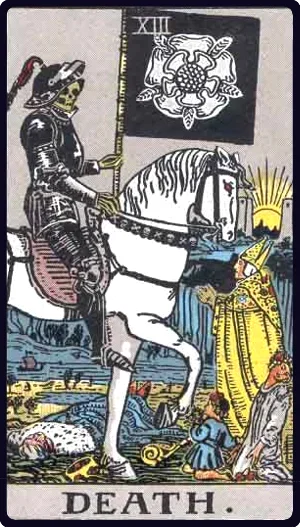
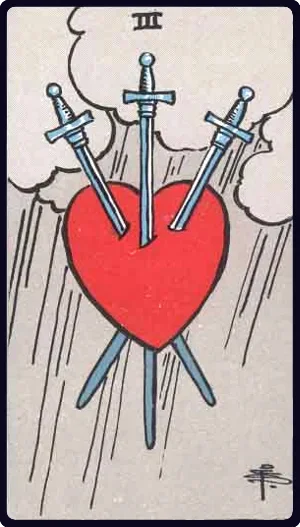
In short. Death ends what has run its course, while the Three of Swords adds sharp pain and a harsh truth that can no longer be avoided.
This is one of the heaviest pairings in the deck, and also one of the most honest. Death speaks of an inevitable ending, while the Three of Swords speaks of heartbreak, rupture, and a truth spoken aloud. Together the cards describe a painful breakup or a bitter realization, after which the illusions collapse for good. It is an ending that wounds, yet that very wound removes the blindfold and restores clarity.
General Meaning of the Combination
At the core of the pair sits a formula: the ending of Death plus the pain of the Three of Swords equals a separation that cannot be softened. Death announces that the chapter has reached its end and holding on is useless, while the Three of Swords shows that the rupture passes through the heart, not only the mind. The combination most often appears in a moment of acute pain, when something has just broken: an affair surfaces, words are spoken that make pretending impossible, a hope collapses. This is not a quiet transition or a gentle goodbye but a storm that strikes straight at the feelings. Yet the pair carries a second meaning: Death reminds you that dawn inevitably follows the dark, and the Three of Swords clears the air. The pain here is honest. It does not deceive but forces you to see things as they are and finally release what long rested on illusion.
In Love and Relationships
In relationships this pairing almost always speaks of a painful breakup. Death ends a union that has worn out, while the Three of Swords makes that ending sharp: separation, infidelity, a hurtful truth that has surfaced. The heart is wounded, and rebuilding the old relationship no longer works. Sometimes it is a love triangle, where a third person becomes the very sword that cuts the bond. For singles, the cards speak of an unhealed wound from the past that must be grieved before letting anything new in. The cards advise living the pain honestly: while you carry the ghost of a dead love, there is no room for a living person beside you.
In Work and Finances
In work and finances the pair speaks of a painful ending and a harsh truth about the matter. Death closes a position or a project, while the Three of Swords adds conflict, stinging criticism, or exposed deceit. There may be a dismissal, a collapsed deal, or office politics behind your back, after which working as before becomes impossible. It is hard, but the clarity finally lets you make a sober decision and leave for somewhere you do not have to pretend. In money matters the combination warns of losses and unexpected expenses tied to closing a chapter. The cards advise waiting out the storm, not investing in anything doubtful, and not clinging to what has already collapsed.
If a Card Is Reversed
Death reversed, Three of Swords upright
The pain has arrived at full force, yet the person will not let the situation finish and keeps the door shut. The wound is fresh, while the overdue separation keeps getting postponed, and that only makes it heavier. In love it is trying to hold a dead relationship together, one with no warmth left, clinging to habit and fear of being alone, in work it is staying stuck in a conflict you should walk away from but are afraid to.
Death upright, Three of Swords reversed
The ending has already happened, and slow healing begins: the swords leave the heart, the pain of separation fades. But the reversed Three warns that the wound can be pushed inside and never processed, hidden under a mask of indifference. In relationships it is coldness and numbness after the breakup, when feelings have not healed but simply frozen, in work it is climbing out of a crisis shadowed by smoldering gossip and quiet resentment toward former colleagues.
Both cards reversed
Both the ending and the pain are blocked: the person will not release what has died and will not let themselves grieve. The old drags on, while hurt hardens into anger replayed again and again. In love it is stagnation, where the breakup is unacknowledged and the wound poisons both present and future, in work it is paralysis and behind-the-scenes maneuvering, when an unsolved conflict quietly builds until it bursts out.
The Cards' Advice
Let the ending happen and live the pain rather than numbing it inside. The Death and Three of Swords combination advises you to acknowledge the wound and grieve what has ended, instead of pretending nothing took place. The storm will pass, the clouds will part, and the clarity, however bitter, will free you of illusions. Do not cling to what has died: an honest ending hurts more, yet it is truer than drawn-out pretense.