Death and Two of Swords Combination in Tarot
The Death and Two of Swords tarot combination meaning: general sense, in love and work, every reversed variant, and advice.
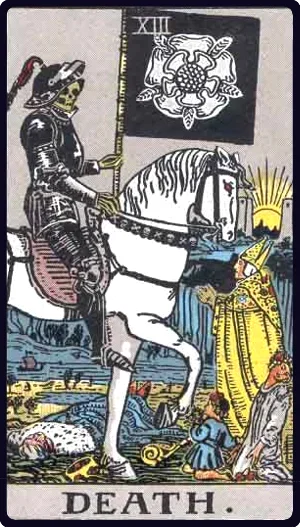
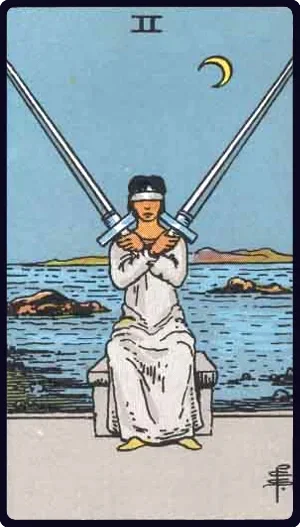
In short. Death announces an inevitable ending, while the Two of Swords shows a blindfolded person who refuses to accept that ending.
This pairing is about refusing to accept an obvious close. Death says the chapter has reached its end and holding on is useless, while the Two of Swords shows how a person shuts out that truth and keeps a fragile truce. Together the cards describe a stalemate in which the decision is long overdue but the blindfold is still on. This is a pause before the inevitable, and the cost of waiting quietly climbs while you stall over what is already clear.
General Meaning of the Combination
At the core of the pair sits a formula: the ending of Death plus the avoidance of the Two of Swords equals a stuck, postponed close. Death announces that the old chapter is spent and the change is inevitable, while the Two of Swords shows that the person deliberately refuses to look and shuts out the situation. The combination often appears when everything is already decided inside, yet the decisive step keeps being put off. For a while this offers relief and a fragile calm, but the tension beneath the surface never goes away. Death reminds you that balance on the edge of a blade cannot last and the ending will come regardless, while the Two of Swords hints that sooner or later the blindfold must come off. The longer the refusal drags on, the more costly the delay, because refusing to accept the close is itself a choice, and usually not in your favor.
In Love and Relationships
In relationships this pairing speaks of a pause before an ending neither side wants to admit. Death points out that the union has worn out and the reckoning is inevitable, while the Two of Swords shows the silence and things left unsaid behind which that truth hides. On the surface there is calm, but the truce holds only because the awkward topics are sidestepped. The partners keep their distance and stall on a conversation long overdue. For singles, it speaks of a choice between past and future, when a person will not release what has ended and puts off the decision out of fear of choosing wrong. The cards advise admitting that one story has closed before building closeness anew.
In Work and Finances
In work and finances the pair speaks of a decision you keep putting off, even though the outcome is already obvious. Death says the project, position, or direction has run out, while the Two of Swords shows how a person stalls on the choice and shuts out the unwelcome truth about the matter. Perhaps two options are on the table, or it has long been clear it is time to leave, but you hold a fragile truce instead of ending it. The cards advise gathering the missing facts and weighing the situation soberly. In money matters it warns of hidden problems that grow while ignored: a dragged-out debt is cheaper to close now than to stall on to the last.
If a Card Is Reversed
Death reversed, Two of Swords upright
The ending is overdue, but the person has shut down twice over: against the change and against the very thought of choosing. The reversed Death deepens the fear of releasing the outworn, so the standstill becomes nearly complete. In love it is dead silence in a union long past due for closure, while both pretend all is well, in work it is delaying departure from a place that has run out.
Death upright, Two of Swords reversed
The ending is already happening, and the blindfold slips: the hidden truth rises to the surface and the stalemate ends. Sometimes this is the courage to finally make a hard decision, sometimes a painful realization that breaks through at once. The calm you lulled yourself with turns out to be false. In relationships it is surfacing silence or deception after which staying quiet no longer works, in work it is a rising conflict that demands action now instead of further delay.
Both cards reversed
Both the ending and the choice are blocked tight: the person will not release the outworn and at the same time refuses even to look at the situation, so everything freezes in limbo. Hidden problems quietly pile up under a mask of calm. In love it is stagnation and dread of the frank talk that is long overdue, in work it is paralysis and a build-up of unsolved matters that will eventually burst into the open.
The Cards' Advice
Take off the blindfold and admit what is already obvious. The Death and Two of Swords combination advises you to stop hiding behind hesitation and to look honestly at the close that will come regardless. Gather the missing facts, weigh the situation soberly, and take the step before the delay costs you more. Refusing to choose is itself a choice here, and usually not in your favor, so untie the knot now.