24 Rune Meanings
The meaning of every rune: upright and reversed, in love, career and health, with rune combinations and spreads.
Freyr's Aett
Heimdall's Aett
Tyr's Aett
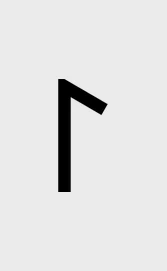
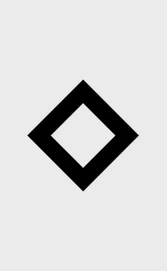
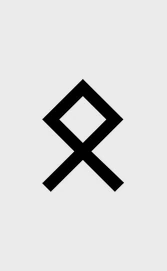
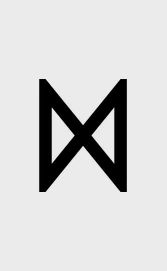
Runes are an old writing system that double as a divination tool. The set most readers use today is the Elder Futhark, a row of 24 characters carved by Germanic and Norse peoples roughly between 200 and 800 AD. Each rune stands for a sound and for an idea, and it is the idea that matters when you cast them. The word itself comes from a root meaning "secret" or "whisper," which tells you something about how these symbols were treated.
This page is a reference. It covers what the runes are, how a rune reading works, what all 24 symbols mean across the three aetts, how to read positions and combinations, and which spreads are worth learning first. You do not need to believe the runes predict anything to get value from them. Most readers treat them as a structured way to slow down and look at a question from angles you would otherwise skip.
If you are new to this, read the first few sections in order. If you already know the basics and want a quick lookup, jump straight to the rune list under the three aetts. If you would rather not study the system yourself, the free rune readings give you a ready answer any time.
What Runes Are and a Short History of the Elder Futhark
The Elder Futhark takes its name from the first six runes: Fehu, Uruz, Thurisaz, Ansuz, Raidho, Kenaz. Read those starting sounds together and you get "futhark," the same way "alphabet" comes from alpha and beta. It was a working script before it was anything else. People used it for inscriptions on stones, weapons, jewelry, and tools.
Archaeology dates the earliest finds to around the second century AD, with the system in active use until the Younger Futhark replaced it in Scandinavia around 800 AD. The Elder version was never written in long texts. Most surviving inscriptions are short, often a name or a single word, which is part of why the symbols carry such concentrated meaning.
In Norse myth the runes are tied to Odin. The Havamal describes him hanging from the world tree Yggdrasil for nine nights, pierced by his own spear, until the runes revealed themselves to him. The story frames the runes as knowledge that costs something to gain. Whatever you make of the myth, it set the tone for how the symbols were regarded: not casual marks, but something earned.
For divination, the practical point is that 24 runes give you a manageable system. That is roughly a third of a tarot deck, with no court cards and no suits to memorize in the same way. The trade-off is that each rune covers more ground, so context does heavier lifting than it does with cards.
How Rune Divination Differs From Tarot
If you have read tarot, the first difference you will notice is the lack of pictures. A tarot card hands you a scene to interpret. A rune hands you a single concept and asks you to apply it. Fehu means cattle, wealth, movable assets. There is no illustrated figure to soften or complicate that, so your reading leans on the core meaning plus the question you brought.
The second difference is how you draw them. Runes are usually pulled blind from a bag or cast onto a cloth, not shuffled and laid from a deck. This matters because orientation becomes part of the reading. A rune can land upright or reversed, and several land face down, which changes how you treat them.
The smaller set also shapes the experience. With 24 symbols you reach fluency faster than with 78 cards, and you start recognizing patterns sooner. Many readers find the runes blunter and more direct as a result. A three-rune cast tends to give you a clear shape quickly, where a tarot spread of the same size can branch in several directions.
None of this makes one system better. They suit different temperaments. Cards reward people who think in images and stories. Runes reward people who like a tighter vocabulary and do not mind doing more of the connecting work themselves.
| Runes | Tarot | |
|---|---|---|
| Character of the answer | Blunt and direct, a single concept to apply | Layered and visual, a scene to interpret |
| Number of symbols | 24 in the Elder Futhark | 78 in a full tarot deck |
| Strength | Fast to learn, clear shape from a small draw | Rich imagery, room for nuance and story |
How to Read Runes (Upright and Reversed, Merkstave, Non-Invertible Runes)
A rune reading starts with a clear question. Vague questions get vague answers, so trade "what about my life" for something you can actually act on, like "what is blocking this job application." Hold the question while you draw, then read what you pull against it.
Most runes have two reading positions. Upright carries the core meaning. Reversed, often called merkstave from a word meaning "dark stave," shifts the meaning toward its harder side. A reversed rune is not the simple opposite of upright. It usually points to the same theme blocked, delayed, misused, or turned inward. Reversed Fehu still concerns wealth, but now it speaks of loss, debt, or money slipping through your hands rather than gain.
Several runes look the same whether you turn them or not, so they cannot be reversed. The reliably symmetrical ones, treated as non-invertible by most readers, are Gebo, Isa, Jera, Sowilo, Ingwaz, and Dagaz. A few others such as Hagalaz, Nauthiz, and Othala are handled as non-invertible in some traditions and as reversible in others, so practitioners differ here. For any non-invertible rune you read a single meaning, though you can still weigh whether it lands as a challenge or a gift based on the surrounding runes.
There is a third state if you cast onto a surface. A rune can land face down. Many readers leave these in place and read them last, treating them as influences that are present but not yet active, or factors the querent cannot see yet. If blind-drawing from a bag, you skip this and work only with upright and reversed.
Whether you use reversals at all is a choice. Some experienced readers ignore them entirely and judge tone from context instead. If you are starting out, pick one approach and stay consistent for a few months before you change it. Switching methods mid-practice is the fastest way to confuse yourself.
Tip. Decide once whether you will read reversals, write that choice down, and leave it alone for at least a few months. Consistency is what lets you compare one reading against the next.
The Three Aetts of the Elder Futhark
The 24 runes split into three groups of eight, each called an aett, an old word for family or clan. The order is fixed and worth learning, because the row tells a loose story. The first aett deals with material life and basic needs. The second moves through disruption and the forces that test you. The third turns toward order, self, and what you leave behind. Each aett carries the name of a deity associated with it.
| Aett | Deity | Theme | Runes |
|---|---|---|---|
| First | Freya | Material life, provision, the everyday foundations | Fehu, Uruz, Thurisaz, Ansuz, Raidho, Kenaz, Gebo, Wunjo |
| Second | Heimdall | Disruption, hardship, the forces that test and transform | Hagalaz, Nauthiz, Isa, Jera, Eihwaz, Perthro, Algiz, Sowilo |
| Third | Tyr | Order, self, growth, what you keep and pass on | Tiwaz, Berkano, Ehwaz, Mannaz, Laguz, Ingwaz, Dagaz, Othala |
Freya's Aett
The first eight runes, often credited to Freyr and Freya, cover the foundations: provision, strength, the household, the everyday building blocks of a life.
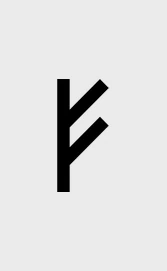
- Fehu · Wealth, cattle, earned resources, the energy of money in motion. Reversed: loss, debt, financial setback.
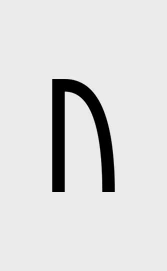
- Uruz · Raw strength, wild vitality, health, untamed potential. Reversed: weakness, missed chances, force misapplied.
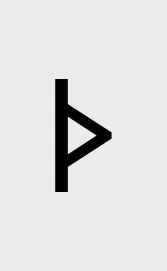
- Thurisaz · A sharp force, conflict, a defensive thorn, a needed reaction. Reversed: spite, danger ignored, lashing out.
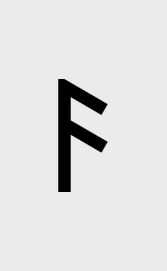
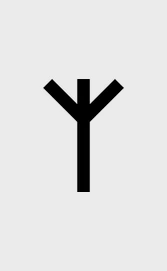
- Ansuz · Communication, a message, wisdom, a signal worth heeding. Reversed: misunderstanding, bad advice, deception.
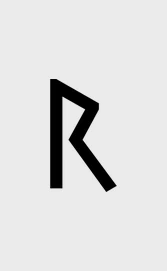
- Raidho · Travel, a journey, rhythm, movement with a destination. Reversed: disruption, delays, a trip gone wrong.
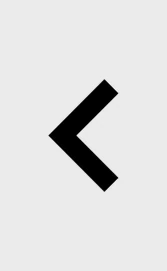
- Kenaz · The torch, insight, craft, knowledge that lights a way. Reversed: confusion, a creative block, lost clarity.
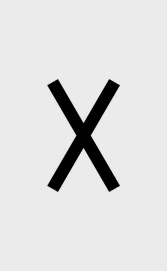
- Gebo · A gift, exchange, partnership, balance between giving and receiving. Non-invertible.
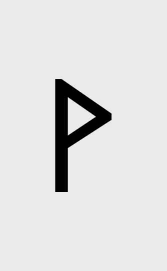
- Wunjo · Joy, harmony, belonging, a goal reached. Reversed: sorrow, friction, a hollow win.
Heimdall's Aett
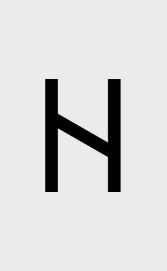
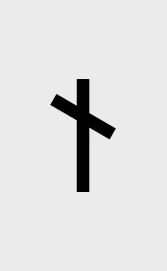
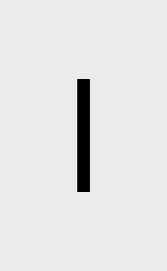
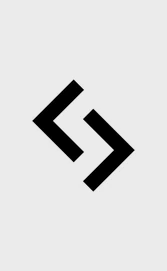
The second eight, linked to the watchman Heimdall, deal with the forces that interrupt and transform: weather you do not control, hardship, stillness, and the turning of cycles.
- Hagalaz · Hail, sudden disruption, an uncontrollable event that clears the ground. Non-invertible.
- Nauthiz · Need, constraint, the friction that teaches patience and resourcefulness. Reversed: deeper want, poor choices under pressure.
- Isa · Ice, stillness, a freeze, a forced pause before anything can move. Non-invertible.
- Jera · Harvest, the year's cycle, results that arrive in their own time. Non-invertible.
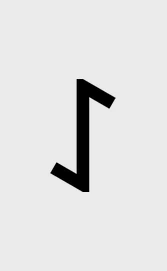
- Eihwaz · The yew, endurance, a defended position, a turning point survived. Reversed: blockage, confusion, weak footing.
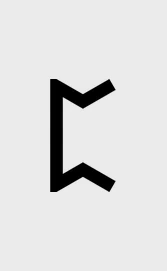
- Perthro · The dice cup, chance, hidden things, secrets and fate. Reversed: stagnation, unwelcome surprises, addiction.
- Algiz · Protection, the warding elk, a connection to something higher. Reversed: exposure, a warning unheeded, vulnerability.
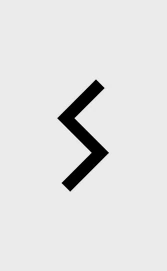
- Sowilo · The sun, success, vital force, clear direction and victory. Non-invertible.
Tyr's Aett
The third eight, named for the justice god Tyr, turn toward order and the self: honor, partnership, growth, breakthrough, and inheritance.
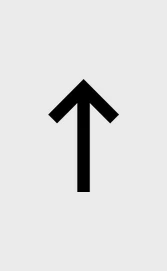
- Tiwaz · The warrior, justice, honor, courage in a fair fight. Reversed: lost drive, unfair outcome, a sacrifice for nothing.
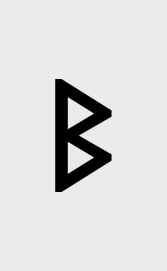
- Berkano · The birch, growth, fertility, new beginnings, family and care. Reversed: stalled growth, family trouble, neglect.
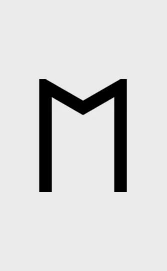
- Ehwaz · The horse, partnership, trust, steady progress between two parties. Reversed: a stalled move, distrust, mismatch.
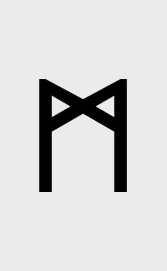
- Mannaz · Humanity, the self, community, intelligence and shared identity. Reversed: isolation, self-deception, an enemy.
- Laguz · Water, flow, intuition, emotion, what moves beneath the surface. Reversed: confusion, fear, a misread instinct.
- Ingwaz · The seed, gestation, completion, potential ready to release. Non-invertible.
- Dagaz · Daybreak, breakthrough, a clear shift from one state to another. Non-invertible.
- Othala · Inheritance, home, ancestral ground, what you keep and pass on. Reversed: loss of home, broken ties, clinging to the past.
Rune Combinations
A single rune answers a narrow question. Most real readings use two or more, and the meaning lives in how they relate. Read each rune alone first, note its core sense against your question, then look at what the combination is doing as a whole.
Some pairs reinforce each other. Fehu next to Uruz strengthens a reading about resources and physical well-being, money and the energy to use it. Sowilo with Tiwaz doubles down on a confident, successful push toward a goal. Berkano beside Ingwaz speaks plainly about new growth ready to emerge, a project or a pregnancy reaching its moment.
Other pairs pull against each other, and the tension is the message. Isa next to Raidho sets a freeze against a journey, which usually means a trip or plan that stalls before it starts. Nauthiz with Wunjo puts constraint beside joy, often a happiness that has to survive real hardship to be earned. When two runes contradict, you are being shown a conflict to resolve, not a clean answer.
Position colors everything. The same two runes read differently if one sits in the "past" slot of a spread and the other in "outcome." A challenging rune in the past is something you have already moved through. The same rune in the outcome is a warning about where things head. Always read the combination through the layout, not in isolation.
When you are learning, keep a journal. Write the runes you drew, the question, your reading, and later what actually happened. Over a few months the patterns in how certain pairs behave for you become far more useful than any fixed list of combinations someone else wrote.
Tip. Note the date next to each entry so you can revisit a reading once the situation has played out. The gap between what you predicted and what happened is where most of the learning lives.
Rune Spreads (Single Rune, Three Runes, the Rune Cross)
You do not need many layouts. Three will carry you through almost everything, and rushing into complicated spreads before you know the runes is the usual beginner mistake.
The single rune is the daily workhorse. Draw one in the morning as a focus for the day, or pull one for a tight yes-or-no leaning question. With a single draw there is nothing to cross-reference, so you read the rune cleanly against the moment. This is also the best way to build fluency, since you meet one symbol at a time and watch how it plays out.
The three-rune spread is the standard for an actual question. Draw three and lay them left to right. The most common reading is past, present, and likely outcome, sometimes framed as the three Norns: Urd for what has been, Verdandi for what is, Skuld for what is becoming. A second framing reads rune one as the situation, rune two as the challenge in it, and rune three as the advice or path forward. Pick one framing before you draw and stick to it for that reading.
The rune cross is the step up when three runes are not enough. A common five-rune version places one rune in the center for the heart of the matter, one to the left for the past, one to the right for the near future, one below for the foundation or root cause, and one above for the influences and potential outcome. Read the center first, then the arms in relation to it. The cross suits bigger questions where you want the background and the surrounding pressures, not just a quick line of past to future.
Whatever you cast, set the question first, draw with it in mind, and read the whole layout before you fix on any single rune. A rune that looks grim alone often softens once you see what surrounds it.
Getting Started for Beginners
Pick a set you will actually handle. Wood, stone, ceramic, or bone all work, and many readers make their own, which builds familiarity before the first reading. What the runes are made of matters far less than how often you use them.
Start with the single rune draw and stay there longer than you think you need to. One rune a day for a few weeks teaches you the symbols in a way no chart can. When a rune shows up, read its meaning, then notice during the day where it actually fit. That feedback loop is the whole method.
Keep a journal from day one. Record the date, the rune, your reading, and a note later on how the day went. Reviewing old entries is how you learn what each rune means specifically to you, which often differs in shade from the textbook line. Decide early whether you will use reversals, and keep that choice steady so your readings stay comparable.
Hold the tool lightly. Runes work best as a way to think a question through, not as a verdict handed down. When a reading lands as a warning, treat it as a factor to weigh rather than a fixed fate. The point is clearer choices, and you keep the agency. If you would rather get a ready answer than cast the runes yourself, the free rune readings collect spreads for different questions in one place.
Everyone Reads at Astralika
Enough theory: time to ask the runes a question of your own. There are 271 readings on love, work, health and more.