36 Lenormand Card Meanings
The meaning of every Lenormand card: love, relationships, work and daily life, with card combinations and spreads.
Explore Other Cards
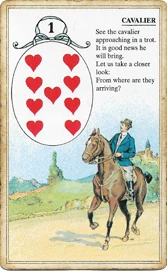
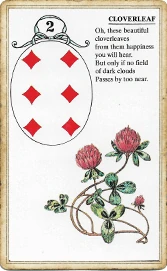
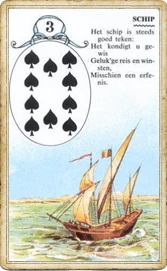
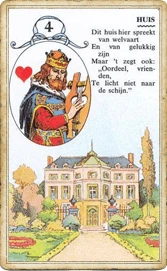
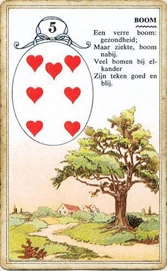
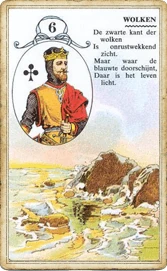
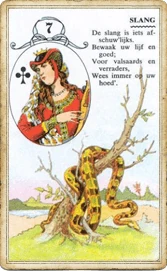
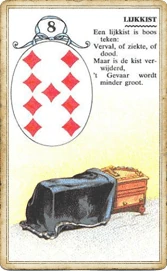
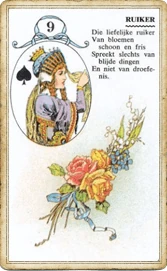
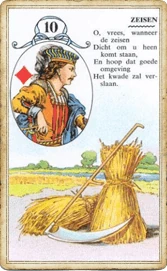
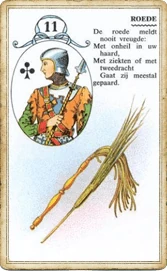
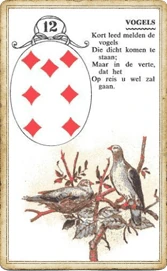
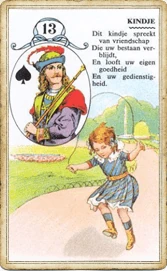
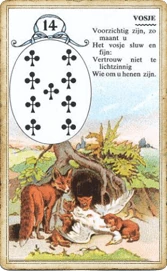
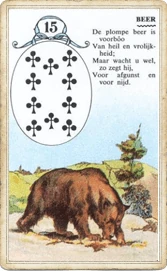
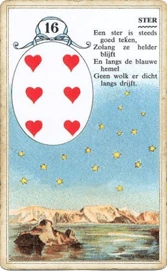
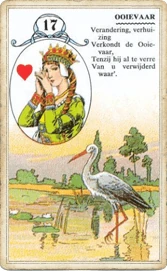
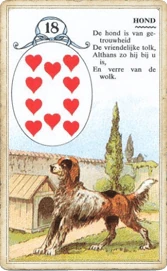
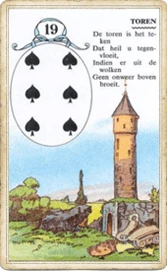
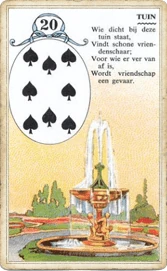
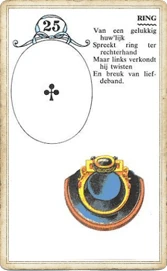
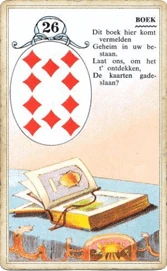
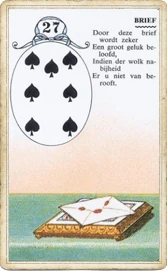
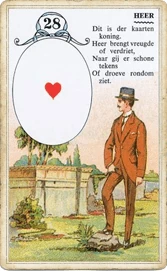
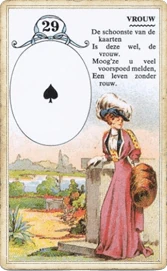
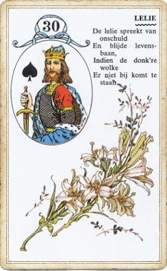
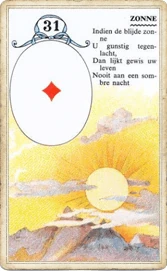
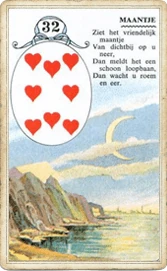
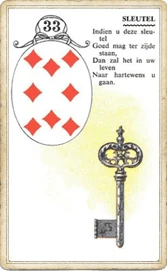
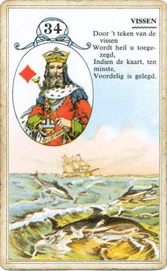
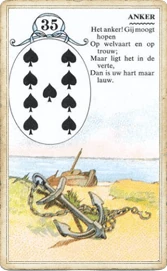
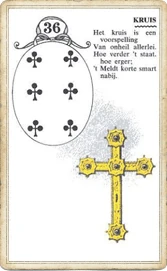
The Petit Lenormand is a deck of 36 cards with everyday pictures: a Rider, a Ship, a House, a Heart, a Ring. Each card carries a tight, practical meaning, and the system is built to give plain answers about real life. People come to Lenormand for love, work, money, and timing, not for grand archetypes. That down-to-earth quality is the whole point.
What makes the deck work is reading cards together rather than one at a time. A single card is a word. Two cards form a phrase. A line of cards becomes a sentence. So a hub like this one has two jobs: give you the keyword for every card, and show you how to chain those keywords into a clear message.
This page is a map of the whole system. You will find a short keyword for each of the 36 cards, the rules that govern how they combine, the main spreads from a quick pair up to the full Grand Tableau, and notes on timing and yes/no questions. Treat the cards as a tool for thinking through a situation, and the readings get sharper the more concrete your question is.
What Lenormand Cards Are and Who Mademoiselle Lenormand Was
Marie Anne Lenormand (1772 to 1843) was a French fortune-teller who became famous during the Napoleonic era. She read for clients across Parisian society and was said to advise figures of the Revolution and the Empress Josephine. Her reputation outlived her by a wide margin, and that fame is the reason her name ended up on a deck she never designed.
The deck itself comes from a parlor game. Around 1799, Johann Kaspar Hechtel of Nuremberg published "Das Spiel der Hoffnung," the Game of Hope, a board game of 36 numbered cards laid out in a grid. The Rider sat at the start and the Anchor stood for hope at the end. After Lenormand died, publishers attached her name to a 36-card oracle modeled on that game, and the Petit Lenormand we use today was born. The history matters because it explains the deck's plain, almost domestic imagery. These were game pieces first.
Each of the 36 cards has a number, a simple picture, and a playing-card inset in the corner (the 36 cards from Ace to King across the four suits, sixes through Aces in a piquet deck). The numbers run from 1 Rider to 36 Cross, and that fixed order shapes timing and layout. There is nothing hidden or secret about the symbols. A Dog means loyalty and a friend. A Coffin means an ending. The skill is not in decoding the picture, it is in reading the cards as a group.
How Lenormand Differs From Tarot
The most common path to Lenormand runs through Tarot, so the contrast is worth drawing clearly. Tarot has 78 cards with rich, layered symbolism, and many readers interpret a card intuitively from its imagery. Lenormand has 36 cards with fixed, literal keywords, and the meaning stays close to the word itself. You read Lenormand the way you read a sentence, not the way you read a painting.
| Lenormand | Tarot |
|---|---|
| 36 cards | 78 cards |
| No reversals | Reversals common |
| Meaning forms from combinations | A single card can carry a reading |
| Concrete, literal answers | Psychological, archetypal answers |
| Faster to start, needs pair practice | Slower to start, reads one card at a time |
Lenormand also has no reversals. A card means the same thing whichever way it falls, so you never flip a meaning to its shadow side. Tone and nuance come from neighbors instead. A Heart next to a Snake reads very differently from a Heart next to a Key, even though the Heart's core meaning never moves.
The biggest practical difference is that Lenormand is built on combinations. A single Tarot card can carry a full reading on its own. A single Lenormand card rarely does. You almost always read at least two cards together, and the system expects it. If you bring a habit of reading one card at a time, Lenormand will feel thin until you start pairing.
Finally, Lenormand tends to be concrete where Tarot leans psychological. Tarot might describe an inner state, a fear, a turning point in the self. Lenormand answers the literal question: will the money arrive, is the move happening, who is the man in the office. Neither approach is better. They answer different kinds of questions.
How to Read Lenormand Cards: A Card's Keyword, No Reversals, Reading in Pairs
Start with the keyword. Every Lenormand card has a small set of core meanings, and you learn the deck by learning those words cold. The Rider is news and movement. The Ship is travel and distance. The Ring is commitment and contracts. Once the keywords are second nature, reading becomes a matter of connecting them.
Because there are no reversals, you have one less thing to track than in Tarot. The card's nature does shift with context, though. Many readers think of cards as broadly positive (Sun, Key, Clover), broadly negative (Coffin, Snake, Scythe), or neutral (Rider, Letter, Ship). A neutral card takes its color from what sits beside it.
The core technique is reading in pairs. The traditional method treats the first card as a noun and the second as an adjective that modifies it, a pattern borrowed from French word order. The House plus the Sun reads as a happy home or a successful household. Flip the order to Sun plus House, and the emphasis shifts to success located in the home. The order changes the stress, so pay attention to which card leads.
Tip. Read every pair left to right as a noun plus a modifier. Say the phrase aloud with the first card as the thing and the second as its quality, and the meaning usually clicks into place.
Here is a worked example. You ask about a job offer and draw Ship then Key. Ship is the noun, travel or a move, and Key is the adjective, certainty and a yes. Together they suggest a relocation that is all but settled. Swap them to Key then Ship and the reading tilts toward a definite decision that involves travel. Small shift, real difference. The more you practice pairs, the faster longer lines fall into place.
One more habit worth building early: read what is in front of you, not what you wish were there. If a Snake lands next to your love card, the reading is pointing at a complication, and naming it plainly serves the querent better than softening it away.
A Quick Overview of the 36 Lenormand Cards
Below are the 36 cards with a short keyword each, grouped to make them easier to hold in memory. These are summaries. Each card has its own full page with combinations and detail.
News and Movement
- 1 Rider · news, a message, a young man, something approaching
- 2 Clover · luck, a small lucky break, a brief happy window
- 3 Ship · travel, distance, foreign matters, longing
- 4 House · home, family, stability, property
- 5 Tree · health, growth, roots, slow steady development
Trouble and Endings
- 6 Clouds · confusion, doubt, an unclear or unsettled period
- 7 Snake · deception, a rival, complications, a clever woman
- 8 Coffin · an ending, loss, illness, the close of a chapter
- 9 Bouquet · a gift, an invitation, charm, something pleasant
- 10 Scythe · a sudden cut, a sharp decision, risk, separation
People and Choices
- 11 Whip · conflict, repetition, arguments, physical effort
- 12 Birds · talk, gossip, a couple, nervousness, phone calls
- 13 Child · a child, a new and small beginning, innocence
- 14 Fox · work, cunning, watching your back, self-interest
- 15 Bear · strength, a boss, money, a protective figure
Hope and Direction
- 16 Stars · hope, clarity, online matters, a guiding sign
- 17 Stork · change, relocation, improvement, a move forward
- 18 Dog · a friend, loyalty, trust, faithful support
- 19 Tower · institutions, isolation, authority, the long view
- 20 Garden · the public, society, networks, an event
Obstacles and Wins
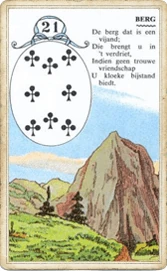
- 21 Mountain · a blockage, delay, a stubborn obstacle
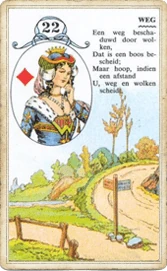
- 22 Crossroads · a choice, options, more than one path
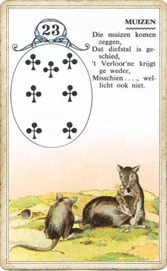
- 23 Mice · loss, worry, theft, something wearing away
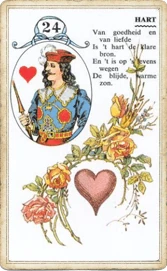
- 24 Heart · love, warmth, affection, reconciliation
- 25 Ring · commitment, a contract, a cycle, partnership
Words and Truth
- 26 Book · a secret, knowledge, study, something hidden
- 27 Letter · a document, written news, a card or email
- 28 Man · the male querent or a significant man
- 29 Woman · the female querent or a significant woman
- 30 Lily · maturity, peace, family elders, sometimes intimacy
Light and Reward
- 31 Sun · success, energy, victory, summer, a clear yes
- 32 Moon · feelings, recognition, fame, the inner life
- 33 Key · certainty, a solution, an important yes
- 34 Fish · money, business, abundance, flow and trade
- 35 Anchor · stability, work, a long-term hold, the sea
The Final Card
- 36 Cross · burden, fate, a hard but unavoidable matter, the end of a line
Lenormand Card Combinations: The Grammar of Reading, Example Pairs
If keywords are vocabulary, combinations are grammar. This is where Lenormand becomes a reading rather than a list of words. The pair method scales: two cards give a phrase, three give a short statement, and a line gives a full answer. Mastering pairs is the single best investment a beginner can make.
The noun-and-adjective rule carries most of the weight. The first card names the subject and the second describes it. Hold that frame and watch how the same card changes color depending on its partner.
Take the Heart and pair it with different neighbors:
- Heart + Ring · love that becomes commitment, a relationship heading toward formal partnership
- Heart + Snake · a love complicated by a rival or by deception
- Heart + Coffin · the end of a relationship or feelings that have cooled
- Heart + Key · a certain, confirmed love, an emotional matter that resolves yes
- Heart + Fish · feelings tied to money, or generosity flowing from affection
Now hold one card steady and vary the other side. The Ring shows how a single keyword stretches across contexts:
- Ring + House · a domestic commitment, moving in together, a property contract
- Ring + Mice · a contract eroding, a partnership wearing thin
- Ring + Bear · a strong, protective bond, or a business agreement with someone powerful
- Ring + Scythe · a sudden break, a contract cut short, a broken engagement
The same logic builds three-card lines. Read them as subject, then modifier, then outcome. Man plus Heart plus Ring describes a man whose love is heading toward commitment. Woman plus Clouds plus Snake describes a woman caught in confusion around a deceptive situation. You are not memorizing thousands of fixed phrases, you are applying one rule again and again.
Two practical habits help. First, let the cards on either side of your key card carry most of the message, since they are the closest neighbors. Second, trust a reading that sounds blunt over one that sounds elegant. Lenormand rewards the plain reading. If Snake plus Fish says shady money, that is usually the answer.
Lenormand Spreads: Three Cards, the Cross, Nine Cards, the Grand Tableau
Spreads in Lenormand are just structured ways to read pairs and lines. The bigger the spread, the more pairs you connect, but the underlying skill never changes.
Three Cards. The everyday workhorse. Draw three cards and read them as a single line: subject, development, outcome. It answers most daily questions and is the spread you will use most. If three cards feel too tight, extend to a line of five for more of the story.
The Cross. A five-card spread with one card in the center and four around it, above, below, left, and right. The center is the heart of the matter. The surrounding cards add what is influencing it from each direction. It works well for a focused question that needs a little more shading than three cards give.
Nine Cards. A 3x3 grid that reads in every direction. The center card is the theme. Rows, columns, and diagonals each form lines of three, and the corners can be paired with the center as well. It gives a fuller picture of a single situation, with past on one side, future on the other, and the surface and undercurrents stacked top to bottom.
The Grand Tableau. The full reading, all 36 cards laid out at once, usually in four rows of eight with the last four centered, or in a 6x6 grid. You begin by finding the significator, the Man or Woman card that stands for the querent. Cards to the significator's left point to the past, cards to the right to the future, and distance equals time, so close cards are immediate and far cards are remote. Cards above tend to show thoughts, cards below the unspoken or unconscious. The diagonals form an X of influences crossing through the querent.
The Grand Tableau looks intimidating, but it is the pair method at scale. Read the cards around the significator first, then check the "topic" cards wherever they fall: Tree for health, Fish for money, Heart for love, Anchor for work. Where each topic card sits, and what surrounds it, tells you how that area of life is going. If you can read a nine-card grid, you can read a Grand Tableau. It only takes longer.
Timing and Yes/No Questions
Lenormand handles timing better than many systems, though it works best when your question invites a time answer rather than forcing one. A few methods are common, and you pick the one that fits.
Some cards carry built-in timing. The seasonal cards are a quick reference: Bouquet for spring, Sun for summer, Scythe for autumn, Lily for winter. Other cards suggest speed or delay by nature. Rider, Birds, and Stork move fast. Mountain and Anchor are slow. Tree points to a long, gradual stretch. So a fast card beside your subject hints at "soon," while Mountain hints at "not yet."
Tip. For any spread about a person, anchor the reading on the significator. Find the Man or Woman card for the querent first, then read the cards nearest it before anything else.
Card numbers offer another approach. Since each card runs from 1 to 36, the number can stand for days, weeks, or months depending on the scope of your question. This works only when you keep the question honest. Do not assume a timeframe the cards never promised, and do not read a number as a date unless you genuinely asked "when."
For yes/no questions, draw a short line, three or five cards, and weigh the nature of the cards. Count the broadly positive cards against the broadly negative ones. A line leaning positive answers yes, a line leaning negative answers no, and a roughly even split answers "unclear, ask again." The presence of a strong yes card like the Key or the Sun tilts the whole line toward yes. A Coffin or a Cross weighs it down.
Keep yes/no questions clean and specific. "Will he call me this week" gives the cards something to answer. "What about him" does not. The clearer the question, the clearer the line.
Getting Started for Beginners
Learn the 36 keywords first, before anything else. You cannot read combinations until the words are automatic, so spend your first sessions just naming cards. Pull one card a day, write down its keyword and how the day actually went, and the meanings will settle in faster than rote memorizing.
Once the words feel solid, practice pairs. Draw two cards, name the first as the noun and the second as the adjective, and say the phrase out loud even if it sounds odd. The odd-sounding reading is often the right one. Do this daily and the noun-adjective rule becomes second nature within a few weeks.
Then move to three-card lines and small questions about your own day. Resist the urge to leap to the Grand Tableau early. The big spread is only impressive if the pairs underneath it are sound, and rushing there teaches bad habits. Build from small to large.
A few practical notes. Pick one deck and stay with it while you learn, since switching imagery slows you down. Read literally before you read intuitively, because Lenormand's strength is its plainness. And treat the cards as a way to think a question through, not as a verdict. The reading is a prompt for reflection, and the most useful interpretations are the concrete ones you can act on.
Everyone Reads at Astralika
Enough theory: time to ask the Lenormand cards a question of your own. There are 271 readings on love, work, health and more.