What Am I Doing Wrong? — Tarot Reading

You keep trying. You compromise, you explain calmly, you give it time, and the situation still slides in the wrong direction. Sooner or later a thought arrives that will not go away. Somewhere in here I am the one making the mistake, and I cannot tell where. Your own choices are the hardest to see, because every one of them looked reasonable in the moment you made it. A free tarot session with the Rider-Waite deck lets you look at your own behaviour through someone else's eyes. Five cards examine your role in what is happening, without accusation and without comforting lies. Some positions name the habit that quietly wrecks your relationships or your work. Others explain why it stays invisible to you and where it started. People spend years fighting the wrong trait in themselves, suspecting something that was never the problem. This kind of look at yourself matters most when the effort is enormous and the results refuse to follow, and you finally want to know which direction to adjust. The cards will not hand you a list of charges. They will highlight the step where things usually go sideways, and suggest what to put in its place instead.
Your Reading Is Ready

1Where am I going wrong?
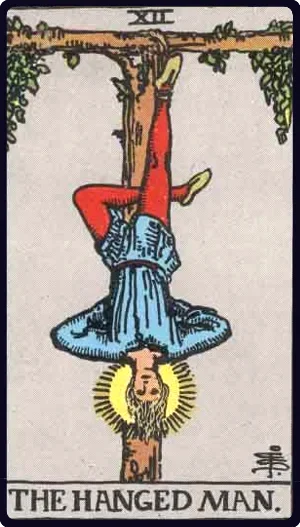
2Why can I not see it myself?

3Which of my traits ruins everything?

4Where did this pattern come from?

5What should I change in myself?
Save Your Reading
Recommended
Total 21




















Guess the Card Meaning
Tarot Reference
Want to read Tarot yourself? Learn the meaning of every card upright and reversed, in love, work and health, and read spreads on your own.







What the reading reveals
-
Where am I going wrong?
The specific thing you keep doing and consider perfectly sensible, even though the situation turns against you every single time right after it happens.
-
Why can I not see it myself?
You replay your own behaviour and find nothing wrong with it. A blind spot stays blind because your own logic guards it with reasons that sound convincing.
-
Which of my traits ruins everything?
No, the problem is not your whole personality. One trait your friends noticed years ago, one you treat as a strength, and the price you have been quietly paying for it.
-
Where did this pattern come from?
Where did this reflex come from? A family script, an old hurt, or a defence that once kept you safe and now sabotages the very thing you are reaching for.
-
What should I change in myself?
Instead of vague advice about working on yourself, a concrete adjustment. What to drop, what to add, and which small move to start with tomorrow morning.
When to do a reading
You try your hardest and nothing moves
You give everything you have. Extra hours at work, the first text after a fight, the awkward compromise nobody thanked you for. Nothing comes back. It feels like rowing hard while the boat sits still, and somebody else clearly learned a rule of the game that nobody bothered to explain to you.
Every relationship ends the same way
It starts well, then the tension creeps in, then the silence, then the ending. Different people, different cities, same finish. You have gone through every ex in your head and found nothing they share. They are not the constant here. You are, though the exact moment it starts to fall apart stays hidden.
People close to you hint the problem is you
Your best friend says it gently. Your sister says it less gently. A colleague says something close to the same thing a month later. It stings and you want to argue back. When three people who barely know each other land on one idea, brushing it off gets harder. What do they see that you do not?
You replay arguments until three in the morning
Three in the morning and you are still rewriting that conversation. Inventing the line you should have used. By sunrise you promise yourself it will never happen again, and a week later it plays out word for word. The reaction fires faster than you can think it through.
You are tired of blaming yourself for everything
The prosecutor in your head never rests. The bus was late, so you should have left earlier. He did not call, so you must have said something wrong. That kind of self-blame drains you and changes nothing, because it keeps aiming at the wrong target. Naming your real missteps helps far more.