Four of Pentacles and Three of Swords Combination in Tarot
The Four of Pentacles and Three of Swords tarot combination meaning: general sense, in love and work, every reversed variant, and advice.
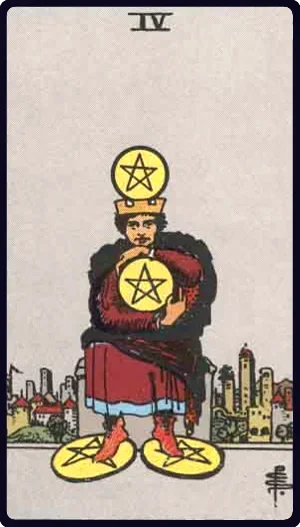
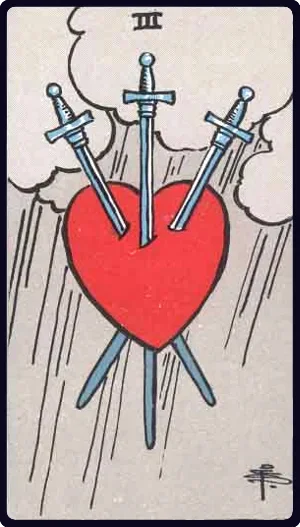
In short. The Four of Pentacles clings to a familiar foundation while The Three of Swords strikes it with pain, so together they speak of a fear of loss that makes you shut down.
This pairing reads cold and tense. The Four of Pentacles is control, thrift, and the wish to keep what you have, while the Three of Swords is heartbreak, rupture, and a harsh truth. When they meet in a reading, the matter is usually a person who has lived through pain and now clenches their fist even tighter, guarding against the next blow. The foundation is there, but behind it hide loneliness and a fear of opening up again.
General Meaning of the Combination
At the core of the pair sits a formula: the rigid control of the Four of Pentacles plus the pain of the Three of Swords equals a defense that hardens into a wall. The Four shows a person used to saving and holding on, while the Three of Swords explains where that grip came from: there was a loss, a disappointment, a blow that made them want to close off. Together the cards say the fear of new pain drives you to cling to the material and to a familiar order, so nothing else can be taken away. Sometimes the combination points to a painful financial loss that knocked the ground out and left anxiety behind. More often it describes an inner state: a person builds a fortress out of things and control, yet behind its walls it only grows colder and emptier. The cards warn that withdrawing does not heal the wound but preserves it.
In Love and Relationships
In relationships the combination speaks of guardedness after lived-through pain. The Three of Swords left a wound from an old betrayal or breakup, and the Four of Pentacles turned caution into a wall that leaves no room for closeness. The person keeps a partner at a distance, controls, grows jealous, or measures feelings by what they cost, just to avoid being hurt again. For a couple it is a cold spell, when both have withdrawn and fear being the first to open up. For singles the cards show a fear of trusting: the old grievance is still alive, and it feels safer to stay inside a fortress than to risk the heart. The pairing advises against mistaking defense for solitude.
In Work and Finances
In work and finances the pair warns of a loss endured through harsh economy and fear. There may be a financial setback, a failed investment, or a painful break in a business relationship, after which a person shrinks and stops taking risks. The Four of Pentacles makes you cling to the remnants of stability, while the Three of Swords recalls the fresh wound that makes it hard to think clearly. Sometimes the combination reveals a harsh truth about money, an exposed deceit, or a debt that weighs on you. The cards advise against making financial decisions out of fear and hurt, or thrift turns into self-torment rather than protection.
If a Card Is Reversed
The Four of Pentacles reversed, The Three of Swords upright
Control collapses at the sharpest moment of pain: the person either swings into chaotic spending to numb the wound or loses the very material support they leaned on. The defense no longer works, and the blow lands at full force. In love it is trying to buy warmth or to hold a leaving partner with money, in work it is a sudden loss of stability amid fresh disappointment and hasty mistakes.
The Four of Pentacles upright, The Three of Swords reversed
The sharp pain slowly fades, yet the person keeps the wall up out of habit, even though the threat is gone. The wound is healing while the fist stays clenched, and that blocks warmth from coming back. In relationships it is a coldness and distance that outlast the grievance itself, in work it is excessive caution and an unwillingness to invest even once the crisis is behind.
Both cards reversed
Both control and pain sink into shadow: the person goes numb, pushes the wound deep inside, and shrinks so far that they feel neither the loss nor the way out. There is not enough energy for an honest step. In love it is frozen feelings and dread of a frank talk, in work it is stagnation, stinginess, and stored-up grievances that gnaw from within until everything falls apart at once.
The Cards' Advice
Do not turn defense into a prison. The Four of Pentacles and the Three of Swords together advise you to acknowledge the wound honestly rather than hide it behind a wall of control and possessions. What you grip so tightly will not bring back what was lost or heal the pain. Open your fist at least a little, let yourself grieve, and let in those who can support you. Warmth and trust restore a foundation faster than any amount of saving.