The Hermit and Three of Swords Combination in Tarot
The Hermit and Three of Swords tarot combination meaning: general sense, in love and work, every reversed variant, and advice.
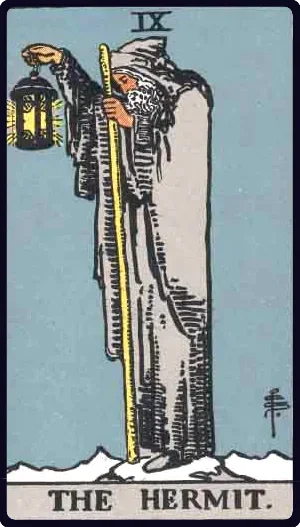
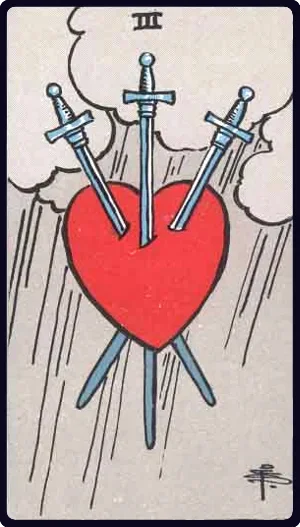
In short. The Hermit calls you into quiet, while the Three of Swords brings heartbreak, so together they speak of how a person lives through a wound alone with themselves.
This is a quiet, bitter pairing about pain processed in solitude. The Hermit carries solitude, wisdom, and the search for answers within, while the Three of Swords paints a pierced heart, disappointment, and a hard truth spoken aloud. When they meet in a reading, the matter is a person who has taken a painful blow and now steps into quiet to live the wound honestly, without witnesses, and slowly arrive at healing.
General Meaning of the Combination
At the core of the pair sits a formula: the pain of the Three of Swords plus the solitude of the Hermit equals an honest living-through of the wound alone with yourself. The Three of Swords shows a breakup, a grievance, or a bitter truth after which pretending is impossible, while the Hermit names the only healthy answer: step back from the bustle and sit in quiet. Together the cards say the pain must be lived, not buried, and that solitude here becomes not a punishment but a space for healing. The pairing often appears to those who have just met disappointment and would rather grieve unseen. This is not flight from reality but a clear look at the wound that strips away the last illusion. The Hermit recalls that the storm of the Three of Swords will pass and the clouds will part, and that an honest talk with yourself in quiet turns sharp pain into mature experience and calm clarity.
In Love and Relationships
In relationships this pairing almost always speaks of pain a person lives through alone. The Three of Swords means a breakup, betrayal, or a hurtful truth that wounds the heart, while the Hermit advises sitting in quiet to live the wound rather than seeking comfort in new bonds. For a couple it can be a painful argument after which each withdraws to make sense of what happened. For singles the pairing shows a person with an unhealed wound from the past, afraid to trust again. The cards hint that a new relationship will not heal you until the old pain is worked through. Give yourself time in quiet, but do not turn caution into a wall against closeness.
In Work and Finances
In work and finances the pair speaks of bitter disappointment that calls for a pause and quiet. The Three of Swords warns of cutting words, unfair criticism, or the collapse of hopes you leaned on, while the Hermit advises stepping back, making sense of it in solitude, and not deciding in the heat of the moment. Sometimes the blow comes from colleagues you trusted, and that stings all the more. The cards say that clarity, painful as it is, helps you see the situation without illusion and grasp what to do next. In money matters the pairing warns of a loss or a miscalculation, after which it is wiser to review everything calmly in quiet than to scramble.
If a Card Is Reversed
The Hermit reversed, Three of Swords upright
The pain arrives at full force, but the person hides from it in unhealthy isolation rather than healing solitude. Instead of living the wound, they bury it inside, refuse support, and cut the bond with loved ones. In love it is retreating into a sullen grievance after a breakup, holding the anger in and never letting themselves grieve, in work it is fleeing reality and refusing to admit the hurt, which blocks moving on.
The Hermit upright, Three of Swords reversed
The sharpest moment is behind, the swords are slowly leaving the heart, and the person consciously uses quiet to heal. The pain eases, forgiveness comes, and solitude helps them make sense of the ordeal and release the grievance. In relationships it is a calm reconciliation with the past and a readiness to open up again someday, in work it is a thoughtful review of what wounded them, after which clarity and strength return.
Both cards reversed
Both the healing and the solitude come hard: the person is stuck in an old grievance and clings to it, hiding from the world out of habit. The pain was pushed deep and never processed, and numbness gets in the way of truly letting go. In love it is an unhealed wound turned into a wall against any closeness, in work it is a lingering resentment toward colleagues and a turn inward instead of honestly naming what causes the pain.
The Cards' Advice
Give yourself room to live the pain in quiet. The Hermit and Three of Swords together advise you not to seek comfort outside at once, but to step back, sit alone with yourself, and honestly grieve. Do not bury the wound or pretend nothing happened, yet do not hold on to the grievance too long either. The storm will pass and the clouds will part: clarity, painful as it is, and quiet will turn a sharp wound into mature experience from which healing begins.