Ten of Wands and Three of Swords Combination in Tarot
The Ten of Wands and Three of Swords tarot combination meaning: general sense, in love and work, reversed variants, and advice when overload turns into pain.
In short. The Ten of Wands shows overload and a heavy burden, while The Three of Swords adds heartbreak, so together they mark draining labor that wounds the heart.
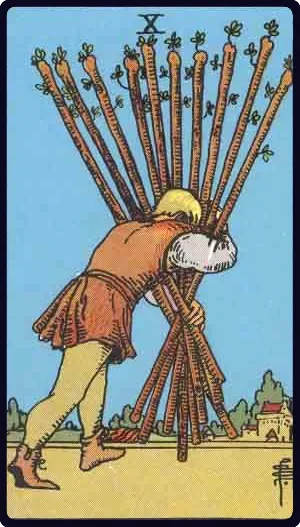
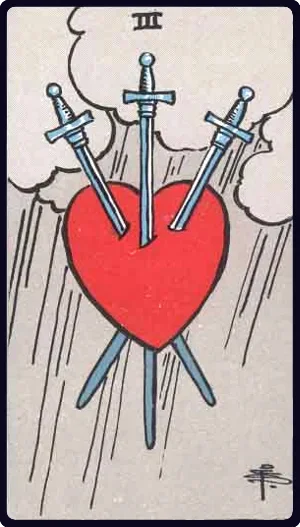
This combination is about the price a person pays for carrying too much. The Ten of Wands bends under ten staves, no help in sight, with no way to refuse. The Three of Swords pierces the heart with three blades: pain, disappointment, and bitter truth arrive. Together the cards say the overload has stopped being mere fatigue and turned into genuine suffering. Often it is the moment when a person strains past their limit for something that failed to repay them, and they realize it too late.
General Meaning of the Combination
At the core sits a simple formula: the overload of the Ten of Wands plus the pain of the Three of Swords equals a breakdown where hard labor wounds the soul. The Ten shows you carry more than you can bear, while the Three adds that the burden now causes real pain rather than just tiring you. The combination often appears when a person gives everything to a job, a relationship, or a goal and receives disappointment, betrayal, or bitter truth in return. The strength is spent, and the result hurts. This is the card of overexertion that has crossed into suffering: the back and the heart ache at once. The Three of Swords will not let you look away from the truth the Ten of Wands carried in silence for so long. The pain here is honest and cleansing, revealing what you truly strained for and whether it was worth it.
In Love and Relationships
In relationships the pair speaks of a bond where one partner strained to carry everything and received pain instead of gratitude. The Ten of Wands shoulders the chores, the care, and the decisions, growing tired of that role, while the Three of Swords adds disappointment: the effort went unappreciated and the trust was betrayed. Sometimes it is a bitter truth that surfaces after long endurance, a breakup or a betrayal against a backdrop of exhaustion. For singles the combination shows fatigue mixed with an old heart wound that blocks opening up. The card advises not to numb the pain with new burdens but to name it and allow time to heal.
In Work and Finances
In work and finances the combination describes overwork that turned into painful disappointment. You hauled several projects to the breaking point, gave everything, and ended with collapse, an unfair verdict, or a blow you did not expect. The Ten of Wands shows the draining labor, while the Three of Swords shows the pain of it not paying off. Conflict, a dismissal, or a split with a business partner is possible, especially when you invested too much and felt betrayed. In money it is a loss that wounds twice over because it came through hard work. The card advises you to stop playing the hero, acknowledge the damage, and rethink what is worth straining for.
If a Card Is Reversed
Ten of Wands reversed, Three of Swords upright
The load begins to lift, but the pain is still fresh: you set part of the burden down, yet the heart wound from overexertion stays open. Relief arrives, but with a bitter aftertaste of what the road cost you. In love it is a parting that brings relief and grief at once, in work it is leaving a draining project while resenting that the effort went unvalued.
Ten of Wands upright, Three of Swords reversed
You are still hauling the heavy load, but the sharp pain starts to recede: healing, forgiveness, or at least numbness replaces the fresh wound. Sometimes it is a lingering grievance you carry along with the burden by inertia. In relationships it is the slow mending of an old injury while the household weight remains, in work it is pushing on through hard labor once the worst disappointment is already behind you.
Both cards reversed
Both the overload and the pain are dulled at once: the person sheds part of the load and gradually heals, but the process is heavy and slow. There is a risk of getting stuck in numbness, no longer feeling the burden or the wound. In love it is detachment and emotional freeze instead of honestly living the pain, in work it is a sluggish recovery where strength returns but the old drive is gone.
The Cards' Advice
Do not numb the pain with new burdens. The Ten of Wands and Three of Swords together advise you to stop and admit that overexertion has crossed into suffering. Set down what wounds you, give yourself time to heal, and look honestly at what you strained for. The pain here is cleansing: it reveals what rested on illusion and what was truly worth your strength. Do not keep carrying what is harming you.