The Hanged Man and Three of Swords Combination in Tarot
The Hanged Man and Three of Swords tarot combination meaning: general sense, in love and work, every reversed variant, and advice.
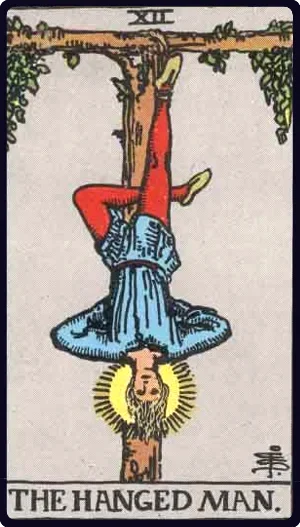
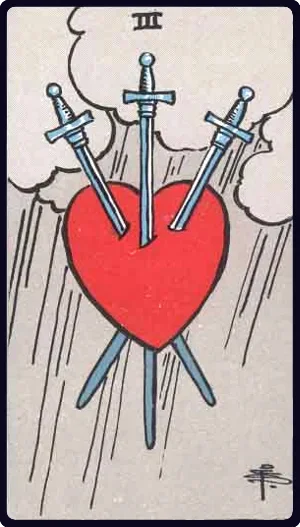
In short. The Hanged Man calls you to stop and accept, while Three of Swords brings honest pain, so together they speak of a wound you must live through as a lesson, not bury.
This is a quiet, deep pairing about living through pain. The Hanged Man shows a willing pause and a shift of perspective, while Three of Swords strikes straight at the feelings with a breakup, a harsh truth, or disappointment. When they fall side by side, something has painfully broken, and the only healthy path is to stop, acknowledge the wound, and see a lesson in it. The pair promises no quick comfort, yet it offers clarity: the storm clears the air, and a new view is born from the pain.
General Meaning of the Combination
At the core of the pair sits a simple formula: the pause of The Hanged Man plus the pain of Three of Swords equals a conscious living-through of a wound that leads to a shift of view. The Hanged Man reports that you must not push or rush now, and Three of Swords specifies that the reason for the halt is honest heartbreak or a bitter truth. Together the cards say the illusion has collapsed, and pretending all is well is pointless. This is the moment when the sacrifice of The Hanged Man meets the disappointment of the Swords, and a person gives up an old hope to see things as they are. The pairing often appears after a breakup or betrayal, when the task is not to act but to grieve and rebuild your picture of the world. The pain here is a lesson stripping away the last illusion. Lived honestly, it becomes the point from which a new angle opens.
In Love and Relationships
In relationships this pairing speaks of a painful pause after a blow. Three of Swords brings a breakup, betrayal, or cutting words, while the Hanged Man advises you not to thrash about but to stop and live through what happened. This is not a time for rash decisions: the wound is fresh, and acknowledging the pain matters more than changing anything urgently. For a couple it often means an honest parting or a forced pause, when both step back to weigh what is left. For singles the cards advise against walling yourself off after an old wound, and suggest giving yourself time before rethinking the image of whom you seek.
In Work and Finances
In work and finances the pair speaks of a disappointment better accepted than suppressed. A project may fail, colleagues may say hurtful things, or a hope for promotion may collapse. The Hanged Man advises you not to charge ahead or take revenge but to pause and see the situation soberly. Three of Swords hints that an illusion about a job or people has dissolved, and that is bitter yet honest. In money matters the combination warns of a painful loss or a frozen income that you need to mourn and reassess. The lesson is to draw clarity from the setback rather than get stuck in grievance.
If a Card Is Reversed
The Hanged Man reversed, Three of Swords upright
The pain has arrived at full force, but the person draws no lesson: instead of living it honestly, they stay stuck in the victim role and suffer loudly for show. The wound is fresh, and the pause curdles into a swamp of grievance. In love it is endless replaying of the breakup and refusal to let go, in work it is getting stuck in disappointment and hunting for someone to blame instead of rebuilding.
The Hanged Man upright, Three of Swords reversed
The sharpest moment is past, and the pause aids healing: the swords leave the heart and the person learns to breathe easily. Yet there is a risk the pain was pushed too deep and never processed under a mask of indifference. In relationships it is a slow mending of the wound, or instead a numbness hiding unfinished grievance, in work it is a gradual recovery after the blow, as long as you do not pretend nothing happened.
Both cards reversed
Both the pause and the pain are blocked: the person pretends all is fine, but the wound bleeds under the mask, and the standstill leaves no room to live it through. Forgiveness is postponed, and an old grievance quietly poisons the present. In love it is a drawn-out muteness and a fear of opening up again, in work it is suppressed disappointment and apathy that pile up until they burst into fatigue.
The Cards' Advice
Do not pretend it does not hurt and do not try to rush the wound. The Hanged Man and Three of Swords together advise you to stop and honestly live through what happened. The storm will pass and the clouds will part, and the acknowledged pain will strip away the last illusion and open a new view. Give yourself time to grieve, draw the lesson, and do not turn caution into a wall that leaves no room for closeness.