Five of Swords and Three of Swords Combination in Tarot
The Five of Swords and Three of Swords tarot combination meaning: general sense, in love and work, reversed variants, and advice.
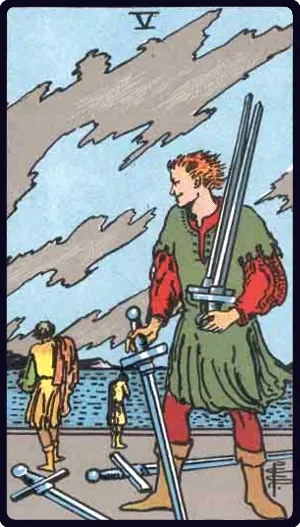
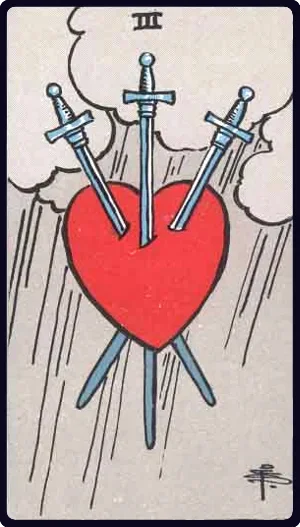
In short. The Five of Swords brings conflict and a hollow victory, while The Three of Swords shows pain and rupture, so together they mark a quarrel that leaves a bitter wound.
This combination is about the cost of a bitter fight. The Five of Swords describes a clash won by force or cunning, where no one truly walks away the winner. The Three of Swords then shows the result: a broken heart, cutting words, a severed bond. Together the cards speak of a conflict that went too far and left behind not the joy of victory but heartache and damaged relationships.
General Meaning of the Combination
At the core of the pair sits a simple formula: the brutal struggle of the Five of Swords plus the wound of the Three of Swords equals a bitter defeat even for the winner. The Five shows a dispute where each side defends its position at any cost, reaching for reproaches, pressure, and unfair tactics. The Three reveals how it ended: the bond cracked, and the swords of words drove into the heart. Together the cards say no one wins this clash; only pain and a bitter aftertaste remain. The pairing often appears after a quarrel where too much was said, or when a person got their way yet lost the closeness and trust. It is the card of a harsh truth about the cost of conflict: you can come out on top of an argument and still break both your own heart and another's. Any illusion that being right matters more than the relationship collapses here for good.
In Love and Relationships
In relationships this pairing speaks of a painful quarrel that wounds both sides. The Five of Swords brings a power struggle and barbs, the urge to be right and to wound, while the Three of Swords shows the broken heart that this war leaves behind. Words spoken in anger cut deep, and the habit of winning every argument erodes intimacy. For a couple it is a season of mutual blame after which rebuilding trust feels hard, and sometimes it moves toward a breakup. For singles the cards speak of bitter experience from the past, a grudge against a former partner that still bleeds. The advice is simple: stop competing and remember that the relationship matters more than being right.
In Work and Finances
In work and finances the pair speaks of a conflict that turned into loss. The Five of Swords brings office politics, harsh rivalry, and victory by unfair means, while the Three of Swords shows disappointment and damaged relationships as the price. There may be a clash with colleagues, a collapsed deal, or a dismissal after an open confrontation. Even if you came out on top, you are left with enemies, a tarnished reputation, and a bitter residue. In money matters the combination warns of a loss through a dispute or foul play, where one side's win becomes another's loss and grievance. The point is to weigh soberly whether the fight is worth the price it will cost.
If a Card Is Reversed
The Five of Swords reversed, The Three of Swords upright
The conflict is winding down and there is a readiness to reconcile, but the wound is still fresh and aching. The person wants to make amends or accept an apology, yet the pain of what was said has not gone anywhere. Sometimes the grievance is buried and smolders behind a calm mask. In love it is an attempt to reconcile while the heart still bleeds, in work it is making peace with colleagues with a bitter residue intact.
The Five of Swords upright, The Three of Swords reversed
The acute pain is already fading, but the fight goes on: the person clings to being right when it is time to let go. The wound slowly closes, yet the quarrel keeps smoldering and will not let it heal for good. In love it is trying to reconcile with the past against ongoing reproaches, in work it is a drawn-out rivalry that blocks recovery after the blow.
Both cards reversed
Both the conflict and the pain are driven inward: the quarrel was never cleared up, the wound never lived through honestly, and everything freezes behind a mask of indifference. Tension builds, the grievance hardens into cold distance, and genuine reconciliation never comes. In love it is a frozen relationship with no frank talk, in work it is quiet hostility and stored-up complaints that will eventually burst out.
The Cards' Advice
Stop fighting to be right. The Five of Swords and the Three of Swords together remind you that this dispute has no winners, only the wounded. Before pressing your point at any cost, ask yourself what you stand to lose even if you win. Lay down the sword, acknowledge the pain on both sides, and turn to rebuilding peace instead of trading new blows. The relationship and the trust are worth more than a won argument.