Five of Swords and The Hierophant Combination in Tarot
The Five of Swords and The Hierophant tarot combination meaning: general sense, in love and work, every reversed variant, and advice.
In short. Five of Swords brings a victory won at an unfair cost, while The Hierophant holds the moral line, so together they mark a conflict where reputation and trust are at stake.
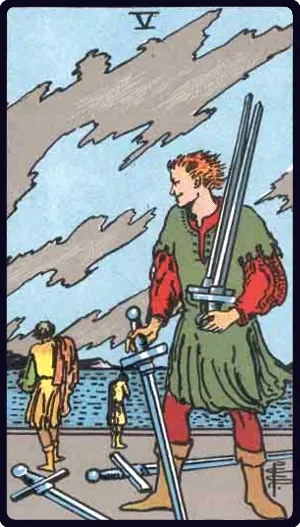
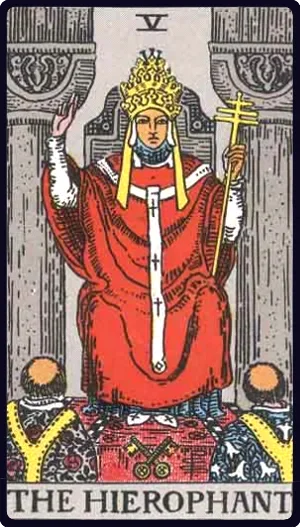
This pairing is about principle colliding with pride. The Five of Swords describes a hollow victory: the person came out on top yet stands alone, with no one to share the win. The Hierophant adds the dimension of ethics and public judgment, where it matters not only who is right but at what cost the rightness was won. Together the cards warn that an argument won may cost a good name, and broken norms eventually surface into the light.
General Meaning of the Combination
At the core of the pair sits a simple formula: the win-at-all-costs of the Five of Swords plus the morality of The Hierophant equals a conflict in which reputation suffers. The Five shows a person ready to push through and take what is theirs even as rules and decency fall by the wayside. The Hierophant names the price: public opinion, authority, the trust of a mentor or a group. Together the cards describe a situation where a formal victory turns into a moral defeat. The pairing often falls during disputes over ethics, broken agreements, or exposed hypocrisy. Sometimes it is a person who hides behind lofty principles while playing dirty, and now it comes out. The lesson is plain: you can win the fight, but if you lose face doing it, the cost runs too high. Real authority rests on honesty, not force.
In Love and Relationships
In relationships this combination warns of a quarrel where one person insists on being right at the cost of trust. The Five of Swords brings sharp words, an urge to win the argument and humiliate the partner. The Hierophant adds the theme of norms and obligations: perhaps promises or the couple's unspoken rules have been broken. Victory in such a fight is empty, you proved your point but the bond cracked. For a couple it is a moment to recall shared values rather than who out-argued whom. For singles the cards warn against relationships built on manipulation and moral pressure. The advice is simple: do not confuse being right with a right to humiliate, or the win costs too much.
In Work and Finances
In work and finances the pair speaks of a conflict that damages reputation and ethics. The Five of Swords promises harsh competition, foul play, or a victory after which the team turns away. The Hierophant points to norms and authority: perhaps you broke company rules, or you face someone who hides behind them to apply pressure. Winning such a struggle may cost the trust of management and colleagues. In money matters the combination warns of a deal that skirts decency or a dispute where a formal win tarnishes your name. The key is to weigh whether a short-term gain is worth a lost reputation, since rebuilding it is far harder.
If a Card Is Reversed
Five of Swords reversed, The Hierophant upright
The conflict winds down, and a chance for reconciliation appears through a return to shared norms and an honest talk. The person admits the victory was hollow and is ready to rebuild trust within the bounds of decency. The point is not to nurse a grudge but to seal the peace openly and by the rules. In love it is an apology and the return of respect, in work it is restoring reputation through dignified conduct and honored agreements.
Five of Swords upright, The Hierophant reversed
The conflict is in full swing, and the moral footing proves false: the one who preaches principle plays dirty, and hypocrisy becomes a weapon. The dispute runs under cover of lofty words that mask cold calculation. Here the key is to resist the polished arguments and see the true motives. In relationships it is manipulation through guilt and duty, in work it is pressure dressed as company ethics and scheming behind a facade of rules.
Both cards reversed
Both the aggression and the authority are distorted: smoldering resentment, buried discontent, and complete distrust of any norm. There is no open clash, but no honest peace either, everything freezes in cold tension. There is not enough energy for a frank talk. In love it is silent hostility and stored-up grievances no one dares voice, in work it is backroom struggle and sabotage instead of fair competition.
The Cards' Advice
Ask yourself whether the win is worth the trust you would lose. The Five of Swords and The Hierophant together advise you to argue honestly and remember the price of reputation: a fight won by foul means turns into a moral defeat. If the truth is on your side, defend it with dignity, without humiliating others or breaking agreements. Real authority rests on honesty, not on the ability to force your way through at any cost.