Eight of Swords and Three of Swords Combination in Tarot
The Eight of Swords and Three of Swords tarot combination meaning: general sense, in love and work, reversed variants, and advice.
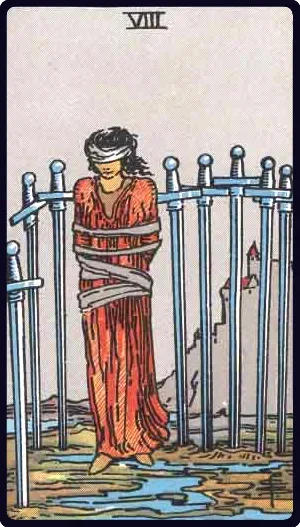
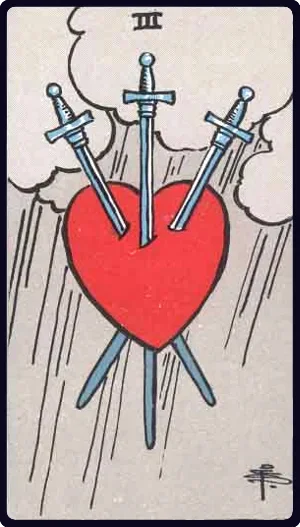
In short. The Eight of Swords shows the feeling of being trapped, while The Three of Swords brings heartache, so together they mark a state where pain convinces you there is no way out.
This combination is about pain that holds you captive. The Three of Swords deals a wound: a breakup, a grievance, a harsh truth. The Eight of Swords then shows how that pain paints walls around the person and convinces them there is nowhere to run. Together the cards speak of imagined helplessness, where suffering paralyzes and every path seems to lead to a dead end. In reality a way out exists; fear and hurt simply keep it out of sight.
General Meaning of the Combination
At the core of the pair sits a simple formula: the pain of the Three of Swords plus the trap of the Eight of Swords equals a sense of helplessness born of suffering. The Three shows a fresh wound and a bitter truth that had to be faced. The Eight reveals how the person reacts: instead of seeking a way out, they freeze, convinced there is no choice. Together the cards speak of mental paralysis, where pain raises a fence of swords in a place that actually holds a clear gap. The pairing often appears for someone stuck after a blow: they stay in a relationship that wounds them, endure a situation they should leave, because fear and hurt feel insurmountable. Yet the swords hang around them rather than closing the circle. The cards remind you that the cage is largely in the mind, and the key to it has been in your hand all along.
In Love and Relationships
In relationships this pairing speaks of pain that keeps you trapped. The Three of Swords brings a grievance, infidelity, or a bitter truth, while the Eight of Swords shows how a person stays in a wounding relationship, unable to find the strength to leave. They are held by fear of being alone, by habit, or by the belief that they could not cope alone. Sometimes a partner uses that insecurity to box them in. For singles the combination speaks of walls raised after past pain: the wound convinced them that love is dangerous, so they shut down in advance. The cards remind you that you built those walls yourself, and lifting them is within your power.
In Work and Finances
In work and finances the pair speaks of disappointment that paralyzes. The Three of Swords brings conflict, failure, or a bitter truth about colleagues, while the Eight of Swords shows how a person gets stuck in a dead end, convinced there is no way out. You could switch jobs but keep insisting nothing better exists, staying in a toxic environment out of fear. In reality the doors are open; pain and insecurity simply keep you from stepping through. In money matters the combination speaks of a loss after which a person feels cornered and afraid to act. The cards advise looking around with clear eyes: is this a real barrier or fear painting walls where there are none.
If a Card Is Reversed
The Eight of Swords reversed, The Three of Swords upright
The wound is fresh and aching, but the person begins to see a way out of a situation that felt hopeless. The blindfold slips, and they realize they are freer than they thought, even amid the pain. Sometimes, the opposite: panic grows and they sink deeper into fear. In love it is a first step away from a wounding relationship, in work it is the resolve to leave a dead end despite a recent defeat.
The Eight of Swords upright, The Three of Swords reversed
The acute pain is already fading, but the sense of being trapped remains: the wound closes while the person still insists there is no choice. Fear of new pain holds them in place more tightly than the grievance itself. In love it is a healed heart that is still afraid to open up, in work it is apathy and reluctance to move even after the blow has been weathered.
Both cards reversed
Both the pain and the trap are driven inward: the wound was never lived through honestly, and the fear is hidden behind a calm mask. The person pretends to be free and fine, while an old grievance and a quiet paralysis of will smolder within. In love it is a frozen relationship they cannot leave or deepen, in work it is stagnation and stored-up unsolved problems that keep them in place.
The Cards' Advice
Lift the imaginary blindfold. The Eight of Swords and the Three of Swords together remind you that pain exaggerates how trapped you are, yet the cage is largely in the mind. Acknowledge the wound honestly, then ask yourself soberly what truly holds you in place: a real barrier or a familiar fear. Most of the time a single step is enough to reveal the gap between the swords. The key to the cage has been in your hand all along; you need only dare to use it.