Eight of Swords and The Hierophant Combination in Tarot
The Eight of Swords and The Hierophant tarot combination meaning: general sense, in love and work, every reversed variant, and advice.
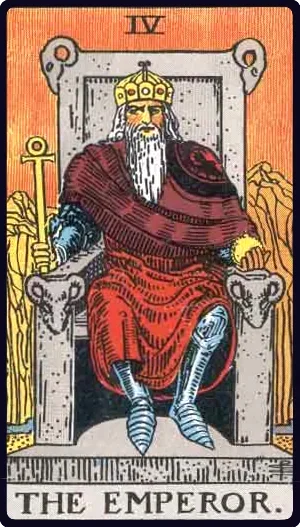
In short. The Eight of Swords builds walls out of fear, while The Hierophant adds rigid rules to them, so together they mark feeling trapped inside an imposed system of norms.
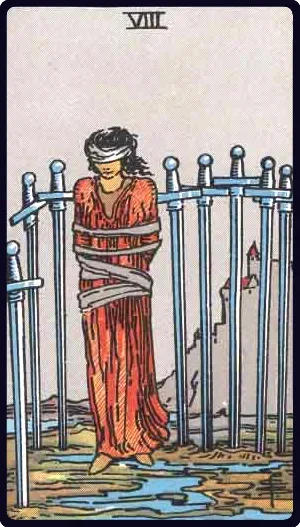
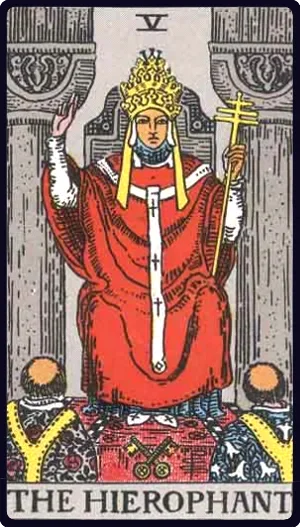
This pairing is about an inner captivity held not by real barriers but by dogma and inherited beliefs. The Eight of Swords shows a blindfolded person convinced there is no way out, while The Hierophant names the source of those limits: a tradition, an authority, a code of rules the person obeys out of habit. When the cards meet in a reading, the matter is how absorbed norms turn into a cage, and a person endures what should long be reconsidered, simply because "that is how it is done."
General Meaning of the Combination
At the core of the pair sits a simple formula: the false helplessness of the Eight of Swords plus the system of The Hierophant equals a trap made of rules. The Eight shows the barrier lives in the mind and the blindfold can come off at any moment, while The Hierophant specifies where those bonds came from: dogma, imposed beliefs, the pressure of authority. Together the cards speak of a person held not by a chain but by a code of borrowed "shoulds," absorbed in childhood or accepted under social pressure. The pairing often appears when the norms of a family, a religion, or an organization have grown too tight, yet fear of judgment blocks a step to the side. This is a card of silent submission to a system that ought to be challenged. The Hierophant explains the cage, and the Eight reminds you the ring of swords is not closed.
In Love and Relationships
In relationships this pairing speaks of feeling trapped inside imposed limits. The Eight of Swords shows a person staying in a bond they should leave, while The Hierophant points to rules, tradition, or family pressure that hold tighter than real attachment. Often a couple exists for the sake of form: a marriage on paper, the roles of "husband" and "wife," the expectations of others, while inside there is neither warmth nor a free voice. One partner gently boxes the other in, invoking "the way it is done." For singles the pairing speaks of walls made of borrowed beliefs: the conviction that love must follow a strict script keeps them from truly letting anyone in.
In Work and Finances
In work the pair speaks of being stuck in a rigid structure. The Eight of Swords shows a person enduring a disliked post without daring to change it, while The Hierophant specifies that the cage is the system itself: bureaucracy, procedure, the pressure of management that strips the right to an opinion. The pairing often appears when an organization's rules have grown too tight and a person submits in silence though everything inside protests. It seems there is nothing better out there, but that is the blindfold. In money the pairing speaks of a fear of stepping outside a familiar model even when it has stopped working: a person clings to stability out of anxiety rather than calculation.
If a Card Is Reversed
The Eight of Swords reversed, The Hierophant upright
The blindfold slips, the person sees a way out and is ready to act, but the system and authority still press to follow the rules. Liberation is possible, yet it means overcoming the resistance of tradition and the judgment of others. The Hierophant slows the leap, invoking "the proper way." In love it is the courage to leave formal limits against family expectations, in work it is the resolve to defend a stance where managers are used to silent submission.
The Eight of Swords upright, The Hierophant reversed
Fear still holds the person captive, and the system itself stands exposed: the rules turned out hollow, the authority is a hypocrite, the tradition degenerated into dogma. The person sees the falseness yet cannot leave, because the familiar cage feels safer. In relationships it is enduring beside someone who hides behind principles, in work it is submission to bureaucracy that lost its meaning, out of fear alone.
Both cards reversed
Both the trap and the footing are blocked: the person sinks deeper into fear yet clings to an empty system of rules they no longer believe. There is no courage to take off the blindfold. In love it is isolation in a formal union where one exploits the other's dependence behind norms, in work it is paralysis in a rigid structure, where the person endures pressure and dogma seeing no exit, though the ring of swords is not closed.
The Cards' Advice
Take off the blindfold and ask whose rules these are. The Eight of Swords and The Hierophant together advise telling a sensible norm from a dogma that merely keeps you in fear. Look around soberly: the barrier usually lives in the mind, and the ring of swords is not closed. You have the right to reconsider borrowed "shoulds" absorbed by habit and to step outside tight limits. The key to the cage has long been in your hands; you only need to dare the first step.