The Hierophant and Ten of Swords Combination in Tarot
The Hierophant and Ten of Swords tarot combination meaning: general sense, in love and work, every reversed variant, and advice.
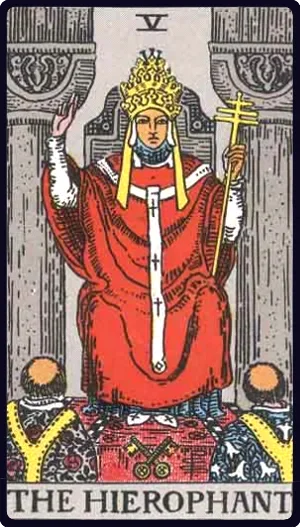
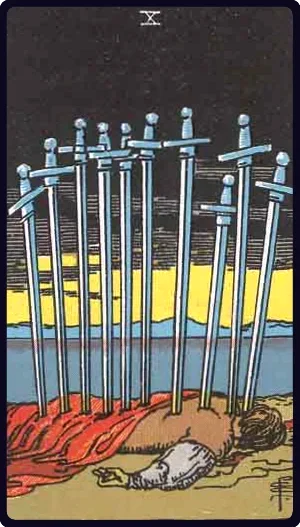
In short. The Hierophant gives faith and a system, while the Ten of Swords tears it down to the ground, so together they mark a collapse of belief and a painful crisis of trust.
This is one of the heaviest pairings in the deck. The Hierophant governs tradition, faith, and reliance on proven authority, while the Ten of Swords stands for collapse, a painful ending, and a stab in the back. When they meet in a reading, the matter is almost always the breakdown of a belief system: what a person trusted falls apart, and the mentor or institution they leaned on lets them down or is exposed.
General Meaning of the Combination
At the core of the pair sits a simple formula: the faith of The Hierophant plus the collapse of the Ten of Swords equals the breakdown of a belief system. The Hierophant shows reliance on tradition, a teacher, or an institution, while the Ten of Swords reports that this support has fallen sharply and painfully, often through betrayal by someone trusted. Together the cards speak of a crisis of faith: rules that once seemed unshakable no longer work, an authority has lost credibility, and a person feels deceived and betrayed. The pairing often appears when a mentor's hypocrisy is exposed or when a familiar value system reaches a dead end and falls apart. This is a painful ending, yet the Ten of Swords reminds you that the bottom has been reached and it will get no worse. The Hierophant points out that faith and trust were the vulnerable spot, and now they must be rebuilt on an honest basis.
In Love and Relationships
In relationships this pairing foretells a painful ending tied to broken trust. The Hierophant speaks of a union that rested on commitment, tradition, and shared principles, while the Ten of Swords topples it with a sharp breakup or exposure. Often an affair or long-standing hypocrisy surfaces: a partner preached one set of values while living by another. For a couple it is a stab in the back, after which the bond is almost impossible to repair, and a formal marriage finally loses its meaning. For singles the cards show someone disillusioned with the very idea of serious relationships, closed off after a betrayal. The card advises accepting the ending and not clinging to broken commitments.
In Work and Finances
In work and finances the pair speaks of a collapse tied to a system or authority that failed. The Hierophant points to an established structure, a mentor, or an institution, while the Ten of Swords points to failure, dismissal, or a blow from those you counted on. Often a venture that rested on someone else's rules and reputation falls apart, or a person grows disillusioned with the organization they served. In money matters the combination warns of losses because someone broke an agreement or failed to deliver promised support. The old strategy has run its course, and fighting for what has collapsed is pointless. The point is to accept the end of the stage and prepare to start again.
If a Card Is Reversed
The Hierophant reversed, the Ten of Swords upright
The collapse arrives at full force, and on top of it the authority's lie comes out: the mentor or system proved hypocritical, while the person clung to the last to what had long rotted. Dogmatism and self-deception made the blow even heavier. In love it is the painful exposure of a partner who preached loyalty yet betrayed, in work it is collapse under someone who abused trust and hid behind the rules.
The Hierophant upright, the Ten of Swords reversed
The worst is already behind, and faith begins to recover little by little: the person works through a crisis of belief and slowly finds a new footing. Tradition and mentorship help them put themselves back together after the blow. In relationships it is the healing of trust after a hard breakup, a readiness to believe in someone again, in work it is recovery after failure through a return to proven rules and the help of an experienced guide.
Both cards reversed
Both faith and collapse are stuck: the person is disillusioned with the system yet clings to past pain and the victim's role. Old beliefs have fallen and new ones are not there yet, so everything hangs in a void. In love it is staying stuck in resentment toward the one who betrayed, which blocks trusting again, in work it is a drawn-out recovery, when fear of a repeat keeps a person from returning to the work.
The Cards' Advice
Do not cling to a system that failed you. The Hierophant and the Ten of Swords together advise you to accept the collapse of belief as given and not to blame yourself for having trusted: the bottom is already reached and it will get no worse. Let go of broken trust, separate honest experience from someone else's hypocrisy, and gradually build a new footing on what has stood the test. That way the crisis of faith becomes the start of a more mature path.