The Hierophant and Page of Swords Combination in Tarot
The Hierophant and Page of Swords tarot combination meaning: general sense, in love and work, every reversed variant, and advice.
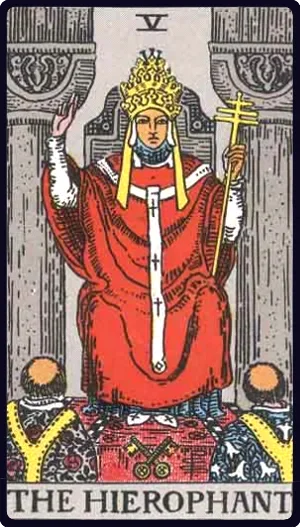
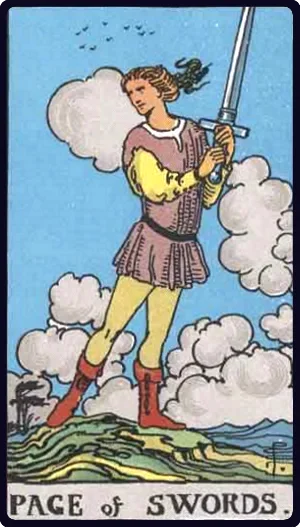
In short. The Hierophant offers proven knowledge and authority, while the Page of Swords asks the awkward questions, so together they mark a student testing tradition for strength.
This pairing is about an established system meeting a probing mind. The Hierophant stands for the teacher, the rules, and the heritage handed down through generations, while the Page of Swords is curiosity, critical thinking, and the urge to get to the bottom of things. When they meet in a reading, the matter is usually learning in which the student does not take everything on faith but asks questions instead. It is a useful tension: knowledge stays alive when it is tested.
General Meaning of the Combination
At the core of the pair sits a simple formula: the authority of the Hierophant plus the curiosity of the Page of Swords equals critical learning. The Hierophant offers a ready answer proven over time, and the Page immediately asks why exactly so, refusing to settle until it makes sense. Together the cards describe a person who enters a system without dissolving into it, keeping a clear head. The pairing often appears at the start of study, an internship, or a new venture where it matters both to absorb experience and to keep your own mind switched on. This is not blind obedience nor rebellion for its own sake but healthy apprenticeship. The Page brings questions and fresh news, the Hierophant gives them a frame and meaning. The one risk: questions can slide into nitpicking, and a mentor gone rigid may take them for insolence.
In Love and Relationships
In relationships the pairing speaks of a couple who talk a great deal and still value reliability. The Hierophant pulls toward serious intentions, shared values, and a lasting union, while the Page of Swords brings lively conversation and a wish to clear the air. This is a good moment to ask the questions that have piled up directly, rather than sitting on your assumptions. For those building something serious, that plainness only strengthens trust. For singles the cards promise meeting someone you can both talk with and picture a future with. The combination advises not to confuse an honest question with a jab: ask to understand, not to catch the other out.
In Work and Finances
In work and finances the pair points to study, an internship, or a new task where both senior experience and careful analysis matter. The Hierophant advises working by the rules and leaning on a mentor, while the Page of Swords suggests studying the details, checking the contract, and gathering facts before you sign. It is a good time to learn a profession built on words and information under the guidance of a master. In money matters the combination favors anyone ready to read the terms and not trust promises made by mouth. The point is to join respect for proven order with your own sharp eye.
If a Card Is Reversed
The Hierophant reversed, Page of Swords upright
Authority loses its credibility, and the student's sharp mind strikes the crack precisely. The Page sees that the mentor or the system is hollow and held together by formality, and asks questions no one can answer. This is healthy exposure, but the risk is that criticism hardens into blanket distrust of every rule at once. In love it is uncovering an uncomfortable truth about a partner who only played a role, in work it is the unmasking of empty rules and a boss hiding behind status.
The Hierophant upright, Page of Swords reversed
The system is sound, but the student shrinks: curiosity curdles into gossip, hasty conclusions, and cutting remarks. Instead of honest questions come rumors and argument for its own sake, while the mentor's advice flies past unheard. The person hears but does not listen. In relationships it is nitpicking and groundless jealousy in place of a calm talk, in work it is intrigue, shallowness, and decisions made in haste that bypass sensible order.
Both cards reversed
Both tradition and the probing mind are distorted: a dogmatic mentor leans on authority, and the student answers not with questions but with sarcasm and rumor. Dialogue collapses, leaving only mutual irritation. Learning is impossible in such an atmosphere. In love it is a cold squabble where both catch each other on their words instead of being honest, in work it is bickering, backstabbing, and frozen bureaucracy where no one hears anyone.
The Cards' Advice
Learn, but do not switch your mind off. The Hierophant and the Page of Swords together advise you to enter a system as a thoughtful student: absorb proven experience, but ask questions where you do not understand. Check the facts, read the fine print, and clarify with your mentor whatever raises doubt. Just keep the questions honest rather than cutting, and the knowledge will truly become your own.