Five of Wands and Ten of Wands Combination in Tarot
The Five of Wands and Ten of Wands tarot combination meaning: general sense, in love and work, every reversed variant, and advice.
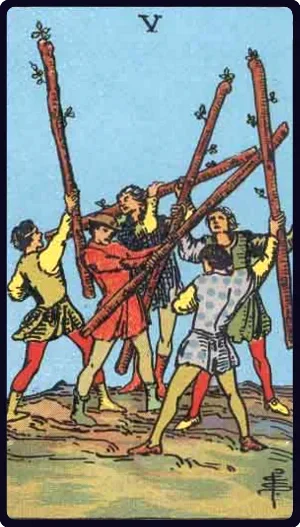
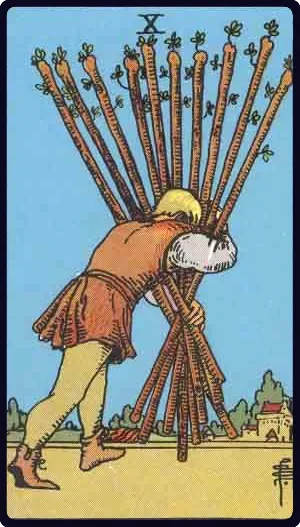
In short. The Five of Wands brings dispute and rivalry, while the Ten of Wands piles on a crushing load, so together they speak of overload from too many clashes dragging you down.
This is a pairing about a struggle that has turned into an unbearable burden. The Five of Wands is a clash of personalities, competition, and active dispute where each person pulls a different way. The Ten of Wands is burden, overwork, and responsibility a person has shouldered alone. When they meet in a reading, the matter is almost always that endless conflicts have piled up into genuine overload, with strength running out right near the goal.
General Meaning of the Combination
At the core of the pair sits a simple formula: the rivalry of the Five plus the load of the Ten equals an exhausting overload from skirmishes. The Five of Wands shows that disputes run hot around you and everyone defends their own ground, while the Ten warns that you are hauling all of it alone and bending under the weight. Together the cards describe someone who has taken on too much at once: other people's conflicts, team battles, the constant need to prove something. The goal is still reachable, only a few steps away, but those steps drain a disproportionate amount of strength. The pairing often appears for someone who mistakes busyness for productivity and treats every dispute as a personal duty. This is not productive competition but the way fighting for its own sake hardens into a load. The pair's real question is which of these battles are genuinely yours and which can finally come off your shoulders.
In Love and Relationships
In relationships this pairing describes a couple where constant disputes have settled as a load on one person. The Five of Wands brings frequent quarrels and clashing opinions, while the Ten adds the sense that one partner carries the household, the decisions, and the emotional labor, and keeps fending off conflicts on top of it. The bond runs on obligation and struggle more than joy, and fatigue slowly curdles into resentment and distance. For singles the pair shows someone so buried in tasks and skirmishes that no energy is left for a personal life. The cards advise you to redistribute the weight honestly and to drop the arguments that solve nothing and only make the bond heavier.
In Work and Finances
In work and finances the pair speaks of overload in a competitive setting. The Five of Wands shows a team where interests collide and every idea has to be defended, while the Ten stresses that you juggle several projects, absorb other people's tasks, and stay late. The result is close, but the cost is too high, and burnout looms ahead. The cards often appear for a workaholic who gets stuck in office conflicts instead of delegating. With money the combination warns that income comes through a heavy load and strain, and new obligations would only add weight now. The point is not to say yes to everything or wade into disputes that steal your strength.
If a Card Is Reversed
The Five of Wands reversed, the Ten of Wands upright
Healthy competition curdles into intrigue and squabbles while the person keeps hauling an unbearable load. Other people's games pile onto already overloaded shoulders, and strength drains into pointless skirmishes. This is a direct road to depletion. In love it is jealous quarrels amid weariness from the household load, in work it is empty fuss and intrigue that only add to an overloaded list of tasks.
The Five of Wands upright, the Ten of Wands reversed
Open rivalry is in full swing, but the person either finally sets the load down or quits the task right before the goal. At best, relief arrives: you step out of other people's disputes and shed the excess. At worst, weariness from the fight pushes you to drop everything and run without finishing. In relationships it is either an honest sharing of the weight or an escape from the bond amid quarrels, in work it is either delegation or abandoning the project at the very finish.
Both cards reversed
Both the fight and the load go into the red: the person gets stuck in unfair skirmishes while dumping responsibility carelessly or dragging the unneeded out of inertia. There is no energy left, and conflicts run on principle, so everything turns into chaotic fuss with no result. In love it is scenes over nothing and a flight from commitments at once, in work it is intrigue, burnout, and tasks shoved onto others.
The Cards' Advice
Set down what is not yours to carry. The Five and Ten of Wands together advise you to step out of other people's disputes and stop hauling every conflict as a personal duty. You are already near the goal, so share the load, ask for help, and do not mistake busyness for results. Not every argument is worth your last reserves. Push through this stage, then honestly decide which battles are truly needed and which keep you in overload for no benefit at all.