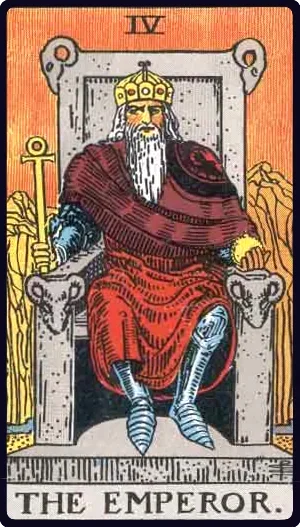
Five of Wands and The Hierophant Combination in Tarot
The Five of Wands and The Hierophant tarot combination meaning: general sense, in love and work, every reversed variant, and advice.
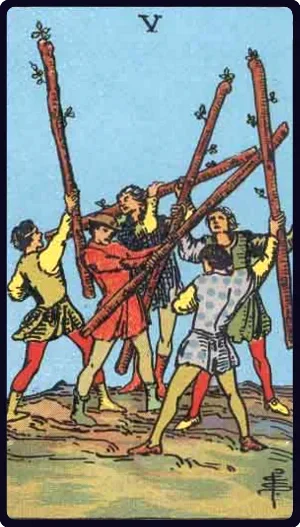
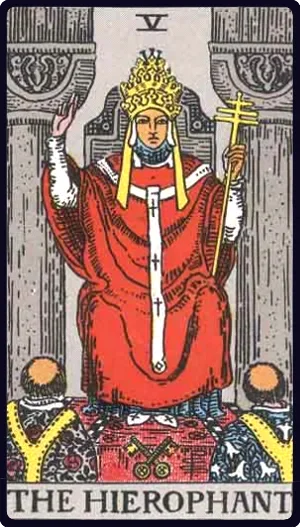
In short. Five of Wands brings a noisy dispute and rivalry, while The Hierophant sets the theme of rules and beliefs, so together they mark a clash of principles.
This pairing is about an argument where different systems of belief collide. The Five of Wands describes a scuffle of ambitions, where everyone pulls their own way and no one will yield. The Hierophant gives the dispute an ideological dimension, since it is not just about a resource but about values, traditions, and rules. Together the cards depict a debate over whose convictions are truer, and they warn that without a common footing the noise stays noise instead of turning into a shared cause.
General Meaning of the Combination
At the core of the pair sits a simple formula: the rivalry of the Five of Wands plus the convictions of The Hierophant equals a dispute over principles. The Five shows a lively clash of characters, when several people defend their own ground at once. The Hierophant explains what sparked the quarrel: differing views on morality, tradition, the right order of things. Together the cards speak of a heated debate where it is worldviews that collide, not interests. The pairing often falls in teams, families, or communities arguing about how to live and by what rules. This is not necessarily hostility, since such a dispute can be useful and help forge a common stance. But if no one will hear the other, the scuffle turns pointless. The Hierophant suggests the way out: an arbiter, a shared code, or an authority to reconcile the sides.
In Love and Relationships
In relationships this combination speaks of a couple arguing over differing values and ideas of what is right. The Five of Wands brings frequent clashes and rivalry, while The Hierophant points to their root: the partners see family, traditions, obligations, sometimes faith or raising children, very differently. This is not passion or jealousy but a collision of principles. For a couple the point is not to defeat each other but to find common ground and agree on rules that suit both. For singles the cards hint at a dispute over what a relationship should even be. The advice is simple: seek a shared footing rather than being right, or petty clashes over principle will keep repeating.
In Work and Finances
In work and finances the pair speaks of competition in which different approaches and standards collide. The Five of Wands promises a fight for position, a team dispute, a clash of ambitions. The Hierophant adds the theme of regulations and professional norms: people argue over methods, over how the work should properly be done, whose standards rank higher. It can be a debate with colleagues, a conflict with management over rules, or a rivalry of schools and approaches. In money matters the combination warns of disputes over terms, agreements, and what counts as fair. The way out is to reduce the differing positions to a common code and channel the rivalry into honest contest rather than fruitless bickering.
If a Card Is Reversed
Five of Wands reversed, The Hierophant upright
The dispute quiets down, and the sides are ready to return to shared rules and common sense. An authority or a code appears that reconciles the parties and restores order. The point is not to bury the conflict but to talk through the disagreements honestly and lock in a common stance. In love it is reconciliation through agreement on values, in work it is order restored in the team and the adoption of unified standards after long arguments.
Five of Wands upright, The Hierophant reversed
The dispute is in full swing, and there is no footing in sound rules: authority has lost credibility, traditions feel hollow, and no one accepts a common arbiter. The conflict runs in circles because each defends their own and denies the other's norms. Here the key is not to make the argument an end in itself and to look for an honest shared reference point. In relationships it is endless clashes with no rules, in work it is chaos because the regulations do not work and management's authority is undermined.
Both cards reversed
Both the struggle and the order are distorted: smoldering disagreements, petty scheming, and distrust of any rules. There is no open dispute, but no agreement either, everything bogs down in irritation. In love it is nitpicking and stored-up discontent that never becomes a conversation, in work it is backroom clashes and sabotage instead of an open discussion of principles.
The Cards' Advice
Do not turn a dispute over principles into a war of attrition. The Five of Wands and The Hierophant together advise you to find a shared code or an authority that reconciles the sides. Rivalry is useful when it stays honest and leads to a common stance, not to endless bickering. Listen to the other's arguments, seek a footing that suits everyone rather than a win, and the clash of views becomes a step toward agreement.