Eight of Swords and Ten of Swords Combination in Tarot
The Eight of Swords and Ten of Swords tarot combination meaning: general sense, in love and work, every reversed variant, and advice.
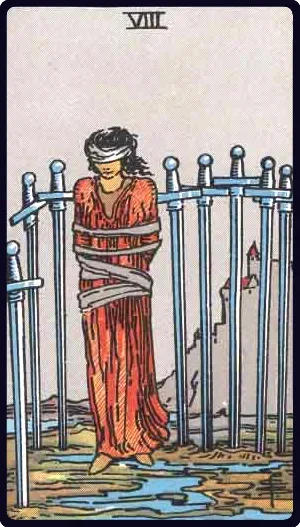
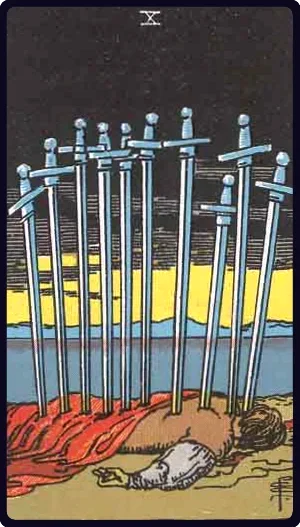
In short. The Eight of Swords holds you in a trap of imagined helplessness, while the Ten of Swords brings a painful ending that finally sets you free.
This is a heavy yet ultimately cleansing pair within the suit of Swords. The Eight of Swords is a sense of being trapped, bound, and powerless, more often invented by the person than real. The Ten of Swords is rock bottom, a painful end, the point below which there is no further to fall. When they appear together, a long-running trap finally breaks: what held you captive reaches its reckoning. It hurts, but beyond the darkest part of the cards a dawn of a new beginning is always in sight.
General Meaning of the Combination
At the core of the pair sits a simple formula: the trap of the Eight of Swords plus the collapse of the Ten of Swords gives the ending of what has long outlived itself. The Eight shows a person stuck in an imagined dead end and afraid to move, while the Ten reports that the situation has reached its limit and the old order falls for good. Together they say: the trap you felt yourself in opens through a painful but necessary finale. This is not a disaster out of nowhere but the logical end of something long held up by fear and inertia. The Ten of Swords reminds you that recovery begins after the hardest blow, and the Eight stops binding the moment the situation that tied you down is over. The worst is behind you, and freedom opens ahead, paid for by what you have lived through.
In Love and Relationships
In relationships the pair speaks of a painful yet freeing ending. A bond where the person long felt trapped reaches its end: illusions collapse, and there is no strength left to pretend. There may be a breakup, infidelity, or betrayal that puts a firm full stop to what was already held together by the fear of leaving. It is hard, but the Eight suggests the captivity was largely in the head, while the Ten promises relief after the blow. For a couple the combination advises not clinging to what is dying. For singles the cards speak of parting with the past, without which new feeling does not arrive.
In Work and Finances
In work and finances the combination describes the collapse of an outworn situation that long felt like a dead end. There may be a layoff, a failed project, or the closing of a venture in which the person felt bound and powerless. The Eight of Swords paints a sense of no way out, while the Ten puts a full stop to it: the scheme has fallen for good. It is painful, especially in money matters where income may be lost, but the very ending frees you from what was dragging you down. The pair advises accepting the finale and not reviving what failed: the worst has happened, and on the cleared ground you can build anew, without the old chains.
If a Card Is Reversed
The Eight of Swords reversed, the Ten of Swords upright
The trap opens exactly as the old order falls: the person is freed from imagined helplessness but pays for it with a painful reckoning. Freedom comes through an ending, and the point is not to cling to what has fallen but to accept it as a stage now passed. In love it is leaving a wearying bond through a hard but cleansing breakup, in work it is release from a dead-end situation that happens together with its collapse.
The Eight of Swords upright, the Ten of Swords reversed
The worst is already behind, recovery begins, but the person still holds themselves captive to old fears. The reversed Ten is healing and a rise from the bottom, while the Eight reminds you the inner chains are due to be lifted. In love it is the slow healing of a wound with a lingering fear of trusting again, in work it is recovery after a failure hampered by a habit of seeing oneself cornered.
Both cards reversed
Both the trap and the collapse lose their edge: the heavy stage draws to a close and the constraint eases, opening the path to recovery. This is a slow but sure return to life after a long dead end. In love it is healing and a readiness to let the past go, in work it is the gradual return of strength and clarity once the most painful part is passed.
The Cards' Advice
Do not revive what is already over. The Eight and Ten of Swords advise you to accept the painful finale as a release: the trap you felt yourself in opens through this very ending. Do not cling to what has fallen, and do not blame yourself for the reckoning. The worst is behind you, and now your strength belongs not to the past but to calm recovery and the first step toward something new.