The Devil and Three of Cups Combination in Tarot
The Devil and Three of Cups tarot combination meaning: general sense, in love and work, every reversed variant, and advice.
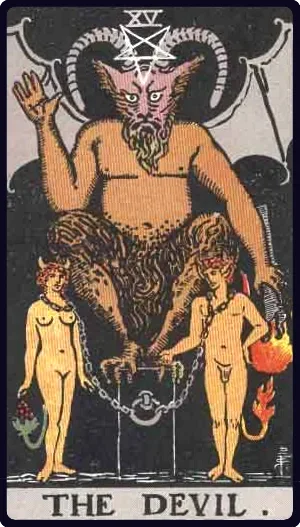
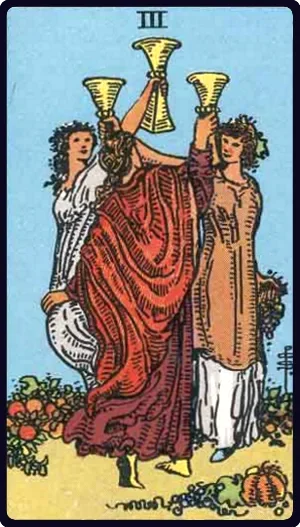
In short. The Devil pulls toward pleasure while the Three of Cups gathers everyone around the festive table, so together they mark a reckless lifestyle where celebration tips into dependency.
This pairing is about a party that has gone on too long. The Devil is the craving for pleasure, the excess, and the habit you cannot tear away from, while the Three of Cups is the lifted cups, the friendly company, and shared joy. When they meet in a reading, the matter is pleasure that has lost its measure: feasts, parties, and easy flings that once delighted turn into a way to drown out emptiness, and the person no longer runs the revelry but depends on it.
General Meaning of the Combination
At the core of the pair sits a cunning formula: the craving of The Devil plus the celebration of the Three of Cups equal pleasure that stops gladdening and begins to enslave. The Three of Cups shows merriment, friendship, and the wish to mark a good moment, while the Devil signals that a dependency hides behind this fun. Together the cards speak of a reckless lifestyle where pleasures come too often and the taste for them has long faded. It can be a pull toward drink and parties, an escape into loud crowds from one's own problems, or a friendship that holds together only on shared excess. The pairing often appears for someone who eats and drinks away their stress among people just like them and mistakes a noisy feast for real closeness. The Three of Cups recalls the joy of company, while the Devil warns that even a celebration becomes a chain when people hide in it from the emptiness within.
In Love and Relationships
In relationships this pairing speaks of a bond built on pleasure and passion rather than depth. The Three of Cups shows lightness, fun, and shared friends, while the Devil exposes that dependency or sheer chemistry hides beneath that ease. Sometimes a couple lives from one party to the next, drowning in feasts what should have been discussed soberly long ago. Sometimes a third person steps in, and the lust for an outsider outweighs reason. For singles the combination warns of shallow connections with no warmth: meetings happen easily, at parties and in loud crowds, but only attraction lies behind them. The card advises against mistaking revelry for real closeness.
In Work and Finances
In work and finances the pair speaks of a team where fun has crowded out the work. The Three of Cups shows a friendly group and reasons to celebrate, while the Devil warns that feasts and entertainment have become a dependency that gets in the way. Office parties and casual hangouts pull you in, and focusing grows harder. Sometimes a person clings to a circle where shared leisure matters more than results, and loses their edge. In money matters the combination speaks of spending on pleasure and entertainment that cannot be stopped. Parties, restaurants, and group gifts punch a hole in the budget, while the urge to live large for the sake of a pretty moment drives you into debt.
If a Card Is Reversed
The Devil reversed, Three of Cups upright
The craving for excess weakens, and real joy of company shows through the revelry: the person finally celebrates in measure and values loved ones rather than an excuse to drink. The party turns bright again, without dependency. In love it is a couple that stopped drowning problems in feasts and learned to talk soberly, in work it is a return of measure, when office parties stop hindering the work.
The Devil upright, Three of Cups reversed
The dependency holds firm while the celebration has tipped into surfeit: pleasures come too often, and tiredness and emptiness remain instead of joy. Gossip, jealousy, and a contest for attention appear, and warmth gives way to tension. In relationships it is jealousy and a third person eating away at the couple, in work it is discord in a team where shared excess has set people against each other, and the pull toward feasts blocks the backlog.
Both cards reversed
Both the craving for pleasure and the celebration are blocked: the person feels like an outsider among others and drowns that loneliness in fresh excess that no longer gladdens. The festivity passes them by, while the dependency remains. In love it is shallow connections with no warmth, chased out of emptiness, in work it is a fractured team where shared revelry has given way to gossip and a chill, and the person sinks into entertainment to avoid noticing that real closeness is long gone.
The Cards' Advice
Slow down and bring order to your pleasures. The Devil and Three of Cups together advise an honest look at whether the fun gladdens you or you hide in it from the emptiness. Ask yourself who is there for you and who is simply along for the party. Restoring measure does not mean denying yourself joy: a real celebration stays bright when you run it rather than it running you. Do not lose yourself in other people's feasts at your own expense.