Ten of Swords and Three of Cups Combination in Tarot
The Ten of Swords and Three of Cups tarot combination meaning: general sense, in love and work, every reversed variant, and advice.
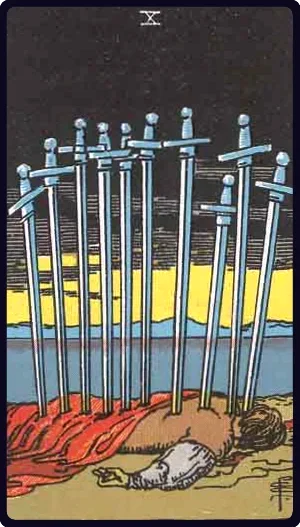
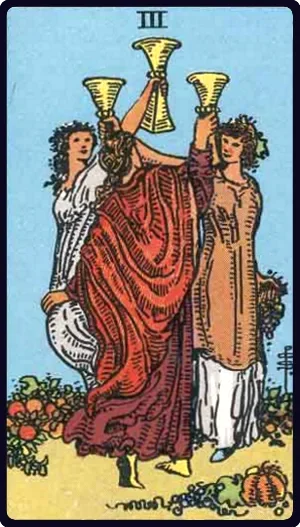
In short. The Ten of Swords brings collapse and a painful ending, while The Three of Cups gathers a warm circle of friends, so together they mark the final breakup of a group.
This combination sets the joy of company against a bitter end. The Three of Cups is a warm card of celebration and support, while the Ten of Swords brings a sharp, painful finale, the blow after which nothing more can be lost. When they fall together, the warm circle reaches its limit and falls apart: a friendship that seemed solid collapses for good. The cards say the company has run its course, leaving emptiness. Yet the sunrise on the Ten's horizon reminds you that after the fall, the climb begins.
General Meaning of the Combination
At the core of the pair sits a simple formula: the collapse of the Ten of Swords plus the company of the Three of Cups equals the final breakup of a close circle. The Ten of Swords closes any cycle with a sharp, man-made finale and arrives when a chapter ends for good. It pours that energy into the place where the Three of Cups promised warmth and support. Together the cards say a circle of friends is falling apart: a quarrel, a betrayal, or accumulated grievances drive people apart for good. The Three of Cups itself, beside the Swords, notes the final breakup of a group, and this pair plays out exactly that scenario. The combination answers honestly that the old friendship cannot be mended, and clinging to what is broken is pointless. Yet that is also its promise: when an outworn company falls apart, room opens for a new circle and more honest bonds.
In Love and Relationships
In relationships this combination is one of the harshest. For a couple it speaks of a sharp breakup, infidelity, or a betrayal that often comes in public, like a blade in the back during a celebration. What should have stayed a warm occasion turns into a collapse the relationship cannot survive. Sometimes the ending reaches the shared circle too, and the group of friends that rested on this couple falls apart. For singles, the cards show someone who has not yet released a painful past and keeps the heart closed even in pleasant company. Do not cling to what is broken; accept the ending so room opens for a new chapter.
In Work and Finances
In work and finances the combination shows the collapse of a team that once pulled together. A joint project that should have been a shared success turns into a failure, and a close-knit group falls apart. Sometimes the blow comes from colleagues or partners you counted on: betrayal or intrigue destroys both the work and the trust. The familiar road to income is cut off, and the old team scatters for good. In money matters the pair warns of losses in a joint venture: a friendly enterprise begun with joy ends in loss and disappointment. The cards advise you to accept the end of this chapter, stop fighting for what has already fallen, and prepare to change direction.
If a Card Is Reversed
The Ten of Swords reversed, The Three of Cups upright
The worst is behind you, and the warm circle helps you recover. The bottom has been touched, the blades drawn from the back, and friends restore your joy with their support. The breakup proves less final than it seemed, and the company heals its wounds. In love it is healing after a crisis, when a couple rebuilds trust, in work it is the recovery of a team and new prospects.
The Ten of Swords upright, The Three of Cups reversed
Collapse at full force, while the company's warmth turns out to be false. The celebration has tipped into overindulgence, envy and gossip thrived in the circle, and the breakup grows especially bitter because there is no one to lean on. A friendship held on appearances falls apart entirely. In love it is a painful finale beside people who only pretended to be close, in work it is the breakdown of a team whose unity was just a mask.
Both cards reversed
Both the collapse and the joy are muted: no open catastrophe, but no real warmth either. A person is stuck in the victim role, clinging to past pain, while the company has fallen apart quietly. The bonds broke long ago. In love it is a drawn-out grieving with no honest closure, in work it is a smoldering breakdown of a team that is together in name while each person is on their own.
The Cards' Advice
Do not cling to what has already fallen apart. The Ten of Swords and the Three of Cups advise you to accept the ending of the old circle, however hard it feels. A friendship that has run its course rested on illusion, and you have the strength to begin again. Grieve the loss, leaning on those who truly stayed, and do not return to what is broken. The bottom has been touched, and beyond the darkest night a sunrise leads you to a new, more honest circle.