Six of Swords and Ten of Wands Combination in Tarot
The Six of Swords and Ten of Wands tarot combination meaning: general sense, in love and work, every reversed variant, and advice.
In short. The Six of Swords carries you away from a hard situation toward calm, while the Ten of Wands shows an impossible load, so together they speak of leaving a draining burden behind.
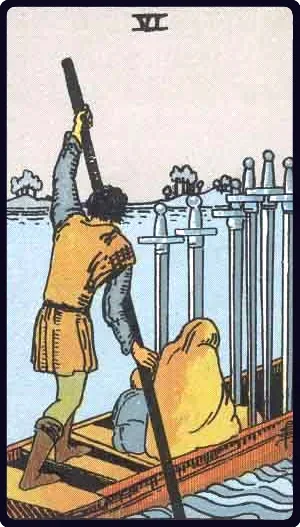
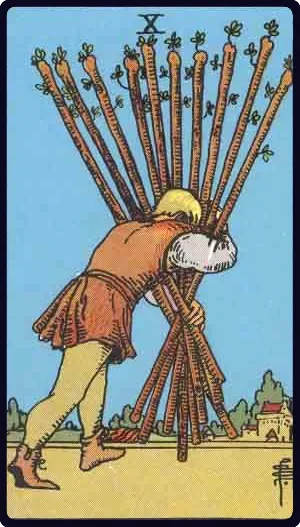
This pairing is about the move from overload to relief. The Ten of Wands depicts a person hunched under a bundle of obligations, while the Six of Swords is the boat carrying them away from a hard shore toward still water. Together the cards say a heavy chapter can and should be left behind. This is not flight but a conscious move from overstrain toward calm, when part of the load finally comes off the shoulders and a quieter, more manageable life lies ahead.
General Meaning of the Combination
At the heart of the pair sits a simple formula: the overload of the Ten of Wands plus the transition of the Six of Swords equals a move away from an impossible burden toward calm. The Ten shows that you are hauling too much and holding on at the limit, while the Six offers a way out: change the setting, leave the trouble behind, and head toward where it gets easier. The movement is not abrupt but gradual, like the steady glide of a boat. The combination often appears for those who decide to leave a draining job, relocate, or simply close a heavy chapter of life. The load does not vanish at once, it is carried along, but the direction is right. The core message: you have the right to leave what depletes you and move calmly toward a more bearable load. This is a sensible, measured step, not an escape from responsibility.
In Love and Relationships
In relationships this pairing speaks of leaving a hard period for a calmer phase. The Ten of Wands shows a couple worn out by chores and obligations, while the Six of Swords promises that the difficult stretch can be left behind and that quiet gradually arrives. Sometimes it is a shared move or a change of routine that lifts part of the weight from both. Sometimes it is the decision to leave a bond that long ago became too much, and to do it calmly, without a scene. For singles the cards speak of emerging from emotional exhaustion: the person leaves behind what drained them and moves toward lighter, healthier relationships they finally have strength for.
In Work and Finances
In work and finances the pair points to leaving a draining workload. The Ten of Wands describes overload, overtime, and a race with no breather, while the Six of Swords suggests a way out: change jobs, hand off duties, or shift to a more bearable mode. It is often a sign of resignation or transfer that lifts an impossible burden from the shoulders. The movement is calm and considered, not a panicked flight. In money matters the combination promises gradual relief: income earned at the cost of exhaustion gives way to something steadier and quieter. The point is not to cling to a worn-out scheme but to move smoothly toward work that stops draining all your strength.
If a Card Is Reversed
The Six of Swords reversed, the Ten of Wands upright
The departure does not come together, the person is stuck in overload and cannot break free. The reversed Six shows the transition postponed: the boat will not leave the hard shore, and the load stays at full force. In love it is being stuck in a draining bond, in work the inability to change a punishing post, when fear keeps the person at the same impossible workload.
The Six of Swords upright, the Ten of Wands reversed
The load lifts, and the transition goes especially easily. The reversed Ten removes part of the burden, while the upright Six carries you toward calm: a heavy chapter ends, and the person travels light toward a new one. In relationships it is a calm exit from a hard period with no extra weight on the shoulders, in work it is the close of a draining project and a smooth shift to a lighter mode, when nothing pulls you back anymore.
Both cards reversed
Both the load and the transition are knocked off course: the person hauls the burden by inertia yet cannot move anywhere, stuck in the past. There is not enough strength for an honest step. In love it is prolonged treading water in a bond long past due, in work resistance to change and a pile-up of tasks the person is ready in their mind to leave yet cannot take the first step away from.
The Cards' Advice
Allow yourself to leave what depletes you. The Six of Swords and Ten of Wands together advise against playing the hero under an impossible load, and instead moving calmly toward where it gets easier. This is not flight but a sensible step. Set the excess down, choose a direction, and head toward a more bearable life without haste or guilt. The still water ahead is worth pushing off the hard shore for.