Nine of Cups and Five of Swords Combination in Tarot
Five of Swords and Nine of Cups in tarot speak of one person's joy won at the expense of others. Meanings for love and work, including reversed cards.
In short. The Five of Swords brings victory through conflict, while The Nine of Cups promises contentment, so together they speak of one person's joy won at the expense of others.
This is a combination about triumph with a bitter aftertaste. The Five of Swords describes a hollow victory, foul play, and pleasure taken in a defeated rival, while the Nine of Cups adds the well-fed smugness of the winner. Together the cards paint a person who relishes the win without a thought for the price others paid. This is joy built on someone else's loss, and so it is short-lived: behind the smugness usually hides a loneliness that sooner or later makes itself known.
General Meaning of the Combination
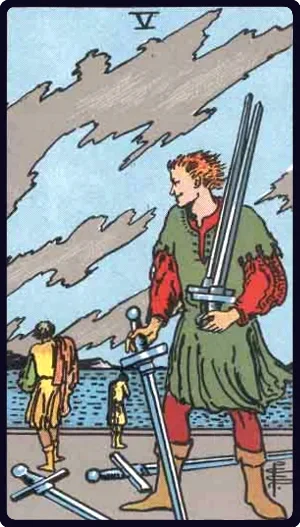
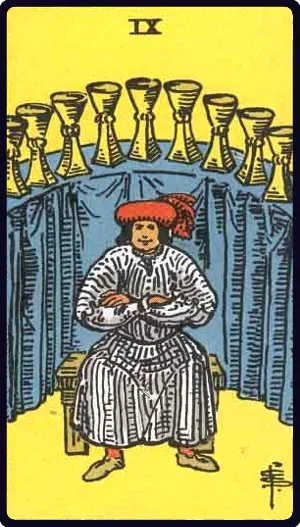
At the core of the pair sits a simple formula: the conflict of the Five of Swords plus the contentment of the Nine of Cups equals selfish triumph at others' expense. The Five of Swords shows a victory won at any cost, with no regard for the feelings of those around, while the Nine of Cups adds pleasure and pride in the achievement. Together the cards speak of a person who got their way, but at the expense of others, and now revels in the result. The pairing often appears when success is real yet has left behind the hurt and the defeated. The Nine of Cups makes the victor blind to that price: they feel good, and the rest do not matter. The cards warn that such smugness is deceptive: joy built on humiliation or cunning isolates, and in the end the person is left alone with their trophies.
Love and Relationships
In relationships the pairing speaks of contentment at a partner's expense. One person in the couple may get what they want by forcing their will, pleased with themselves, while failing to notice the other feels defeated. The Five of Swords brings rivalry and a struggle for the upper hand, and the Nine of Cups adds the self-assurance of someone used to winning arguments. For singles it is a risk of selfish connections, where one's own pleasure is placed above the other's feelings. The cards warn that joy won at a loved one's cost destroys trust: a victory that leaves the partner humiliated is in truth a shared defeat.
Feelings, Thoughts and Intentions
Feelings. This pair reflects mixed emotions: pride and satisfaction in achievement coexist with underlying bitterness and irritation about how the goal was reached. The person may feel selfish joy, unaware of the other's pain.
Thoughts. Thoughts revolve around justifying winning at any cost and strategies to maintain control. At the same time, there is an inner awareness that such success can damage relationships and cause alienation.
Intentions. Intentions focus on holding onto the achieved position and affirming one's correctness, even if it leads to conflicts. There may be readiness to reconcile, but only after recognizing fatigue from the struggle.
Career and Work
At work and in financial matters the pair speaks of success achieved dishonestly or at colleagues' expense. The Nine of Cups promises a bonus, recognition, and contentment, but the Five of Swords reminds you this victory left people hurt: perhaps you outplayed a rival harshly or claimed someone else's credit.
Finances
In financial matters the combination hints at profit that pleases you but cost another a loss. The cards warn that such triumph erodes your reputation: colleagues remember exactly how you won. Better to ask whether brief pleasure is worth spoiled relationships and the enemies you make. Honest success brings a steadier, calmer joy than a win poisoned by someone else's grievance.
Health
Energy is depleted due to ongoing tension and conflicts, manifesting as fatigue and nervous exhaustion. The cards advise reducing stress levels, allowing time for rest and recovery to prevent accumulated fatigue and worsening health.
Situation and Question
The situation involves a struggle where victory is achieved but leaves bitterness and damages relationships. The main obstacle is the inability to let go of confrontation for the common good. The next step is to recognize the cost of the dispute and redirect efforts toward reconciliation and repair rather than continuing the conflict.
If a Card Is Reversed
The Five of Swords reversed, the Nine of Cups upright
The conflict winds down and a chance opens to enjoy without another's loss: the person tires of the struggle and reaches for reconciliation, while the Nine of Cups promises calm contentment now free of the bitter aftertaste. Sometimes it is remorse after a harsh victory. In love it is a readiness to let rivalry go for the sake of warmth, in work it is dropping foul play in favor of an honest and steadier result.
The Five of Swords upright, the Nine of Cups reversed
The victory is there, but there is no pleasure in it: triumph over others turns to emptiness, and smugness gives way to dissatisfaction. The person won, yet feels no joy. In relationships it is the bitterness that forced will brought no closeness, in work it is the disappointment when success won dishonestly does not warm you and leaves only spoiled ties and a residue.
Both cards reversed
Both the conflict and the joy stall: the person is worn out by the struggle, and pleasure in the win never comes, so only hidden resentment and emptiness remain. The smugness deflates, giving nothing in return. In love it is a cold withdrawal after a string of quarrels where no one won, in work it is exhaustion and a damaged reputation with no compensation for the effort spent.
The Cards' Advice
Ask yourself the price of your joy. The Five of Swords and the Nine of Cups warn that pleasure built on another's loss isolates and quickly dulls. Do not confuse triumph over others with real happiness: the first leaves you alone with your trophies, the second shares the joy with those close to you. Choose the honest path, and your contentment will prove steadier than any hollow victory.
Nine of Cups Combinations
Everyone Reads at Astralika
Enough theory: time to ask the Tarot a question of your own. There are 346 readings on love, work, health and more.
Your Birth Card

Everyone has cards that walk with them through life. Enter your date of birth to meet yours: one speaks of your character, the other of what your soul is seeking.