Four of Pentacles and Seven of Swords Combination in Tarot
The Four of Pentacles and Seven of Swords tarot combination meaning: general sense, in love and work, every reversed variant, and advice.
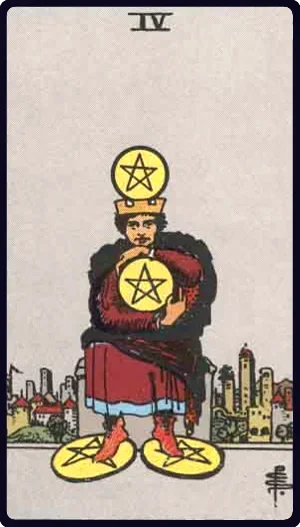
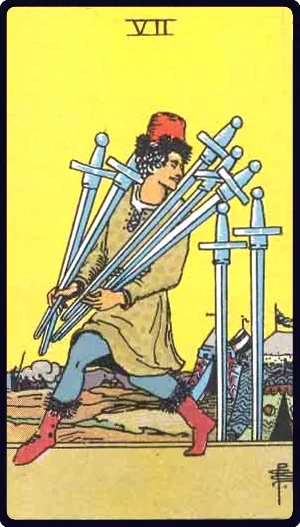
In short. The Four of Pentacles clings to what it owns, while the Seven of Swords whispers a cunning move, so together they show how stinginess pushes a person toward a petty lie.
This pairing is about fear of loss turning into dishonesty. The Four of Pentacles carries control, hoarding, and a tight grip on what is owned, while the Seven of Swords adds stealth, tricks, and back routes. When the cards meet, the matter is usually someone who clings to what is theirs so tightly that they will cheat for the sake of saving. Greed prompts a petty lie: hiding something, underpaying, cutting a corner. Behind the wish to save every penny hides a readiness to sacrifice honesty.
General Meaning of the Combination
At the core of the pair sits a formula: the stinginess of the Four of Pentacles plus the cunning of the Seven of Swords equals a petty lie for the sake of gain. The Four shows a tight grip on money and a fear of loss, while the Seven hints that this grip pushes toward a trick: the person saves at others' expense, hides spending, or cuts corners just to keep from parting with what they have hoarded. Together the cards describe someone for whom control over resources matters more than honest dealings with people. Sometimes it is a small thrifty trick that slips by unnoticed, but more often the combination warns that greed erodes trust: for a saved penny the person loses their reputation. The cards remind you that a stingy deceit rarely pays off, since what is saved this way costs you something far more valuable.
In Love and Relationships
In relationships this pairing speaks of guardedness mixed with calculation and half-truths. The Four of Pentacles describes a stable but closed-off bond, where one keeps the other on a short leash, while the Seven of Swords adds stealth and petty dishonesty. Most often the pair means a partner is stingy not only with money but with warmth, and covers the lack of openness with half-truths. Sometimes it is secret economizing in the joint household, hidden spending, or calculation passed off as care. From the outside the union looks stable, while coldness and distrust quietly build. For singles the cards advise a closer look: behind a new acquaintance's tightness and guardedness may lurk a readiness to cheat for their own gain.
In Work and Finances
In work and finances the pair speaks of stinginess that pushes toward dishonest moves. The Four of Pentacles describes a tight grip on money and a refusal to invest, while the Seven of Swords adds tricks for the sake of saving. Most often the combination means someone cuts corners just to avoid spending: underpays, hides part of the profit, or skimps on quality around the agreement. Sometimes it is calculating caution, but the cards advise checking whether it slides into petty fraud. In money matters it warns of the temptation to save by dishonest means. Such economizing hits trust, and a transparent deal is steadier than a penny saved by a trick.
If a Card Is Reversed
The Four of Pentacles reversed, the Seven of Swords upright
The cunning game runs on, but the grip on money goes to the extreme: the Four is reversed, stinginess turns into open greed, and the person is ready for any petty lie to save. Or the opposite, control collapses, the savings drain away, and in panic they reach for dishonest moves. In love it is greed that chokes closeness, in work it is petty fraud and saving at the cost of the work itself.
The Four of Pentacles upright, the Seven of Swords reversed
The hidden comes out: the Seven is reversed, the petty lie surfaces, while the Four still holds the person in its usual grip. Hidden spending, underpayment, or money trickery comes to light, and they must answer. It is a chance to switch to transparency and stop cutting corners to save. In love it is the surfacing of secret calculation dressed up as care, in work it is the exposure of petty dishonesty and a return to honest agreements.
Both cards reversed
Both the grip and the cunning are blocked: the person is tangled between greed and tricks that circle round and bring no gain. Self-deception joins the deceit, while stinginess and dishonesty wreck everything around them. Money either sits as dead weight or drains away. In love it is coldness, greed, and half-truths instead of closeness, in work it is petty fraud, stagnation, and unsolved problems.
The Cards' Advice
Do not let the fear of loss push you toward deceit. The Four of Pentacles and the Seven of Swords together advise you to ask honestly whether your thrift is sliding into a stinginess you would cheat for. A penny saved by dishonest means is rarely worth the trust it costs. Loosen the grip where control has become a cage, and build your dealings with money and people on transparency. What is saved at the price of honesty turns into the loss of something far more valuable than money.