Five of Swords and The Hanged Man Combination in Tarot
The Five of Swords and The Hanged Man tarot combination meaning: general sense, in love and work, every reversed variant, and advice.
In short. The Five of Swords pulls you into a fight with no winners, while The Hanged Man advises stepping back and shifting your view, so together they mark a pointless clash to release.
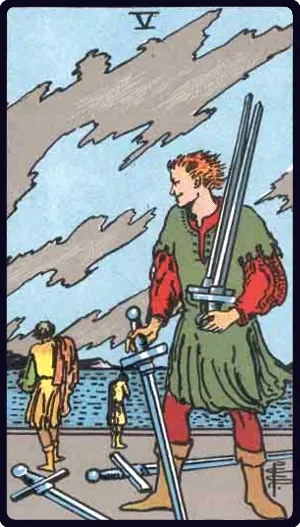
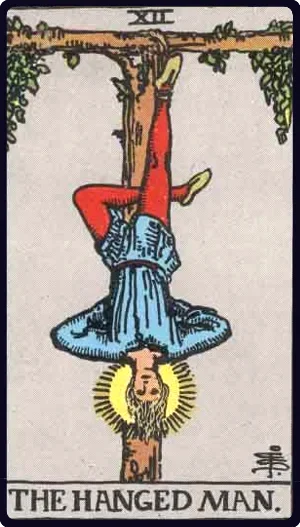
This is a pairing of conflict and a conscious halt. The Five of Swords is conflict, hollow victory, and winning at any cost, while The Hanged Man is a pause, a refusal to push, and a shift of perspective. When they meet in a reading, a person stubbornly proves a point even though the win turns to dust. The Hanged Man reminds you that it is sometimes wiser to lay down the sword and see the dispute differently than to claim a victory that settles nothing.
General Meaning of the Combination
At the core of the pair sits a simple formula: the fight of the Five of Swords plus the pause of The Hanged Man equals a pointless clash you need to leave. The Five shows a conflict won by force or cunning, where no one truly wins, while The Hanged Man says pushing and breaking through a wall is useless; it is time to stop and shift the angle. Together the cards mark the moment when continuing the feud only costs you strength, relationships, and peace. The pairing often appears when a person is so caught up in proving a point that they stop seeing the price of the struggle. This is not a call to surrender but advice to weigh honestly what the fight is for. The Hanged Man teaches a new view, and then it grows clear: the way out lies not in a fresh attack but in releasing the conflict and seeing the situation wider.
In Love and Relationships
In relationships this pairing speaks of a drawn-out quarrel stuck in deadlock. Partners argue on principle, each defends their position, and one side's victory turns into hurt and a crack in trust. The Hanged Man advises stopping the struggle and seeing the conflict from a new angle rather than finishing off the other side. The Five warns that even winning the argument can lose the closeness. For a couple this is a signal to pause, cool down, and understand what the war is even for. For singles the cards speak of the bitter taste of past clashes that blocks opening up. It is worth releasing the old grievance, shifting the angle, and not seeing a rival in a new person.
In Work and Finances
In work and finances the pair speaks of a conflict that drains strength and brings no result. Team disputes, a fight to be right, or unfair competition have hit a deadlock, and The Hanged Man shows that pushing further is useless; a sober rethink is needed. The Five warns that victory in such a standoff often brings a damaged reputation and new enemies. Sometimes it is a signal to step back and see the task through the opponent's eyes, and a way out appears. In money matters the combination advises against a lawsuit or rivalry at any cost: better to weigh the real price of the fight and seek a solution where you do not lose more than you gain.
If a Card Is Reversed
The Five of Swords reversed, The Hanged Man upright
The heat fades and a readiness for reconciliation arrives, and The Hanged Man supports it with a calm pause. The person lays down the sword and takes time to work out how to mend what was broken. This is a slow rebuilding of peace. In love it is a careful reconciliation and the release of an old grievance, in work it is a calm review of the conflict before building relations anew.
The Five of Swords upright, The Hanged Man reversed
The conflict is at its height while the pause has curdled into a standstill with no lesson: the person clings to the feud and refuses to shift their view. Delay only stores tension, and the dispute smolders with no resolution. In relationships it is a drawn-out cold war, when it is long past time to talk honestly and let go, in work it is getting stuck in a fight to be right that wears you out and brings neither victory nor peace.
Both cards reversed
Both the fight and the pause are blocked: the person buries the conflict and freezes, pretending the matter is settled while resentment builds behind a calm mask. There is not enough energy for an honest talk. In love it is suppressed irritation and dread of clearing the air, in work it is hidden rivalry and a build-up of unspoken grievances that will one day burst into the open all at once.
The Cards' Advice
Lay down the sword and weigh the cost of the fight honestly. The Five of Swords and The Hanged Man together advise you to leave the conflict and shift your angle: continuing the feud only costs you strength and closeness. Ask yourself what this dispute is really for and what you stand to lose even if you win. Sometimes it is wiser to step back and see wider than to claim a victory that turns to emptiness.