Five of Swords and Knight of Swords Combination in Tarot
The Five of Swords and Knight of Swords tarot combination meaning: general sense, in love and work, every reversed variant, and advice.
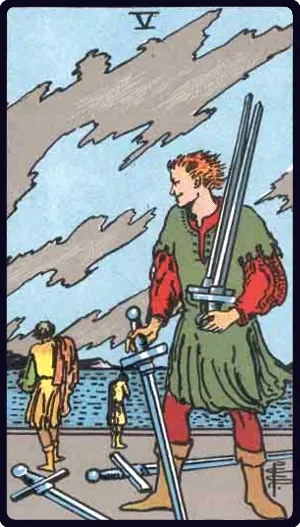
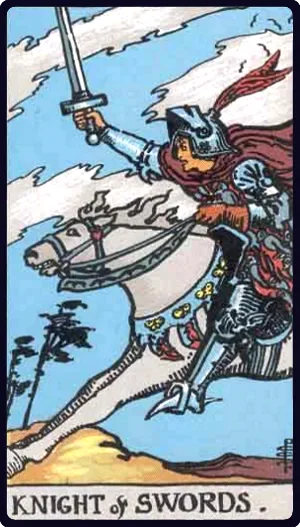
In short. The Five of Swords brings a conflict with no winners, while The Knight of Swords adds force and aggression, so together they speak of a hard clash won by sheer drive.
This pairing is about a head-on attack. The Five of Swords is a dispute where each side defends its case at any cost, while the Knight of Swords is a mind so quick it turns thought into a blow in a single breath. When they fall together, the matter is almost always a sharp, forceful clash: someone charges in, speaks the truth to your face, and aims to win on the first strike. This is open battle, where words wound and the urge to win overrides good sense.
General Meaning of the Combination
At the core of the pair sits a simple formula: the hostility of the Five plus the drive of the Knight equals an aggressive clash. The Five of Swords shows a fight won by pressure, while the Knight of Swords adds speed, directness, and an unstoppable charge. Together the cards speak of a conflict that flares fast: a person goes straight at it, strikes first, and does not slow down until they take what they want. The pairing often appears when someone forces their point through by sharp argument and bluntness, with no regard for others' feelings. Victory comes, but at the cost of new enemies and ruined relationships. The cards warn that a sharp mind is useful when it cuts cleanly, not when it slashes at everything in reach. The deeper message is to temper the charge and ask whether the dispute is worth the losses it will bring even in victory.
In Love and Relationships
In relationships the combination speaks of quarrels where partners argue to win. The Five of Swords shows a power struggle and mutual reproaches, while the Knight of Swords adds harshness, coldness, and the urge to place being right above a loved one's feelings. The relationship turns into a battlefield where each side fights to come out on top, and careless phrases spark fresh skirmishes. Sometimes it points to a breakup triggered by a word spoken in anger, something hard to walk back. For singles the cards warn of meeting someone bright but hard, who attacks with bluntness and argues instead of drawing close. The cards advise putting down the swords and learning to listen, not just to defend your position.
In Work and Finances
In work the pair speaks of fierce competition and open clashes. The Five of Swords is intrigue and victory at the cost of ruined relations, while the Knight of Swords is drive, speed, and the push to force a point through against a wall of skepticism. A person takes charge and outpaces rivals, but sharpness in communication makes enemies and arrogance pushes partners away. The cards warn of conflict born of intolerance for other views: someone may flare up and storm out, then regret it. In finances the combination speaks of losses through hasty, aggressive decisions and disputes. This is no time to act rashly: better to check the numbers and avoid a fight that is not worth it.
If a Card Is Reversed
The Five of Swords reversed, The Knight of Swords upright
The conflict quiets down, but the drive stays strong. The reversed Five carries reconciliation and weariness with the feud, while the upright Knight keeps its resolve and directness. This is a chance to aim the energy not at war but at the honest, open talk that is long overdue. In love it is the courage to clear the air without fresh jabs, in work it is drive redirected to the task instead of skirmishes with colleagues.
The Five of Swords upright, The Knight of Swords reversed
The dispute rages, and the charge curdles into recklessness. The upright Five holds the conflict, while the reversed Knight adds force without calculation: a person rushes ahead blind, breaks more than they build, and hears only themselves. Words turn sharp and wound without cause. In love it is quarrels over rudeness and stubbornness, in work it is conflict from intolerance and decisions made in haste.
Both cards reversed
Both the hostility and the blind drive lose their power: the heat fades and the aggression burns out. The reversed Five carries remorse, the reversed Knight a hint to cool your head and choose one goal instead of ten. Yet there is a risk that strength drains for nothing while a person darts about and hoards unspoken resentment. In love it is a cooling after a run of sharp rows, in work it is chaos and lost direction, drive with no result.
The Cards' Advice
Temper the charge and do not act rashly. The Five and Knight of Swords together advise you to ask whether the dispute is worth the losses it will bring even in victory. A sharp mind is useful when it cuts cleanly, not when it slashes at everything in reach. Put down the swords, hear the other side, and aim the energy at the task rather than the war. Victory at any cost leaves you surrounded by enemies.