Five of Swords and Knight of Pentacles Combination in Tarot
The Five of Swords and Knight of Pentacles tarot combination meaning: general sense, in love and work, every reversed variant, and advice.
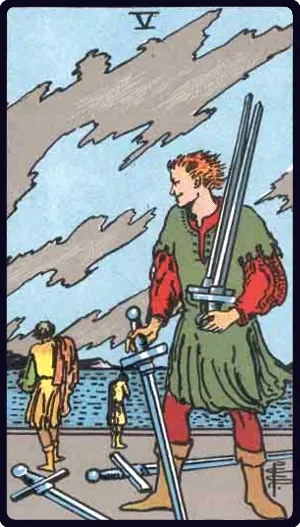
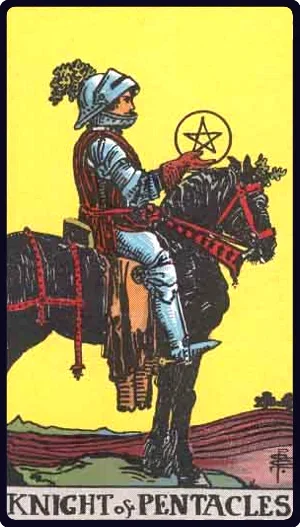
In short. The Five of Swords brings conflict, while The Knight of Pentacles embodies stubborn persistence, so together they often mean that obstinacy drags out the standoff.
This combination joins a sharp conflict with slow, unbending persistence. The Five of Swords is a clash won by force or cunning, while the Knight of Pentacles is a person who moves toward a goal step by step and never backs off. When they meet in a reading, the matter is usually a drawn-out feud where neither side yields. One side clings to being right with the Knight's stubbornness, and the dispute drags on for months, turning into a war of attrition instead of an honest resolution.
General Meaning of the Combination
At the core of the pair sits a formula: the conflict of the Five of Swords plus the persistence of the Knight of Pentacles equals a standoff that drags on through obstinacy. The Five of Swords shows a dispute where each defends their own at any cost, while the Knight of Pentacles adds inflexibility and an unwillingness to shift position. Together the cards speak of a feud that will not resolve because both sides are too dug in to step back. The pairing often appears in a long, drawn-out dispute where principle has hardened into rigidity: a person holds to being right out of stubbornness rather than conviction. It is a trench standoff with no winners, where energy goes into defending a position instead of solving anything. The cards advise you to tell firmness from blind obstinacy and to ask whether you value the fight itself more than its outcome.
In Love and Relationships
In relationships this pairing speaks of a drawn-out conflict where neither yields. The Knight of Pentacles describes a reliable but stubborn, rigid partner, while the Five of Swords brings quarrels, reproaches, and a power struggle. The dispute drags on for weeks, both have dug in, and the entrenched standoff slowly cools the feelings. The stability the Knight promises turns into a frozen war where no one takes the first step. For a couple it is a cold positional feud where not yielding matters more than the closeness. For singles the cards speak of a person who clings to an old grievance and lets nothing new in. The advice is to lay down your weapons first.
In Work and Finances
In work and finances the pair points to a drawn-out conflict that drags on through the sides' obstinacy. There may be a dispute with a colleague or management where each has dug in, while the matter stalls for months. The Five of Swords warns of intrigue and made enemies, while the Knight of Pentacles adds rigidity and an unwillingness to change approach even where it clearly fails. In money matters the cards advise you not to turn a work dispute into a war of attrition: blind obstinacy costs more than compromise. Sometimes it is wiser to yield on a small point and get the matter moving than to defend a position for years.
If a Card Is Reversed
The Five of Swords reversed, The Knight of Pentacles upright
The sharp phase of the feud is behind you, and the Knight's persistence finally serves the work rather than defending a position. The reversed Five of Swords cools quarrels and opens a path to reconciliation, while the upright Knight of Pentacles brings reliability and calm steadiness without stubbornness. In love it is reconciliation and a return to a calm, dependable bond, in work seeing the matter through once the drawn-out dispute has settled.
The Five of Swords upright, The Knight of Pentacles reversed
The conflict is in full swing while persistence has curdled into blind obstinacy and rigidity. The upright Five of Swords fuels the fight, while the reversed Knight of Pentacles adds stagnation, laziness, and a refusal to budge. A person clings to a position out of pure stubbornness. In love it is a cold feud where no one will talk, in work a stalled dispute and a failed task dragged on just to avoid yielding.
Both cards reversed
Both the fight and the persistence are blocked: there is no open dispute, but under a calm mask resentment and dull obstinacy pile up while the matter sits as dead weight. The person neither fights openly nor steps toward peace, so everything freezes in a deadlock. In love it is a frozen relationship where no one yields or names what hurts, in work a drawn-out sabotage that lets the matter rot until it breaks into open conflict.
The Cards' Advice
Tell firmness apart from blind obstinacy. The Five of Swords and the Knight of Pentacles together advise you not to turn a dispute into a war of attrition where, on principle, no one yields. Ask yourself whether you hold your position out of conviction or just refuse to admit you are wrong. Lay down your weapons first, give way on a small point, and get the matter moving: persistence is valuable in work but ruinous in a drawn-out feud with no winners.