Five of Swords and Judgement Combination in Tarot
The Five of Swords and Judgement tarot combination meaning: general sense, in love and work, every reversed variant, and advice.
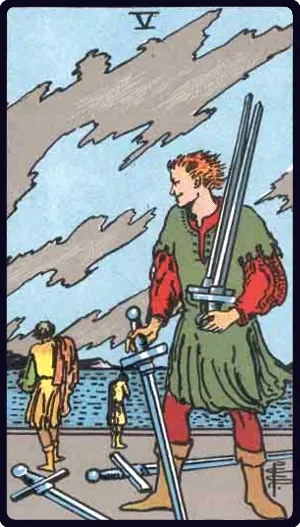

In short. The Five of Swords marks a conflict with no winners, while Judgement calls you to own your part in it and draw the line.
This combination is about a moment of truth after a fight. The Five of Swords shows a hollow victory, resentment, and a bitter aftertaste, when the argument is won but the relationship is wrecked. Judgement arrives like a call from above: it is time to look back at the conflict without excuses, own your share of the blame, and decide whether to keep the feud or forgive. The real reckoning comes when you weigh what happened honestly.
General Meaning of the Combination
At the core of the pair sits a formula: the fruitless struggle of the Five of Swords plus the awakening of Judgement equals a moment of truth and an honest reckoning with the conflict. The Five shows a dispute where each side defended its case at any cost and both came out losers. Judgement arrives as a voice that demands you draw the line: own your share of the blame, release the buried grievance, and decide what comes next. Together the cards rarely bless a new war; more often they call for peace through truth. The combination asks you to answer honestly what the fight was really for and what you lost even by winning. The lesson lands when you stop carrying old scores and judging yourself for the defeat, and instead acknowledge what happened and lay down the sword. This is a card of closing a conflict through mature honesty.
In Love and Relationships
In relationships this pairing speaks of a reckoning after a draining battle to be right. The Five of Swords describes reproaches, barbs, and the habit of winning every argument, while Judgement offers to stop and weigh honestly what intimacy has become. For a couple it is a moment of truth: both admit that competing matters more to them than the bond, and they either make peace by releasing the grievances or part honestly, freeing each other. Pretending no longer works. For singles the cards advise releasing the bitterness of the past: as long as you keep scores against a former partner and meet new people braced to defend yourself, a second chance at feeling stays closed.
In Work and Finances
In work and finances the pair speaks of a reckoning after conflict or unfair play. The Five of Swords shows intrigue, competition, and victory at the cost of a ruined reputation, while Judgement demands you weigh soberly what the struggle was worth. Sometimes the combination means owning your own mistake in a workplace dispute and a chance to rebuild trust if you can be honest enough. In money matters it is the moment to review schemes built on cunning and pressure and to set up a cleaner footing. The point is not to cling to a hollow win but to face the truth of what happened and take a deliberate step forward.
If a Card Is Reversed
The Five of Swords reversed, Judgement upright
The conflict is already cooling and the call to reconcile rings clear, but the person still carries a buried grievance behind a calm mask. Judgement urges an honest line, yet unspoken bitterness smolders inside. In love it is a kind of peace that hides an unforgiven score, in work it is a formal truce where trust is not actually restored and tension keeps building.
The Five of Swords upright, Judgement reversed
The struggle is at its height, and the person smothers the call to own their part with pride and a search for someone to blame. Instead of an honest reckoning they prove their case at any cost and judge others to avoid looking at themselves. In relationships it is a stubborn war to win, where intimacy is sacrificed, in work it is intrigue and the drive to win an argument at the cost of reputation, with no readiness to admit a mistake.
Both cards reversed
Both the conflict and the awakening are blocked: the person has buried the quarrel and cannot hear the call to settle it honestly. The grievance stays unspoken and responsibility unclaimed. In love it is cold silence after a fight, where both pretend the matter is settled, in work it is a smoldering feud and a build-up of unsettled scores that will eventually break into the open.
The Cards' Advice
Lay down the sword and honestly own your share of the blame. The Five of Swords and Judgement together advise you not to prove your case at any cost but to draw a mature line under the conflict. Ask yourself what the fight was really for and what you lost even by winning. Release old scores, forgive yourself and others, and answer the call to reconcile with action rather than another barb.