Eight of Cups and Five of Wands Combination in Tarot
The Eight of Cups and Five of Wands tarot combination meaning: general sense, in love and work, every reversed variant, and advice.
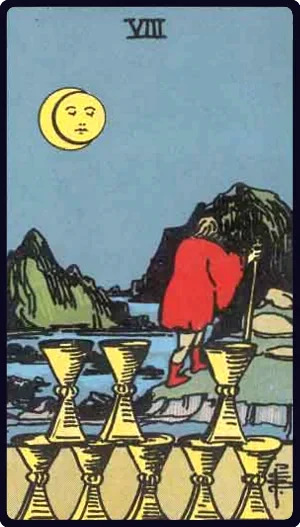
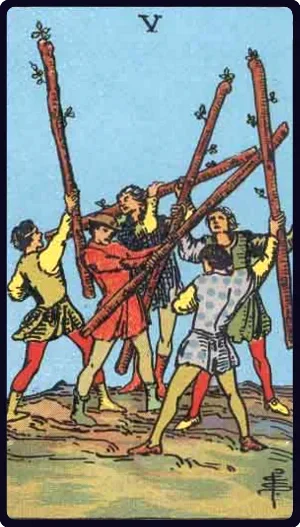
In short. The Eight of Cups calls you to walk away, while The Five of Wands keeps you in dispute and rivalry, so together they mark a deliberate departure from an exhausting struggle.
This pairing describes the decision to leave a conflict that no longer has meaning. The Five of Wands brings dispute, competition, and a clash of ambitions, while the Eight of Cups adds a mature wish to turn around and walk toward something more important. When they meet, the matter is usually a person tired of endless bickering who has realized that winning this fight would give them nothing. This is not flight but a conscious choice to leave the battlefield for inner peace.
General Meaning of the Combination
At the core of the pair sits a simple formula: the struggle of the Five of Wands plus the departure of the Eight of Cups equals a conscious decision to leave a conflict. The Five of Wands brings rivalry, dispute, and constant tension, while the Eight of Cups says a person has outgrown this fight and is ready to turn away from it toward something more meaningful. Together the cards describe the moment when it becomes clear that this battle drains you and the prize is not worth the strength spent. The combination often appears when it is time to leave a toxic environment, a pointless contest, or a conflict that holds no real win. This is not weakness or surrender but a mature choice to save energy for what matters. The Five urges you to stay and prove yourself, the Eight calls you to rise and go, and together they advise admitting honestly that sometimes the best victory is leaving the battlefield in time.
In Love and Relationships
In relationships this pairing speaks of the decision to walk away from draining disputes. The Five of Wands brings constant quarrels and friction, while the Eight of Cups adds the understanding that this struggle no longer nourishes and the wish to move on. For a couple it is the moment when one partner, tired of endless conflict, is ready to leave the relationship for inner peace. This is not an impulse of hurt but a mature farewell to what stopped bringing joy. For singles the combination often speaks of refusing to fight for someone's attention. The advice: if quarrels only hollow you out, ask yourself honestly what you are staying for.
In Work and Finances
In work and finances the pair describes leaving a competitive environment that wears you down. Constant struggle over a position or recognition has exhausted you, and the person decides to quit this race for work that feels closer in meaning. The Five of Wands keeps an atmosphere of rivalry around you, while the Eight of Cups brings the readiness to resign, change fields, or leave a toxic team. It is a deliberate step, not an impulse: outward success in this fight does not fill an inner emptiness. In money matters the combination can speak of declining a profitable but draining option for the sake of calm. The advice: leave with dignity, finishing your affairs rather than burning bridges.
If a Card Is Reversed
The Eight of Cups reversed, The Five of Wands upright
The wish to leave the struggle is there, but the person gets stuck in the dispute, fearing change and clinging to the familiar battlefield. The reversed Eight brings fear of change and a return to what should be left behind. In love it is staying in a draining relationship out of fear of being alone, in work it is refusing to leave a toxic environment, fighting on where one should have walked away.
The Eight of Cups upright, The Five of Wands reversed
The decision to leave grows firmer, while the struggle loses its edge and curdles into petty squabbles easy to step away from. The reversed Five brings a fading conflict and weariness on both sides. In relationships it is a calm farewell, when the quarrels have run out of steam, in work it is a quiet exit from a crumbling race, where colleagues' intrigue no longer stings or blocks the departure.
Both cards reversed
Both the departure and the struggle are blocked: the person wants to leave yet fears the step, so they stay stuck in a hated conflict without the strength to quit it. There is not enough energy for a decisive turn. In love it is stagnation in a relationship long overdue to release, where fear holds them in place, in work it is paralysis between resigning and the dread of change, which keeps the draining race dragging on.
The Cards' Advice
Admit honestly whether this struggle is worth your strength. The Eight of Cups and the Five of Wands together advise you not to confuse persistence with stubbornness: sometimes the most mature step is to rise and leave a conflict that only hollows you out. If the prize is not worth the energy spent, leave the battlefield with dignity, finishing your affairs, and aim your strength where there is real meaning. Departure here is not defeat but a choice in your own favor.