Nine of Swords and Ten of Swords Combination in Tarot
The Nine of Swords and Ten of Swords tarot combination meaning: general sense, in love and work, reversed variants, and advice.
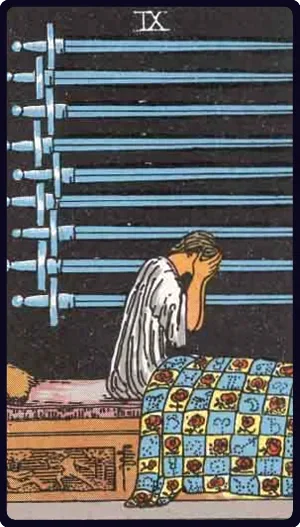
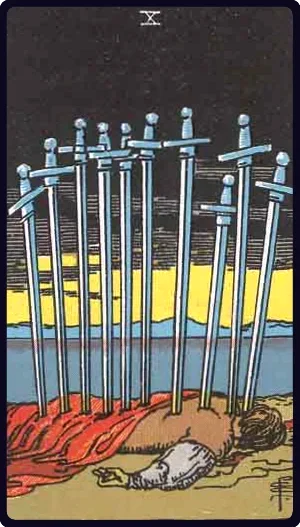
In short. The Nine of Swords is the agonizing dread before the blow, while The Ten of Swords is the blow itself and the rock bottom after which, by the suit's logic, dawn begins.
This is one of the heaviest pairings in the deck, fully within the element of Air and thought. The Nine of Swords is sleepless nights, fear, and guilt, when the mind inflates trouble into catastrophe. The Ten of Swords is a painful ending, a collapse after which there is nothing left to lose. Together the cards speak of the darkest stretch of the road: what a person feared happens or feels as though it has happened, yet a turn toward relief is sewn into this very lowest point.
General Meaning of the Combination
At the core of the pair sits a simple formula: the dread of the Nine of Swords plus the collapse of the Ten of Swords equals passing through rock bottom. The Nine shows exhausting fear, insomnia, and the looping of worst-case scenarios, while the Ten reports that a chapter really is closing sharply and painfully. Together the cards often describe the moment when long inner tension finally breaks into resolution: what tormented in the dark comes out into the open. It is the darkest night and the blow at dawn at once. It is worth remembering that both cards are, in essence, about the end of pain: the Nine reminds you the swords hang above the head rather than pierce the heart, and the Ten plainly shows the dawn on the horizon. The combination is heavy but honest: it says it will not get worse, the bottom is reached, and strength will now begin to return.
In Love and Relationships
In relationships the pairing speaks of a painful reckoning after long suffering. The Nine of Swords describes sleepless nights, jealousy, hard conversations, and fear of losing a loved one. The Ten of Swords carries this to its finale: a sharp breakup or betrayal after which the union cannot be mended. Often the blow lands like a strike in the back and leaves a deep grievance. For singles the pair shows a person whose heart is closed by past pain, who suffers over memories and refuses new feeling. And yet both cards reversed promise healing. The combination advises accepting that the relationship has ended and not clinging to what is already broken, since only then does a path to peace open.
In Work and Finances
In work and finances the pair speaks of a collapse preceded by long anxiety. The Nine of Swords describes fear of failure, impostor syndrome, and the expectation of disaster, while the Ten of Swords shows that the blow truly lands: a layoff, a failed project, or the closing of a venture into which much was poured. Sometimes colleagues you counted on let you down. In money matters the combination warns of losses, debts, or a bad investment, especially if decisions were made in panic. The old strategy has run its course, and fighting for what collapsed is pointless. The cards advise accepting that this chapter is over and preparing to change direction, since a new road opens after rock bottom.
If a Card Is Reversed
The Nine of Swords reversed, The Ten of Swords upright
The blow lands at full force, but the anxiety around it is already easing: the person meets the collapse more calmly than they feared. The hardest thing happens, yet the sleepless nightmares recede. In love it is a painful finale that, oddly, brings relief from exhausting suspicions, in work a collapse after which dread lets go and the disaster proves less terrible than the mind painted.
The Nine of Swords upright, The Ten of Swords reversed
The worst is already behind, but the anxiety will not release: the person clings to past pain and holds onto the victim role, though the bottom was long ago passed. Recovery stalls out of fear of repetition. In love it is a drawn-out grieving of a breakup when it is time to let go but the thoughts keep circling, in work the crisis is already surmountable, yet the person keeps winding themselves up and fears starting over.
Both cards reversed
Both the dread and the blow are softened: the worst will not come or proves less terrible, and imagined fears dissolve. The clouds part, strength gradually returns. But there is a risk of getting stuck in suppressed pain while pretending all is well. In love it is slow healing and readiness to trust again, in work the realization that the catastrophe did not happen, and the time to draw a lesson instead of frightening yourself with the worst scenario.
The Cards' Advice
Do not cling to what is already broken, and do not wind yourself up in the dark. The Nine and Ten of Swords remind you that you have reached the bottom, which means it will not get worse. Accept the end of a hard chapter, grieve it honestly, and share the pain with someone you trust. The swords hang above the head, not through the heart, and dawn always follows the darkest night.