Eight of Cups and Six of Pentacles Combination in Tarot
The Eight of Cups and Six of Pentacles tarot combination meaning: general sense, in love and work, every reversed variant, and advice.
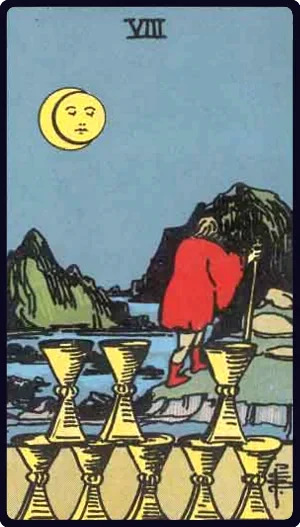
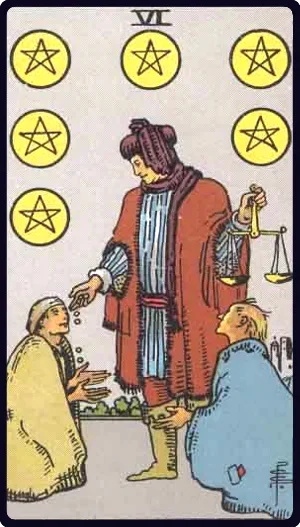
In short. The Eight of Cups calls you to leave what no longer fulfills, while The Six of Pentacles speaks of help and dependence, so together they mean refusing support for independence.
This is a pairing about breaking an unequal exchange. The Six of Pentacles shows a bond where one gives and the other receives, while the Eight of Cups carries the wish to step out of that role. When these cards meet in a reading, the person leaves the position of the receiver: they walk away from patronage, sponsorship, or support that has grown cramped, to stand on their own feet. It is a departure for the sake of independence, even at the cost of losing convenient but binding help.
General Meaning of the Combination
At the core of the pair sits a simple formula: the departure of the Eight of Cups plus the exchange of the Six of Pentacles equals refusing support for the sake of independence. The Six of Pentacles shows a bond with a giver and a receiver: help, patronage, dependence on another's generosity. The Eight of Cups reports that this role no longer fulfills: receiving has become demeaning or cramped, and you long for freedom. Together the cards describe a person who leaves a convenient but binding position to stop depending and start relying on themselves. The combination often appears when support has turned into a leash and gratitude into a debt. It is a mature step: you refuse another's hand not out of arrogance but for the sake of dignity and self-reliance. Sometimes the cards instead describe the one who stops giving and steps back from the sponsor's role, worn out by carrying someone else's life.
In Love and Relationships
In relationships this pairing speaks of leaving a union built on inequality and dependence. The Six of Pentacles shows a couple where one provides, protects, or rescues while the other receives, and the Eight of Cups reports that such a bond no longer pleases. Sometimes the one who leaves is tired of being dependent and wants to provide for themselves. Sometimes the giver leaves, worn out by the role of sponsor and rescuer. For singles, the cards advise not to seek a relationship as a source of upkeep and support, but to build a bond between equals. Walking away here frees you from a debtor's dynamic where love was replaced by an exchange of help for attachment.
In Work and Finances
In work and finances the pair speaks of refusing another's support for the sake of financial independence. The Six of Pentacles shows dependence on a sponsor, an investor, a boss, or parents, while the Eight of Cups carries the wish to step out of patronage and earn for yourself. It is a departure from convenient but binding help: you give up handouts and guarantees for the freedom to dispose of your own work. In money matters the combination advises getting off another's back and ceasing to live on someone's injections, even if it is harder at first. The decision is justified when dependence has become a leash rather than temporary support, and you are ready to answer for yourself.
If a Card Is Reversed
The Eight of Cups reversed, The Six of Pentacles upright
The wish to become independent is there, but fear keeps you dependent: the person wants to leave patronage yet fears being left without help and keeps accepting it against their will. The leash chafes, and letting it go is frightening. In love it is holding on to an unequal union for upkeep and care, in work it is staying under someone's wing when leaving would pay off, but without guarantees the step feels too risky.
The Eight of Cups upright, The Six of Pentacles reversed
The departure is ripe and underway, while by now the exchange has skewed: the reversed Six of Pentacles shows unfairness, debts, and help with strings attached. The person leaves precisely because support turned into self-interest and control. In relationships it is a breakup with someone who helped but demanded obedience in return, in work it is leaving a sponsor or boss whose generosity proved to be manipulation.
Both cards reversed
Both the departure and the exchange are knocked off: the person wants independence but is afraid, while the relationship of help is skewed and burdens both sides. Everything rests on a sense of duty and hidden discontent. In love it is stagnation in a dependent union where the receiver does not leave and the giver feels weighed down, in work it is a sticky attachment to another's money that should long have been ended.
The Cards' Advice
Stand on your own feet, even if it is harder at first. The Eight of Cups and Six of Pentacles together advise you to step out of a dependent role when help has turned into a leash and gratitude into a debt. Refusing another's hand here is not arrogance but a return of dignity. Thank them for the support, but do not buy convenience at the price of freedom. Self-reliance will take effort, yet it gives back your right to run your own life without an eye on another's generosity.