Five of Spades and Four of Spades Playing Card Combination
Combination of Five of Spades and Four of Spades: first temporary setbacks and a missed chance, then minor worries and an enforced pause.
In short. Five of Spades + Four of Spades: You first lose an opportunity, then spend a long time dealing with the small aftereffects of that loss.
The Five of Spades and the Four of Spades together describe a stretch in which big plans fall through and a crowd of small worries follows. The first card sets the subject: something did not work out, a chance slipped away, an argument was lost. The second card changes the course. It turns one setback into a run of everyday problems that wears you down more than the original loss.
General Meaning of the Combination
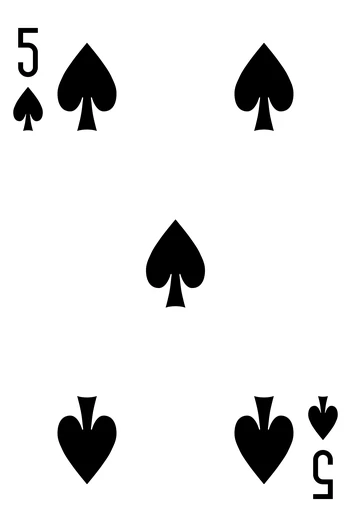
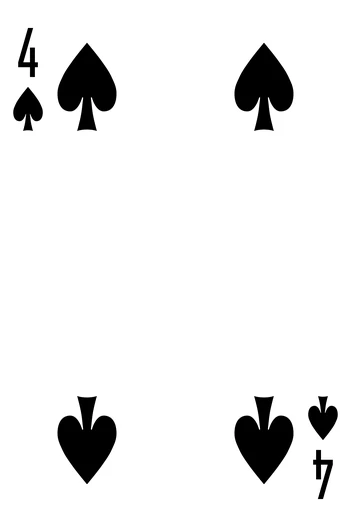
The Five of Spades says a plan has run into an obstacle. You failed to apply in time, put off a conversation, or lost an argument. A missed chance is unpleasant, but it is not a verdict. The Four of Spades shows that life does not return to its normal rhythm afterwards. Instead come small worries: a gadget breaks, someone close falls ill, money has to be spent urgently. Each problem can be solved on its own, but together they drain your energy.
In this order you first feel disappointment and then fatigue. The main theme is not one event but how a setback spills into everyday life. The card advises against looking for a single cause of every trouble and against trying to plug every gap at once. Take problems one at a time, and notice which ones you can actually change.
Love and Relationships
In a relationship this might look like this: one partner did not say something important in time, and the talk keeps being put off. Then ordinary weeks begin, and both of you are tired and irritable over small things. You argue about dishes or bills when the real worry lies elsewhere. If you are single, the card suggests a possible connection may fizzle out, and then you will be too busy with chores to look for someone new.
Partners should admit that there was first disappointment and then a build-up of tiredness. Say plainly, "I'm worn out and it hurts that we barely talk." That way you share the weight instead of passing it back and forth.
Feelings, Thoughts and Intentions
Feelings. At first a person feels annoyance and bitterness over a missed opportunity. Then irritation and fatigue from minor tasks join in. Mood levels out, but without any lightness.
Thoughts. Thoughts first circle around what went wrong and whether it could have gone differently. Then attention shifts to a list of current problems: what broke, who needs help, how to stay within the budget. Sometimes these thoughts repeat in a loop.
Intentions. Intentions come down to waiting things out, avoiding sudden moves, and then simply finishing the urgent tasks. There is almost no wish to take on anything new. The person wants rest and does not want to argue over trifles.
Career and Work
At work this may mean a project or negotiation has collapsed, followed by routine errands and paperwork in place of important tasks. Do not take on extra and pick three tasks for the week that truly matter. The rest can wait without guilt.
Finances
With money the card points to a poor purchase or a failed deal, followed by small unexpected costs that eat into the budget. Make a list of fixed payments and postpone non-essential buying. A small reserve for surprises will help you get through such months more calmly.
Health
Health in this pairing relates to overwork. Disappointment disturbs sleep, and small chores leave no room for rest. Try to go to bed at the same time, get some fresh air, and do not overload evenings. If you feel unwell, rest rather than trying to carry on as usual.
Situation and Question
In the situation, first the plan falls apart, then small obstacles pile up and things move slowly. You put off a talk or a trip, then spend the weekend on household jobs. It is better to choose one main task a day rather than trying to cover everything.
Reverse Order
With the Four of Spades before the Five of Spades, small worries, mild illness and tight money come first, and then a missed chance or a lost argument follows. The first card sets the theme of a draining stretch. The second shows that because of it you lose what you need. The point is that tiredness gets in the way and leads you into a mistake. That is why you should restore your strength first and only then decide what to do next. The emphasis lies on recovery before action, so that a stretch of fatigue does not turn into a lasting loss. Compare: Four of Spades and Five of Spades.
The Cards' Advice
Accept that one failure does not define everything else. Work out what you can fix now and set the rest aside. Save your strength for the things that matter to you, and do not spend that strength on getting irritated over trifles.
Five of Spades Combinations
Everyone Reads at Astralika
Enough theory: time to ask the cards a question of your own. There are 346 readings on love, work, health and more.
Your Birth Card
In cardology every day of the year has its own playing card. Enter your date of birth to see which one is yours and what it says about your character.