Four of Spades and Five of Spades Playing Card Combination
Combination of Four of Spades and Five of Spades: first minor worries and an enforced pause, then a missed chance and a lost argument.
In short. Four of Spades + Five of Spades: You first wear yourself out on small tasks, then at the worst moment you miss what matters most.
The Four of Spades and the Five of Spades together describe a period in which everyday worries and fatigue lead to a missed opportunity. The first card sets the subject: small problems, mild illness, tight money and an enforced pause. The second changes the course. From a draining stretch it makes a moment when tiredness causes you to miss a chance or lose an argument.
General Meaning of the Combination
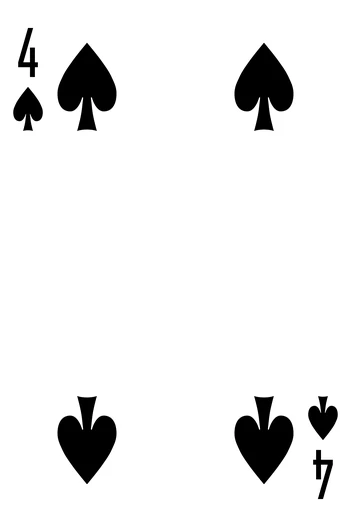
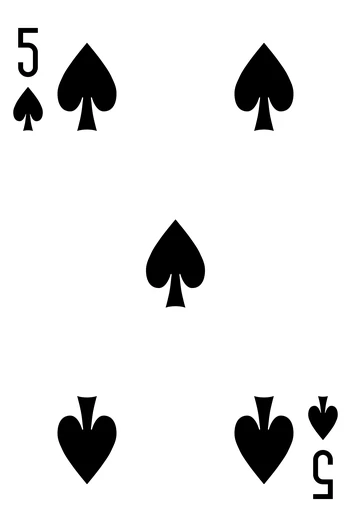
The Four of Spades speaks of small but persistent worries. Something breaks, someone is ill, money has to be counted. Each problem is minor, but together they take strength and time. The Five of Spades shows that against this tiredness it is easy to miss something important. You do not get your application in, you put off a conversation, you give ground in an argument because you do not have the energy to hold your ground.
In this order the main theme is not simply a setback but how accumulated tiredness leads to a mistake or a missed chance. The card advises giving yourself a breather first and only then making decisions. Otherwise you risk making an important choice when you lack the strength for it.
Love and Relationships
In a relationship this might look like this: for a long time you have both been busy with domestic life, tired and irritable over trifles. Then one of you does not dare to say what they feel, and the moment passes. You argue, but the one who has already run out of steam loses the argument, unable to explain what truly hurt. If you are single, the card says constant tiredness can make you miss a connection that might have mattered.
Partners should rest together first and only then discuss difficult topics. Say, "Let's talk when we've both had some rest." The conversation will be calmer, and you will not lose what matters.
Feelings, Thoughts and Intentions
Feelings. At first a person feels irritation and fatigue from minor tasks, sometimes a slight malaise. Then annoyance and bitterness are added as they realize they missed what was needed.
Thoughts. Thoughts first revolve around current problems: what to fix, how to stay within the budget, who needs help. Then regret appears: "why didn't I decide" or "I should have said it sooner". These thoughts repeat, especially when tiredness takes over.
Intentions. Intentions are at first about simply getting through this stretch and not taking on anything extra. Later a wish to put right what was missed arises, but there is less strength for it. The person wants a pause and then to return to what matters.
Career and Work
At work this may look like this: first you are buried in routine and small errands, then because of fatigue you miss an important deadline or lose an argument at a meeting. Do not take on extra, and pick out the most important tasks so you do not lose sight of the main thing. If you see your strength running out, be honest with your manager about timing.
Finances
With money, small but steady costs and a tight budget come first. Then a good purchase or deal may fall through because you did not manage to close it. Keep track of your spending and do not make financial decisions when you are worn out. It is better to postpone a decision than to rush it.
Try our readings
Health
Health in this pairing relates to overwork that builds up and then leads to mistakes. Try to sleep well, not overload your days and not skip rest. If you feel unwell, rest before it becomes more serious.
Situation and Question
In the situation, at first everything moves slowly because of small obstacles and tiredness, and then at the least convenient moment a chance appears or an argument arises in which you cannot defend your position. It is better not to make decisions at the peak of tiredness and to give yourself time to think.
Reverse Order
With the Five of Spades before the Four of Spades, you first meet an obstacle and a missed opportunity, and then tiredness and a build-up of small problems. The first card sets the theme: you lost something or lost an argument. The second shows that the loss drags a train of everyday difficulties behind it. This sequence suggests that it matters to accept the setback and to stop in time, so you do not get pulled into endless details. The emphasis lies on recovery and on not letting a single disappointment grow into a permanent state of irritation. Compare: Five of Spades and Four of Spades.
The Cards' Advice
Before making an important decision, rest and at least partly restore your strength. Do not let small worries take what truly matters to you. If you have missed a chance, do not blame yourself. Work out what caused it and prepare for the next time.
Four of Spades Combinations
Everyone Reads at Astralika
Enough theory: time to ask the cards a question of your own. There are 346 readings on love, work, health and more.
Your Birth Card

In cardology every day of the year has its own playing card. Enter your date of birth to see which one is yours and what it says about your character.