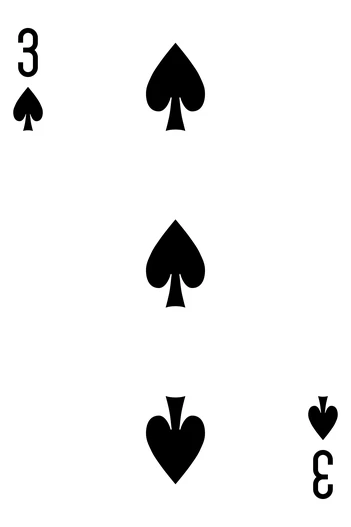
Five of Spades and Three of Spades Playing Card Combination
A combination of Five of Spades and Three of Spades: temporary setbacks that turn into a parting and heartache caused by a third party.
In short. Five of Spades + Three of Spades: First a setback and a missed chance, then a parting in which someone outside the couple is to blame.
The pairing of the Five of Spades and the Three of Spades tells of a path that starts with a frustrating setback and ends in a break-up with outside interference behind it. The first card sets the subject: something did not work out, a plan collapsed, a chance slipped away. The second card changes the course and shows that the trouble did not stay external but reached the heart and the relationship. Read it calmly rather than as a verdict.
General Meaning of the Combination
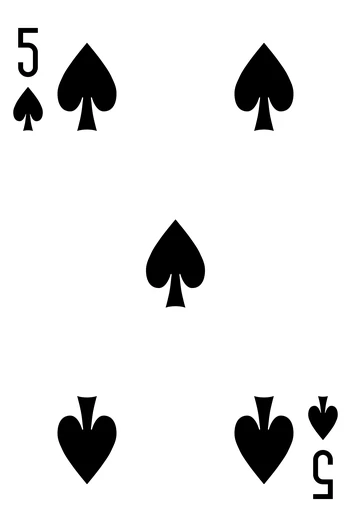
Here the main subject is obstacles and failure. The Five of Spades says a plan has run into trouble, deadlines have shifted, someone has refused, or you were too late to decide and lost the opportunity. It is annoying but fixable. You can analyse what went wrong and try again.
The second card, the Three of Spades, changes direction. The failure stops being purely a matter of circumstance and becomes a parting in which a third person takes part. The order matters: first you lose the chance, then you lose someone close, and that loss hurts more because betrayal or interference has been added. The pairing describes a situation where external difficulties become a personal drama.
Love and Relationships
In a relationship this combination looks like a quarrel or misunderstanding that later worsens because of an outsider. For example, you argue with your partner because you missed the moment to say how you feel. While you were apologising and sorting things out, someone appeared who started meddling in your relationship. The misunderstanding then turns into a separation.
If you are single, the pairing warns that a meeting may not happen, and you could later be drawn into someone else's story. Do not rush into a relationship where a third person is already involved.
Feelings, Thoughts and Intentions
Feelings. At first you feel disappointment and irritation over the failure, and then that irritation turns into deep hurt and a sense of betrayal. The feelings grow, from mild bitterness to heavy resentment. Anger, sadness and helplessness may all be present at once.
Thoughts. Your mind circles questions like what I did wrong, why it all fell apart, who really interfered and why. First you look for fault in yourself and in circumstances, then you start suspecting others and trying to understand their motives. It is a conversation with yourself that does not always produce an answer.
Intentions. At first the intention is to wait it out and rethink the failure. Later comes the wish to clear things up, protect yourself from further hurt, or pull away. Sometimes a person wants to end the conversations with whoever interfered and simply go quiet to get through the pain.
Career and Work
At work this pairing describes a project or negotiation that was first turned down, and then a colleague began scheming and split the team. For example, your proposal was rejected, and a coworker started spreading rumours about you. It helps to understand the reasons for the refusal first, then decide how to protect yourself from office politics without getting drawn into open conflict.
Finances
With money, the pairing points to a failed deal or a missed gain that was made worse by a dishonest middleman or partner. For example, you lose money on a purchase that falls through, and later you learn someone involved acted unfairly. Before signing anything, check who is behind the offer and what they stand to gain.
Health
The pairing relates to strain: first fatigue from failure and disappointment, then emotional pain that weighs on the heart and nerves. Poor sleep, anxiety or lost appetite are possible. A calm routine, short walks and talking to someone you trust help more than shutting yourself away.
Situation and Question
In a situation this looks like a plan that first fell apart because of circumstances and was then finished off by an outsider's interference. You can revise your goals, work out who is shaping the outcome, and decide whether to keep fighting or step back for a while.
Reverse Order
The Three of Spades followed by the Five of Spades tells a different story. The Three of Spades opens the subject: a parting, heartache and a third party's interference. That is where the situation begins, and this part sets the emotional tone. The Five of Spades shows how this plays out further: the personal break-up spreads into temporary obstacles, missed chances and lost arguments. The first card names the topic, and the second changes its consequences. The point of the pairing is the shift from personal drama to setbacks in practical matters, and that shift matters more than either card on its own. Compare: Three of Spades and Five of Spades.
The Cards' Advice
Do not let one failure become a break-up. When you miss a chance, admit it honestly and do not look for someone close to blame. If you notice a person appearing to interfere with your relationship, talk about it openly and check the facts. Do not trust rumours or make decisions in a rush.
Five of Spades Combinations

Everyone Reads at Astralika
Enough theory: time to ask the cards a question of your own. There are 346 readings on love, work, health and more.
Your Birth Card

In cardology every day of the year has its own playing card. Enter your date of birth to see which one is yours and what it says about your character.