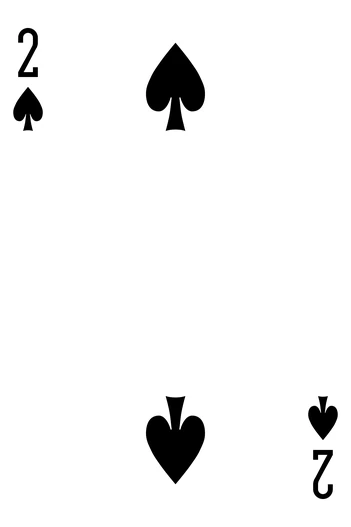
Five of Spades and Two of Spades Playing Card Combination
The combination of the Five of Spades and the Two of Spades: temporary setbacks that turn into a separation and a hard choice.
In short. Five of Spades + Two of Spades: What you counted on first falls through, then it becomes clear the choice cannot be put off any longer.
This spread starts with an ordinary setback that seems temporary. You applied, arranged a meeting, made plans, and they ran into obstacles. The second card shows the situation shifting: the obstacles grow into a real break or a forced choice between two paths. The order matters here, since the first card sets the subject and the second decides the outcome.
General Meaning of the Combination
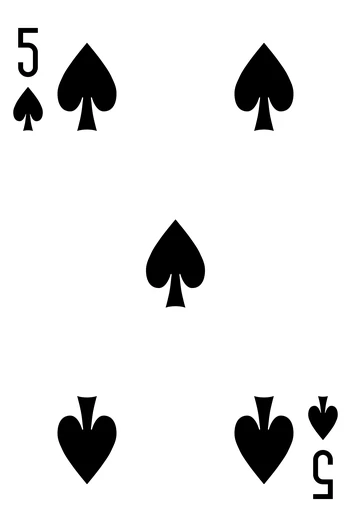
The Five of Spades speaks of temporary setbacks, a missed chance, and a lost argument. A plan that looked solid trips over deadlines, refusals, and changed circumstances. You hesitated, put off the talk, and the opportunity slipped away. It is frustrating, but the situation can still be turned around.
The Two of Spades changes the picture. It points to separation, deceit, and a hard choice. Following the Five, the setback stops being a simple delay. A relationship, partnership, or familiar routine starts to crack. Someone may be holding back the truth, and you will have to decide which path to take and what it will cost.
Love and Relationships
In a relationship the difficulty comes first: a quarrel in which you were wrong, or disappointment in a partner. You missed the moment to say something important, and the misunderstanding has been building. The Two of Spades then shows that the talk about the future cannot wait. You may have to decide whether the couple stays together, or agree on a pause if one of you needs to leave.
If you have realized the long quarrel is going nowhere, say plainly what worries you. Do not expect your partner to guess. For a single person, this spread can mean an unpleasant discovery about someone's past, so do not rush into new feelings.
Feelings, Thoughts and Intentions
Feelings. At first the person feels irritation and a mild bitterness over the setback. Then deep sadness joins in, along with the sense that something important is slipping away. Sometimes there is a feeling of having been treated unfairly. It is a heavy but understandable state, a reminder that what matters cannot simply be taken back.
Thoughts. Thoughts circle around what went wrong. First the person wonders whether they could have changed anything. Then comes reflection on who is to blame and whether what they heard was true. Understanding arrives slowly: the chance is gone, and a choice must be made that cannot be avoided.
Intentions. Intentions start out aimed at waiting it out and gathering information. Later a readiness appears to make a hard decision, even if it hurts. The person wants to find out what is really happening and no longer wants to drag things on. They accept that something dear may have to be let go in order to move forward.
Career and Work
At work the setback comes first: a project is not approved or talks fall apart. Instead of blaming yourself, ask those who decided what could be improved. If the failure leads to a team or partnership breaking up, reread the contracts carefully and clarify who is responsible for what.
Finances
Money may first go out through a deal that fell through or expectations that did not come true. Later there may be a split of shared costs or a choice between two investments with different risks. Do not try to win it back with risky moves. Write down who paid what and who owes what, so disputed sums do not turn into a new conflict.
Health
At first irritation gets in the way of sleep. Then the strain of a hard choice can bring tiredness and anxiety. Keep a regular routine, take walks, and do not sit alone with your thoughts at night. Talk with people you trust.
Situation and Question
Your plans have fallen through and now you stand before a choice. Both options are imperfect, so something will have to be left behind. Do not expect the decision to come on its own, and be honest with yourself about what matters most to you.
Reverse Order
In the reverse order, the Two of Spades comes first and shows the break or choice, after which something changes for good. The second card shows that the consequences feel like a string of obstacles and frustration. The Two sets the subject, and the Five decides how the path unfolds after the decision. The difficulty does not come from the choice itself but from what follows it. Compare: Two of Spades and Five of Spades.
The Cards' Advice
Do not delay the decision, but do not make it in anger either. First be honest with yourself about what hurt in the first setback, then agree on a talk where each person can speak. If the bond really is breaking, let it go with dignity rather than trying to hold on by force.
Five of Spades Combinations
Everyone Reads at Astralika
Enough theory: time to ask the cards a question of your own. There are 346 readings on love, work, health and more.
Your Birth Card
In cardology every day of the year has its own playing card. Enter your date of birth to see which one is yours and what it says about your character.