Scythe and Coffin Combination in Lenormand
Scythe and Coffin combination in Lenormand: a sharp break leads to a final ending. Meaning in love, work, and why card order matters.
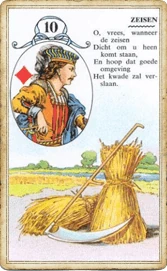
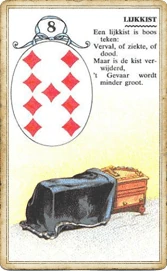
In short. The Scythe sets a sharp break, and the Coffin shows that a final ending follows it.
In this order the Scythe names the theme: a sudden, instant cut. The Coffin then qualifies what it turns into and closes the door for good. First comes the sharp rupture, and after it arrives a long pause and silence. This is not a slow fading but a quick stroke, after which the stage truly ends, with no chance of restoring its old form.
General Meaning of the Combination
The Scythe leads, so everything starts with a decisive motion: a decision, a rupture, an unexpected turn. The Coffin acts as the qualifier and says this break will have a heavy, final outcome. Together the cards describe an ending that happens fast but stays closed for a long time. What the Scythe cuts in one stroke, the Coffin carries off and buries, leaving no way back.
This is one of the harshest pairings in the deck, and it is best read soberly. The sharpness of the Scythe is not softened here but amplified by the weight of the Coffin: the change arrives at once and feels like a loss. Even so, beyond the ending lies clear space and a pause for recovery, since the Coffin always marks the place where the old leaves to make room for the new.
In Love and Relationships
In relationships the Scythe brings the matter to a head: built-up tension breaks through in one sharp talk or argument. The Coffin shows that after this blow the bond in its old form ends. This is not a pause for thought but a final separation that feels cold and irreversible. The feelings that still held the couple fade at once, and the card advises accepting the ending rather than clinging to what has cooled. For single people the pairing says an old attachment should be closed completely, or it will keep pulling you back and crowding out anything new.
In Work and Finances
At work the Scythe means an abrupt change: a layoff, a sudden end to a project, or a break in a business relationship. The Coffin adds that this stage closes completely, with no hope of reviving it. In finances the pairing warns of a sharp drop in income or the closing of a money source, followed by a downturn. The advice is simple: draw the line quickly and soberly, settle debts, and do not invest in what has already run its course.
Reverse Order
If the Coffin comes first and the Scythe follows, the accent shifts. Then the theme is a slow, heavy ending, and the Scythe merely cuts it off with a final motion, speeding up what was already drawing to a close. In the order Scythe and Coffin the sharpness leads and the weight arrives after; in the reverse the burden of closure leads and the sharpness sets the full stop. Read more about that direction on the Coffin and Scythe page.
The Cards' Advice
Do not drag out what has already ended. When the break has become unavoidable, make it clean and calm, without anger and without a long goodbye. The Scythe asks you to act decisively, while the Coffin reminds you to give yourself time to live through the loss. Release the old for good and use the pause that follows for recovery, not for trying to bring back what is gone.