Scythe and Clover Combination in Lenormand
Scythe and Clover Lenormand combination: a sharp break that turns out small and quickly settled, meaning in love and work, and how the card order reads.
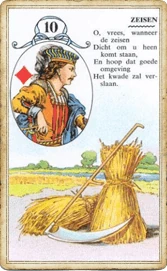
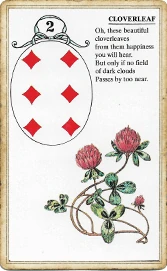
In short. The Scythe puts the sharp break in the lead, and the Clover makes it small, so the threat often proves empty.
This is a sharp yet light combination, and in this order the cut speaks first. The Scythe stands for a sudden ending and a decisive step, while the Clover adds luck, lightness and a brief favourable moment. When the break leads, the spread points to a sharp but minor ending that is quickly settled: something is cut off in one motion, then luck follows and the trouble turns out trivial.
General Meaning of the Combination
In this order the sharp break becomes the leading theme, and the Clover clarifies that it is small and resolves luckily. The Scythe shows a sudden cut, a decision or an ending, while the Clover shrinks its scale and adds a bright note. Together the cards read like this: a sharp ending turns out to be a small quarrel or an empty threat that quickly settles. It can be a short conflict resolved in one motion, a break followed by a pleasant stroke of luck, or a decision that unexpectedly turns fortunate. The Scythe acts fast and precisely, while the Clover shows that the sharp moment passes easily and without heavy consequences. Remember the speed of the Scythe and the brief life of the Clover: both the break and the luck after it flicker by quickly, so the lucky moment is worth using at once.
In Love and Relationships
In feelings the sharp conversation comes first, and the Clover shows that it settles quickly. The Scythe brings a frank moment of truth, while the Clover clarifies that the rift will be small and easily fade away. For a couple this is a short quarrel after which reconciliation comes quickly, or a sharp talk that clears the air toward easy joy. For a single person the cards speak of a short break with the past, followed by a lucky meeting. The Scythe removes the excess, and the Clover gives good fortune in return. The pleasant moment is fleeting, so make up and catch the lightness at once rather than dragging out the hurt.
In Work and Finances
In work a sudden ending leads, and the Clover shows that it is small and lucky. The Scythe brings a sharp end to a matter or a decision, while the Clover clarifies that a small piece of luck or a pleasant opening follows it. This can be a quick refusal of a needless task that frees your hands, or the break of an old project and a lucky short chance right after. In money the cards speak of a sharp ending with a pleasant small outcome: closing a needless expense after which a bit of luck arrives, or a dispute over money that settles in your favour. Act quickly while the favourable moment is near.
Reverse Order
If the cards swap and the Clover comes first, luck itself takes the lead, and the Scythe only cuts it off. The accent then moves from a sharp ending to good fortune that is suddenly stopped or demands a quick decision. This turn is covered in detail on the separate page Clover and Scythe, where the happy chance is the theme and the sharp break becomes what suddenly ends it.
The Cards' Advice
Make the break clean and do not blow a small matter up into a drama. In this order the sharp motion is already on its way, but it is minor, and luck holds behind it, so it needs both resolve and lightness. Cut the excess clearly, then catch the pleasant moment that follows. The Scythe asks you to act fast, and the Clover reminds you not to pin big hopes on short luck and to use it at once.