Scythe and Letter Combination in Lenormand
The Scythe and Letter combination in Lenormand: a sharp ending arrives in writing. Meaning in love, work, finances, and why card order matters.
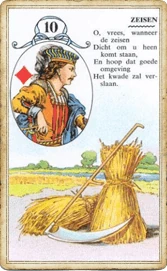
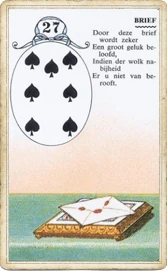
In short. The Scythe leads with a sudden ending, while the Letter specifies that this break reaches you in written form.
In this pair the Scythe comes first and sets the theme: an abrupt halt, a clean cut, a final decision. The Letter follows and names the channel through which that break arrives. Sharp news comes on paper or in a message, and you will have to read it head-on.
General Meaning of the Combination
As the leading card, the Scythe names the heart of the event: something ends in one motion, with no slow fading. The Letter in second place shows the form of that ending, and the form is written. It is a notice of cancellation, a document of termination, a message that draws a line. Order matters here, because the sharp break is the main thing and the text is only its carrier. The combination speaks of news that leaves no room for long discussion: the decision has already been made and set down. Most often it is a short, dry word, after which the situation changes quickly and almost irreversibly.
In Love and Relationships
In matters of the heart the Scythe in the lead points to a sharp split or a sudden resolution, while the Letter moves it onto the plane of words at a distance. It is a breakup message, a cold text instead of a talk, an admission that things between you are over. The bond breaks not in a live meeting but through correspondence, and that lends it a note of finality. If the relationship long rested on pain, such a letter brings clarity, however sharp. It is best to accept it as fact and not drag out your reply.
In Work and Finances
In work the Scythe leads to a sudden ending, while the Letter wraps it in a document. It is a notice of dismissal, a contract terminated on paper, an abrupt cancellation of a deal. In finances the pair speaks of a bill, a fine, or an official paper that changes the balance at once. The decision arrives formalized and is not open to long debate. The advice is simple: read the document carefully, check the dates and terms, then act quickly and soberly, because the consequences of a sharp step here can be irreversible.
Reverse Order
If you swap the cards, the Letter becomes the lead, and then the message itself moves to the foreground while the Scythe only lends it a sharp, cutting edge. In the order Letter and Scythe the news or document comes first, and its content turns out to be harsh, cancelling, final. There the main thing is the text bearing bad news, not the event, whereas in the order Scythe and Letter the break itself comes first and the paper is only its form. The shade is similar, but the accent shifts from the sharpness to the news itself.
The Cards' Advice
Do not try to soften or contest what is already set down on paper. Read the message in full, pick out the substance and the deadlines, then calmly decide what to do next. The Scythe advises against clinging to what has gone, while the Letter asks you to handle the document with care. Act quickly but with a cool head, and the sharp ending will clear space for something new.