Whip and Letter Combination in Lenormand
Whip and Letter Lenormand combination: a dispute carried on in writing, meaning in love and work.
In short. The Whip puts conflict in the lead, and the Letter moves it into correspondence, so the pair reads as a dispute waged in words and messages.
In this order the clash speaks first, and the Letter clarifies that it runs through text. The Whip stands for a quarrel, a showdown and tension, while the Letter gives it a form: correspondence, a document, a hostile message. When conflict leads, the spread points to a dispute that unfolds not face to face but in letters, chats and papers, where the sharp words stay on record.
General Meaning of the Combination
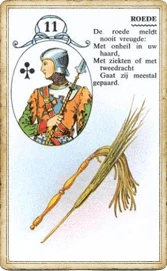
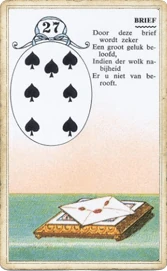
In this order conflict becomes the leading theme, and the Letter shows it is waged in writing. The Whip brings a dispute, a clash and tension, while the Letter adds correspondence, documents and an exchange of messages. Together the cards read like this: the quarrel unfolds in text, through sharp letters, hostile chats or contested papers, rather than in a living talk. The Whip brings a cyclical streak, so the same complaints can repeat in the correspondence again and again, and repeated requests and barbed messages only heat the dispute. The Letter is neutral by nature and merely carries the content, so all the heat comes from the Whip. This is a sign to choose words with special care: what is written in anger stays on paper and is easily reread, and a misunderstanding in text inflames the conflict more than a spoken talk.
Love and Relationships
Emotionally, conflict comes first, and the Letter shows it runs through messages. The Whip points to quarrels, jealousy and showdowns, while the Letter says all of it happens in correspondence: sharp messages, chat disputes, hurtful lines sent in haste. For a couple this is a conflict at a distance, when a living talk is replaced by barbed texts and every word is easy to misread. For a single person the pair can mean a stormy, contentious exchange with a new acquaintance, where attraction goes alongside tension. The cards advise not settling things in messages, but moving the hard talk into live contact, where the tone can be heard.
Feelings, Thoughts and Intentions
Feelings. There is a strong physical attraction mixed with irritation and conflict. Partners experience stormy arguments followed by equally intense reconciliations, creating an emotionally charged atmosphere.
Thoughts. They reflect on the causes of recurring disputes and how written messages exacerbate misunderstandings. There is awareness of the need to express feelings but also concern about worsening the situation through harsh words.
Intentions. There is a desire to communicate through correspondence, tempered by fear that sharp words will inflame the conflict. They intend to have an honest conversation, but for now, interaction remains mostly via messages.
Career and Work
At work conflict still leads, and the Letter shows it runs through documents and correspondence. The Whip gives a dispute with colleagues or a boss, while the Letter narrows the form: hostile letters, claims by mail, repeated requests, contested clauses of a contract. This is a clash that unfolds in business correspondence rather than at a personal meeting.
Finances
In finances the pair points to disputes over financial papers: payment claims, penalty notices, contract disagreements, and contested invoices. The Whip warns of tension around such documents. The cards advise rereading the text before sending and keeping the contested papers in order, so a written conflict does not drag on.
Health
The pair symbolizes cyclical flare-ups and tension reflected in frequent stress and nervous strain. Maintaining a routine, engaging in physical activity, and allowing time for rest are important to reduce the impact of conflicts on overall wellbeing.
Situation and Question
The situation centers on a sharp conflict developing through correspondence or documents. The main struggle occurs in texts where the same complaints and misunderstandings repeat. The next step is to move the dispute from written form to live conversation to ease tension and clarify positions.
Reverse Order
If the cards swap and the Letter comes first, the message or document itself takes the lead, and the Whip only tints it with a conflicted tone. The accent then moves from the dispute to a troubling message or a contested paper that causes tension, rather than to a conflict waged in correspondence. This turn is covered in detail on the separate page Letter and Whip, where the message itself is the theme and the conflict becomes its sharp, contentious content.
The Cards' Advice
Do not wage the quarrel in correspondence, move it into a living talk. In this order conflict stands first and the Letter only records it, so every sharp word stays on paper and is easily reread. The Whip brings a cyclical streak, and without an honest spoken talk the same complaints will keep returning in the chat. Reread the text before sending, do not write in anger, and keep the contested papers in order, so the written dispute does not grow.
Whip Combinations
Everyone Reads at Astralika
Enough theory: time to ask the Lenormand cards a question of your own. There are 346 readings on love, work, health and more.