Tree and Scythe Combination in Lenormand
The Tree and Scythe combination in Lenormand: a solid foundation cut by a sharp decision. Meaning in love, work, and health, and how card order changes it.
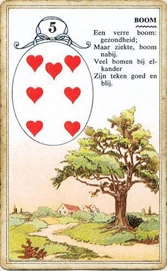
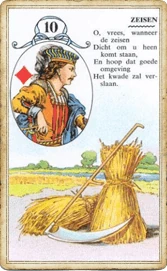
In short. Tree sets the theme of health, roots, and long growth, while Scythe cuts that steady foundation in one sharp motion.
Here the Tree comes first, setting a solid, slow-growing base: health, ancestry, a matter with deep roots. The Scythe stands second and brings a sharp break into that stability. What seemed unshakable and grew for years suddenly meets a decisive ending. In health questions this combination often points to an acute condition or surgery; in work, to the abrupt end of something thought reliable.
General Meaning of the Combination
In this order, the Tree is the topic and the Scythe is the qualifier. The Tree speaks of a firm base with deep roots: health, a family line, work meant to last. The Scythe then cuts something away from that base quickly and without slow fading. The result reads as a sharp change in what looked stable: a sudden health setback, surgery, the break of a long-standing matter or a process that ran for years.
The Tree itself is slow and dislikes sharp moves, so its company with the Scythe sounds like a warning: the stability has been undermined and calls for a decision. At the same time, the Scythe works like a surgical instrument, removing what has stopped being useful, and often after such a break clear space opens up for new growth.
In Love and Relationships
In relationships, the Tree first shows a firm, rooted union in which the partners have long been settled in each other. The Scythe then brings a moment of truth into that bond: a sharp conversation, an argument, or a sudden decision after which the relationship will not be the same. If the base was healthy, the break touches only what was in the way and clears space for renewal. If the roots had long rotted, the Scythe points to a parting that frees both. For a single person, the combination advises honestly letting go of an old attachment from the past that holds you yet has no future.
In Work and Finances
In work, the Tree first sets a reliable, slow-growing base: a stable position, a long project, a venture with deep roots. The Scythe then brings a sharp change that cuts off that stability almost without warning. It can be the sudden end of a long-standing project, a layoff from a calm position, or an abrupt break in business ties that ran for years. In finances, the combination speaks of an unexpected expense or loss that strikes at what was thought a solid reserve. The card advises acting with a clear head: decide quickly, but coolly, because cutting away a steady base can be irreversible.
Reverse Order
If the cards are swapped, the Scythe leads, and then the theme of a sharp break sounds first, with the Tree only specifying what that cut touches. In the pair Scythe and Tree, the accent shifts from a solid base to the sharp action itself: first there is a break or a decision, and the Tree shows that it concerns health, roots, or a long process. Here, in the Tree and Scythe order, it is the other way round: first the steady base, and only then the sharp ending breaks into it.
The Cards' Advice
If something stable suddenly calls for a sharp decision, do not drag out the pain, yet do not cut in the heat of the moment. The Tree reminds you the situation has firm roots, so make the break clean and precise, removing only what has rotted. In health questions, do not put off seeing a specialist: an acute condition needs fast, careful help. After a clean cut, a strong base keeps the strength to grow anew.