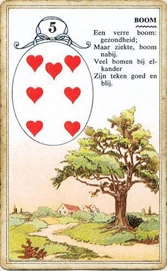
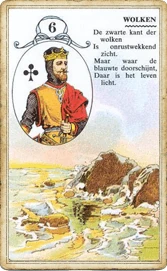
Scythe and Tower Combination in Lenormand
Scythe and Tower Lenormand combination: a sharp break with an institution, surgery, or a decision from authority, meaning in love, work, and card order.
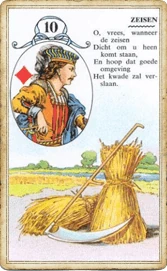
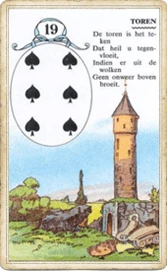
In short. The Scythe puts the sharp break in the lead, and the Tower shows that it concerns an institution, a status, or official order.
This combination is about a sharp break with a formal structure. The Scythe stands for a sudden ending and a decisive cut, while the Tower brings the theme of institutions, hierarchy, and distance. When the Scythe leads, the break is the theme, and the Tower clarifies its area: you part not with a person but with an organization, a post, or an official tie. The spread reads like this: one decisive motion ends what had been built by the rules.
General Meaning of the Combination
In this order the Scythe sets the theme and the Tower refines it. The Scythe shows an abrupt ending or the decision to cut off what has run its course, while the Tower tints that step with the official and the separate, turning the rupture into an exit from a structure. Together the cards read like this: you sharply end a matter with an institution, a post, or a status, and it happens by the rules, in one clear motion. Sometimes this is an authority's decision that cuts off the old order, sometimes leaving a position, or hospitalization and surgery. The Tower often marks a specific building or agency tied to the break. The Scythe works fast, while the Tower reminds you that this is a solid, established system you can only leave decisively. The combination speaks of an ending that touches the formal side of life rather than the heart.
In Love and Relationships
In feelings the rupture comes first, and the Tower shows its cold, distanced character. The Scythe brings a sharp separation or the end of an old way of life, while the Tower clarifies that the bond rested on status, routine, or a shared project rather than warmth. So the break here is dry and official: a divorce filed by the rules, a separation, the end of an office romance. For a couple this is an ending after which each retreats behind their own wall. For a single person it speaks of a decisive choice in favor of freedom and personal space. The Scythe removes the tie, and the Tower shows that separateness follows rather than immediate new closeness.
In Work and Finances
In work the sharp break leads, and the Tower reveals its official side. The Scythe brings a layoff, the end of a project, or a break in business ties, while the Tower clarifies that this concerns a large structure, a post, or an agency. This is an abrupt decision from management, leaving a stable organization, or the end of a formal stage of a career. A frozen hierarchy changes in one motion. In finances the combination speaks of a sharp cancellation of an official contract or a halt to payments through an authority. This is change by the rules. Make the break clean and through formal channels, leaving no loose ends, or the sharp step will turn into bureaucratic trouble.
Reverse Order
If the cards swap and the Tower comes first, the institution or the stable position itself takes the lead, and the Scythe only shows that a sharp break happens within it. The accent then moves from the rupture to the structure inside which the cut or the decisive decision occurs. This turn is covered in detail on the separate page Tower and Scythe, where the official system itself stands ahead and the sharp ending becomes what is cut off within it.
The Cards' Advice
Resolve on the break and carry it through official channels. In this order the ending concerns a structure, a post, or a contract, so act by the rules, handle the paperwork, and close formal questions all the way. A sharp step is fitting here, but it must be clean and legally tidy. The Scythe gives the resolve to cut, while the Tower reminds you that you can leave a system only step by step, leaving no undocumented ends behind.