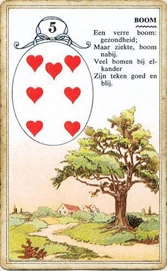
Letter and Man Combination in Lenormand
The Letter and Man Lenormand combination: a message with a specific male author, the meaning in love and work, and how the card order reads.
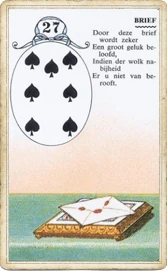
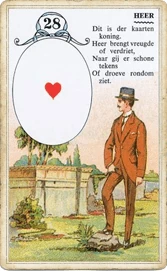
In short. The Letter puts the message in the lead, while the Man names its author, so the pair reads as word with a specific man behind it.
This combination is about addressed correspondence. In this order the tidings come first, the text, document, or message, while the Man specifies who sends it and whom it concerns. When the Letter leads, the spread speaks above all of incoming information, and the figure of the man gives it a name and a face. Before you is not abstract news but the word of a particular person.
General Meaning of the Combination
In this order the message becomes the leading theme, while the Man shows whose it is. The Letter governs written communication, a document, news, or correspondence, and the male figure sets the source: it is his letter, his reply, his signature on the paper. Together the cards read like this: word is heading your way, and behind it stands a specific person, a husband, a partner, a boss, or the querent himself when a man reads. The Letter is neutral and describes only the form, text on a carrier, so the tone of the tidings is set by the neighbors in the spread. The combination often appears when you are waiting for a reply from a particular man and want to know whether it will come. The card confirms that the word is on its way and that it has a clear sender.
In Love and Relationships
In feelings the message comes to the fore, while the Man suggests it is from a partner or someone who interests you. The Letter shows correspondence, a confession in words, or flirting in a messenger, and the male figure makes the source specific. For a single person it is word from the one who caught your attention, the start of contact through text. For a couple the combination says the man expresses himself in writing: he writes, replies, explains himself. What his true feelings are, the neighboring cards will tell, while the combination itself only confirms that the initiative in communication runs through his word.
In Work and Finances
In work the information stays in the lead, while the Man names the one it comes from. The Letter shows a contract, a report, business correspondence, or a reply to an application, and the male figure specifies the author: a boss, a partner, a client, or a colleague. It may be a written offer, a work document, or a message from the particular person the matter hinges on. In finances the combination points to a paper tied to a man: a bill, a payment agreement, a reply about money from the one who pays or shares the budget. The Letter itself promises no profit; it only shows that the question is settled through a document with a clear sender.
Reverse Order
If the cards swap and the Man comes first, the figure of the person takes the lead, while the Letter only reports that he is tied to papers and writing. The accent then moves from the tidings to the man himself, and the spread describes not so much the word as the one who writes: his mood, his role, and his intentions. This turn is covered in detail on the separate page Man and Letter, where the person stands at the center and correspondence becomes one of his traits.
The Cards' Advice
Do not guess at the content; wait for the text itself and read it carefully. In this order the word is already on its way, and it has a clear author, so it helps to understand what exactly you expect from this man. If the reply is delayed, write first and put your thought plainly: an open word often resolves what hangs in silence. Reread an important message before sending it, so that it is understood the way you intended.