Ten of Spades and Jack of Spades Playing Card Combination
The Ten of Spades and Jack of Spades combination: a hard patch sets the tone while a young ill-wisher and bad news deepen it. Love, work, card order in cartomancy.
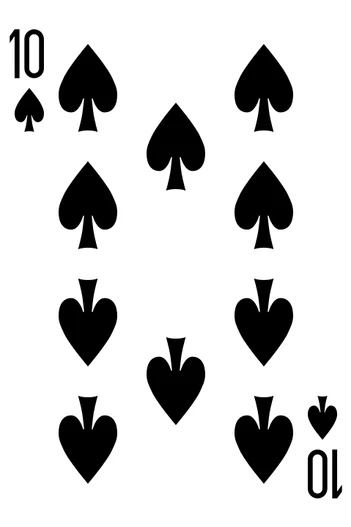
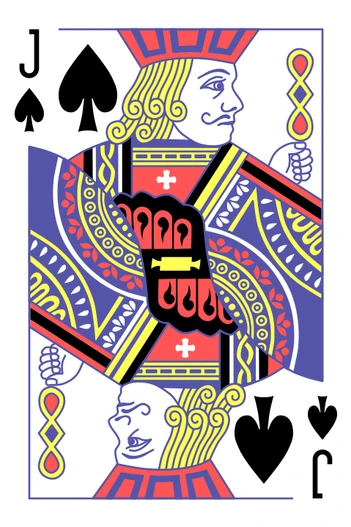
In short. The Ten of Spades sets a hard patch, and the Jack of Spades adds unwelcome news and a restless young man to it.
In this order the theme belongs to the Ten of Spades, the heavy card of obstacles and drawn-out chores. The Jack of Spades follows and amplifies it: two spade cards in a row make the patch denser and edgier. The pair reads as a hard period sharpened by the arrival of a young ill-wisher, a quarrel or bad news that pulls you into needless trouble.
General Meaning of the Combination
The first card, the Ten of Spades, names the theme: big trouble, obstacles, a drawn-out stretch of cares. The second card, the Jack of Spades, is of the same suit, so it does not soften the meaning but sharpens it. Both carry the element of Air, anxiety, conflict and unwelcome news, and their meeting in this order makes the hard period thicker. The Ten leads and sets the scale of the problem, while the Jack refines that a person steps into it: a young restless youth, often an ill-wisher or rival, fond of idle talk and small intrigue. Sometimes, instead of a person, the bad news itself arrives, a quarrel or a contested conversation that pours oil on the fire. The card warns you not to be drawn into someone else's squabble and to stay calm, since composure is what keeps the patch from spreading.
In Love and Relationships
In a relationship the Ten of Spades sets a strained period of tension and unspoken words, and the Jack of Spades adds a difficult person to it. More often this is a young admirer or acquaintance marked by jealousy, sharp edges and a readiness to quarrel, or a rival meddling in the couple. A cutting talk or a small intrigue lands on already tired feelings, and the falling-out drags on longer than usual. For singles the pair warns of meeting someone who looks for advantage rather than attachment. The card advises against answering a jab with a jab and suggests clearing up what went unsaid before the grievance grows into a lasting rift.
In Work and Finances
In affairs the Ten of Spades shows a backlog, hindrances and tight constraints, while the Jack of Spades adds a young rival or schemer to them. This is a colleague who gossips, repeats your words in twisted form and sets small obstacles in your path. On top of an already dense patch comes extra fuss that yields nothing. In finances the pair warns of disputed spending, an unreliable debtor among younger acquaintances, and outlays on smoothing over trouble. The Ten advises against taking on extra and recommends a reserve, while the Jack adds: do not trust important matters to unproven people and count twice on anything promised.
Reverse Order
If the Jack of Spades falls first and the Ten of Spades follows, the theme belongs to a young ill-wisher or a small intrigue, and the big trouble becomes its consequence. Then a restless person or a contested message comes first, with the heavy patch growing out of it. In our order it is the opposite: the hard period holds the stage and the Jack merely sharpens it and gives it a face. The page Jack of Spades and Ten of Spades covers that swap in detail.
The Cards' Advice
Keep your composure and do not let yourself be drawn into someone else's quarrel, since calm is what keeps the hard patch from spreading. If a restless young man has appeared nearby, hold your distance and do not hurry to trust him. Take any bad news evenly, check rumors before you believe them, and do not answer intrigue with intrigue, and it will burn out on its own.