Snake and Scythe Combination in Lenormand
The Snake and Scythe combination in Lenormand: a hidden conflict that breaks out in a sudden split. Meaning in love, work, and the role of card order.
In short. The Snake leads the theme of a hidden threat or intrigue, and the Scythe narrows it down: the matter is heading for a sharp, sudden break.
In this pair the Snake comes first and sets the tone: cunning, a rival, or a hidden motive is at work nearby. The Scythe follows and shows how that intrigue ends: with a sharp movement, a cut, a sudden break. A simmering hidden conflict surfaces and is settled in one stroke, without a slow fade.
General Meaning of the Combination
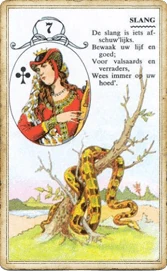
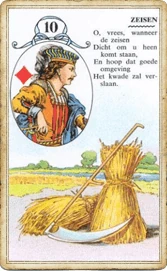
Here the Snake is the theme and the Scythe is the qualifier. The hidden danger, deceit, or rivalry stops smouldering and is cut off all at once. The combination speaks of the moment when an intrigue is exposed and a sharp resolution follows: a break, an unmasking, a conflict that can no longer be sidestepped. What had been building behind your back breaks into the open in a single movement.
The Scythe carries no malice in itself; it works like a surgical instrument. So the pair can mean release: someone's cunning is finally laid bare, and you cut away the person who acted behind your back. But the resolution comes fast and leaves little time to prepare, so it matters to act deliberately rather than in the heat of the moment, because the consequences of a sharp step can be irreversible.
Love and Relationships
Emotionally,, the Snake in the lead points to a hidden interest, jealousy, or a third party stepping in, and the Scythe brings it to a head. The built-up tension breaks through, and the unspoken gives way to a sharp conversation or a sudden parting that feels final. If a double game had long been played in the couple, the combination shows a break that protects your self-respect. It is a painful but honest end to an illusion, after which clean space opens up. Calmly separate the one who was sincere from the one who wove the intrigue.
Feelings, Thoughts and Intentions
Feelings. The relationship feels tense due to hidden motives and escalating conflict. Emotions may be marked by jealousy, distrust, and an internal struggle for attention and closeness.
Thoughts. Thoughts focus on analyzing hidden games and intrigues that hinder openness and trust. There is a desire to understand who is playing a double game and what lies behind the sharp break.
Intentions. An intention to end dishonest games and clarify the situation. A resolve to take decisive action to protect oneself and restore honesty in the relationship, even if it is painful.
Career and Work
In business, the Snake leads the theme of intrigue and an unfair game, and the Scythe turns it into a sharp ending. This is the exposure of a colleague who acted on the sly, a sudden break of a questionable partnership, or the quick termination of a contract with hidden clauses. The combination advises against clinging to a tie that rested on deceit, and to cut it with one decision before it does more harm.
Finances
In finances the pair warns of a sharp loss through someone's cunning, so vet deals in advance and close risky obligations fast but with a cool head.
Health
Together, the Snake and Scythe symbolize tension between hidden, slowly developing issues and sudden acute conditions. This calls for attentiveness to bodily signals, a balanced pace of work and rest, and caution in daily habits to prevent abrupt deteriorations.
Situation and Question
The situation involves hidden intrigues that suddenly surface and demand a quick, decisive response. The straightforward path is blocked or dangerous, so acting thoughtfully and avoiding rash decisions is key to preventing worse outcomes.
Reverse Order
If the Scythe falls first and the Snake becomes the qualifier, the emphasis shifts. Then the theme is the sharp break or decision itself, and the Snake merely shows that someone's cunning or a hidden motive stands behind it. Here the Snake leads, so the focus is above all on an intrigue that has reached its resolution and is cut off by the Scythe. For the detailed breakdown of the reverse direction, see Scythe and Snake.
The Cards' Advice
If the intrigue has surfaced, do not drag out the resolution, but do not cut in anger either. The Scythe calls for a clear and final decision, while the Snake reminds you first to understand the balance of forces and who stands behind it all. Cut away what rested on deceit, calmly and without extra words. A direct, quick break serves you better here than a drawn-out reckoning, but give yourself a moment to weigh the consequences soberly.
Snake Combinations
Everyone Reads at Astralika
Enough theory: time to ask the Lenormand cards a question of your own. There are 346 readings on love, work, health and more.