Cross and Man Combination in Lenormand
Meaning of the Cross and Man combination in Lenormand: a man under the weight of a trial, its sense in love and work, reverse card order, and advice on support.
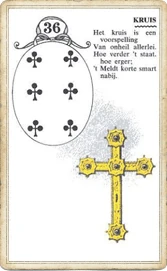
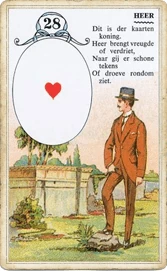
In short. Cross brings burden and trial, while Man qualifies it, showing the load is tied to a specific person.
The Cross leads, so the tone is set by a load, duty and a hard period. The Man, standing second, gives the weight a face: the trial centres on a particular person, a partner, a relative, or the querent himself if he is a man. This is a burden with a name and a figure.
General Meaning of the Combination
The Cross sets the tone of a hard lesson, and the Man qualifies whom it concerns. The Man figure is neutral and takes its meaning from the neighbouring card, and here that neighbour, the Cross, colours the person with weight. The formula is simple: a burden (Cross) settles on a specific man (Man). This can be someone who carries a load and is tired, a partner under the pressure of circumstance, a man with a sense of duty or guilt, or you yourself if the spread is about you. The card speaks not of the person's fault but of the load he is now pulling. It is worth seeing which way the figure faces: the neighbouring cards show whether the trial is nearing its end or still in full swing, and whether support is near.
In Love and Relationships
In relationships this pair most often describes a man under the weight of a trial. The Cross brings a test of feelings and fatigue, and the Man shows it concerns a particular partner or someone who may become one. Often it is a person carrying a hard period and therefore distant, sparing with warmth, or absorbed in his own cares. Sometimes he himself feels the relationship as a load. The cards advise not taking his heaviness personally but looking honestly at whether the bond holds real support or you stay out of a sense of duty. Support and a plain talk help more than silent endurance.
In Work and Finances
In work and money the Cross brings strain and the weight of responsibility, and the Man ties them to a particular person in your circle. This can be a boss who pressures and overloads, a partner under the weight of obligations, or a colleague pulling a heavy project. If the Man stands for you, the card speaks of your own fatigue and of a role you carry out of duty rather than interest. The pair advises against piling everything on yourself, toward judging the load honestly and sharing it. Obligations in money matters may also run through this person, so keep the arrangements clear.
Reverse Order
If you swap the cards, the Man leads and the Cross only qualifies it, showing weight surrounds this person. Then the reading is chiefly about a particular male figure with a note of trial added, rather than a burden that has found a face. The emphasis shifts from load to the person himself: the point is who he is and what his role is, and the Cross only colours him with a serious tone. For more on that arrangement, see the combination Man and Cross.
The Cards' Advice
Do not carry someone else's load alone, and do not take a man's heaviness personally. The Cross asks for patience, and the Man shows the trial has a specific face you can speak to plainly. Offer support where it fits, but judge honestly where your responsibility ends and his begins. A plain talk and a shared load ease the hard period for you both.