Coffin and Cross Combination in Lenormand
The Coffin and Cross Lenormand combination meaning: a heavy ending through trial, meaning in love and work, and both card orders.
In short. The Coffin marks the end of a stage, while The Cross adds the weight of duty and trial, so together they speak of a hard, sorrowful ending.
This is one of the most serious pairings in the deck, where two difficult cards meet back to back. The Coffin brings a matter in its old form to an end, and the Cross shows that the goodbye comes through effort, sorrow, and a sense of responsibility. Together they describe not a light pause but a heavy finish, after which recovery takes longer than usual.
General Meaning of the Combination
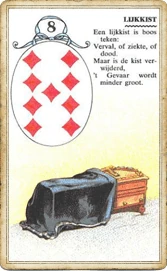
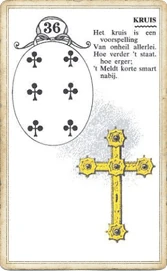
The Coffin points to an ending, while the Cross colors it with burden and fate. The ending here feels heavy, like a hard lesson you must go through. The cards speak of a loss that weighs on you, of parting with something important and feeling grief long afterward. It may be the close of a relationship, a venture, or a whole period, and the Cross stresses that the person carries this loss with a sense of duty, sometimes guilt. The combination promises no quick relief, yet it reminds you that every hard stretch has a limit. By living the sorrow fully and not trying to carry everything alone, a person slowly turns a difficult ending into a foundation and gains a maturity that is hard to reach otherwise.
Love and Relationships
In relationships the pairing speaks of a painful ending that lingers for a long time. A bond held together by duty, habit, or patience comes to a close, and the parting is hard. Sometimes the cards describe a couple where one partner has long carried the load alone, and now that story closes with sorrow and fatigue. For singles the pair advises working through an old pain fully before opening up to anything new. Above all, do not blame yourself for the heaviness of the goodbye, and give your heart time to recover, because gentleness toward yourself is what turns loss into a calm closing of a chapter.
Feelings, Thoughts and Intentions
Feelings. This pair reflects feelings of exhaustion and sorrow. Emotional depletion and the weight of responsibility create a sense of distance and sadness that makes it hard to feel closeness and joy.
Thoughts. Thoughts focus on the need to accept an ending and recognize the burden it carries. Separate attachment from duty and understand that the relationship or situation requires change.
Intentions. The intention is to fully experience the pain and grief without rushing, to allow time for healing, and not to carry the burden alone. There is a will to accept support and gradually transform loss into growth and maturity.
Career and Work
At work and in financial matters the Coffin and Cross warn of a hard ending tied to a burden of obligations. A draining project may end, you may leave a place that was wearing you down, or a venture may close and leave debt and fatigue behind.
Finances
In financial matters the combination points to a drop in income alongside a financial burden, to expenses you have to cover through sheer effort. The cards advise you not to pile everything on yourself, to take stock calmly, and to avoid risky investments until the hard stretch passes. This is a time to conserve strength and avoid ambitious new ventures, and after the pause the situation gradually steadies.
Health
The pair symbolizes the need for gentle self-care amid emotional and physical fatigue. Listening to the body, avoiding overexertion, and allowing time for rest are recommended to prevent worsening chronic discomfort or emotional strain.
Situation and Question
The situation is described as a painful ending that calls for acceptance and patience. The main obstacle is the reluctance to acknowledge closure and release feelings of guilt or duty. The next step is to give oneself time to experience the transition calmly, avoid rushing, and seek support if needed to ease the process.
Reverse Order
If you swap the cards, the leading theme becomes burden rather than ending. In the pair Cross and Coffin the trial stands first, a long difficulty you have been carrying, and the Coffin only shows how it ends: the load lifts, the painful issue is finally resolved. There the emphasis falls on the hard stretch coming to a close. In our order the ending itself leads, and the Cross only explains its heaviness and why the loss brings grief for so long.
The Cards' Advice
Do not rush a heavy ending and do not carry it alone. The Coffin and Cross together advise you to accept the close as part of the path, to live the sorrow calmly, and to ask for support where you can. Release the guilt that only adds to the load, give yourself time to rest, and the hard stretch will one day end, leaving maturity and clarity behind.
Coffin Combinations
Everyone Reads at Astralika
Enough theory: time to ask the Lenormand cards a question of your own. There are 346 readings on love, work, health and more.