Book and Letter Combination in Lenormand
The Book and Letter Lenormand combination: a secret set down on paper, an important document, meaning in love and work, and how the card order reads.
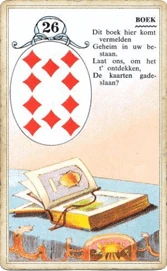
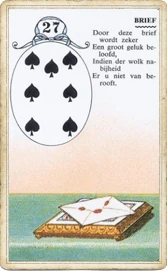
In short. The Book puts secrets and knowledge in the lead, and the Letter sets them down on paper, so the pair reads as hidden information laid out in a document.
In this order the secret itself speaks first, and the Letter clarifies that it is fixed in text. The Book stands for hidden knowledge, things left unsaid and the subject to be studied, while the Letter gives them written form: a document, a record, a contract. Together the cards point to information that is concealed yet already set down on paper and waiting to be read.
General Meaning of the Combination
In this order hidden knowledge becomes the leading theme, and the Letter clarifies that it is fixed in text. The Book sets the secret, the things left unsaid and the subject to study, while the Letter turns them into a document: an important paper, a record, a contract, or information set down in writing. Together the cards read like this: there is a closed layer of information, and it already exists on paper, ready to be read and worked through. This is a calm, businesslike combination, since both cards belong to information rather than action. The Book promises the heart of the matter is hidden in the details, and the Letter clarifies you must look for them in text: in a contract, a report, correspondence, or fine print. The pair often points to a document that calls for careful, in-depth reading.
In Love and Relationships
In feelings the Book brings things left unsaid to the front, and the Letter moves them into correspondence. It is a message with a second meaning, a confession written on paper, or a subject people write about but do not say aloud. The Book shows privacy and a secret, while the Letter clarifies that it shows up in text rather than in deeds. For singles the pair hints at an online acquaintance where the other person leaves much unsaid; their chapter is still closed. The advice is simple: reread what is written to you, and do not finish the meaning for the author. A direct question in a message clears up more than long guessing over an ambiguous text.
In Work and Finances
In work the Book sets the theme of study, and the Letter ties it to documents. This is a contract with hidden terms, a report to be worked through, or information tucked into the fine print. The Book advises you to understand the details, while the Letter clarifies that those details lie in the text of the paper. If the question concerned a project or a deal, the pair calls you to read everything through first and only then to sign. In money the combination speaks of financial papers with a hidden layer: unread clauses in a contract, an unaccounted figure in a statement, a condition easy to miss. Double-check the text before you agree or invest.
Reverse Order
If the cards swap and the Letter comes first, the message or document takes the lead, and the Book only adds a shade of secrecy and depth. The accent then moves from the secret to a specific message that carries a hidden content. This turn is covered in detail on the separate page Letter and Book, where the document is the theme and the secret becomes what is hidden within its lines.
The Cards' Advice
Read the text to the end and understand the details before you act. In this order the secret leads, and the Letter only shows that you must look for it on paper, so do not skip the fine print or sign blind. The Book and the Letter are both slow and dislike haste. The answer you seek is hidden in the lines of the document, not in your first impression of it.