Six of Hearts and Three of Diamonds Playing Card Combination
A combination of the Six of Hearts and Three of Diamonds: first a warm visit or reconciliation, then formalizing the relationship or business.
In short. Six of Hearts + Three of Diamonds: First the heart draws you toward someone close, then the relationship or business moves onto an official footing.
The Six of Hearts speaks of a journey, a meeting and reconciliation, while the Three of Diamonds speaks of documents, contracts and business growth. Together they show a path from warm closeness to formalizing what has already taken shape. The first card sets the subject: your feelings or your ties with people close to you. The second changes the course: feelings lead to practical steps, and the conversation shifts to paperwork, commitments and order.
General Meaning of the Combination
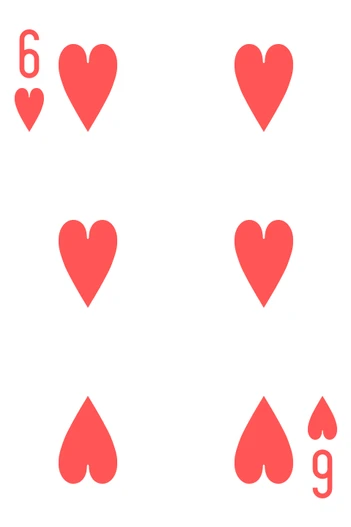

As the first card, the Six of Hearts says you want to draw closer to someone you have not seen in a while, or make peace after a falling out. A trip, a walk or a face-to-face talk will bring relief. Then the Three of Diamonds comes in. It suggests that warm words are worth anchoring: signing an agreement about living together, sorting out shared costs, writing down what was promised. Together the cards describe an order in which feelings first lead to a meeting and then take a formal shape.
This pairing also suits a business that grew out of a personal friendship or a family project. The people first agreed over a cup of tea, then decided to put the arrangement on paper. The sequence matters here: human contact first, then documents.
Love and Relationships
For a couple, the combination speaks of a warm reconciliation after which it helps to settle the rules of shared life. You meet, walk, talk openly, and a few weeks later sit down together to decide who pays the rent and how you split the chores. This is not cold calculation. It is care for keeping the union steady.
For singles, the cards promise an introduction at a family gathering or on a trip, and then the start of a relationship that might become official later. Do not rush the paperwork until the feelings have been tested by time.
Feelings, Thoughts and Intentions
Feelings. At first comes warmth and a light flutter before the meeting. Once the reconciliation has happened, relief arrives and the tension seems to lift. Then calm settles in, as things begin to take a clear and steady shape.
Thoughts. Your thoughts circle around the person close to you: how to say what matters, how to spend time together. Later come practical questions: what to write down, who signs what, how to divide duties so there are no arguments.
Intentions. You want to visit, see each other, apologize or accept an apology. Then the intention turns toward order: draft an agreement, settle shared spending, preserve what both of you liked.
Career and Work
At work this pairing fits a partnership project that began through personal acquaintance. First you meet a colleague or future partner, talk ideas over lunch, and then sit down to draft a contract. Do not skip the paperwork stage just because the relationship feels reliable.
Finances
First you split the cost of a trip or gifts, then decide how to formalize shared spending. The card suggests that money within a family or partnership is best recorded in writing: who contributes, what it covers, how it is reported. That lowers the chance of misunderstandings.
Try our readings
Health
For health, the combination recommends balancing rest with a steady daily routine. A trip or time with loved ones eases fatigue, and afterward it helps to gather medical records and write down your appointments and medication schedule. A simple routine makes stress easier to carry.
Situation and Question
If the question is about a conflict with someone close, meet and talk in person first. Once you reach an understanding, write it down: who does what and by when. This keeps the old arguments from coming back.
Reverse Order
With the Three of Diamonds followed by the Six of Hearts, the paperwork, decisions and official steps come first. The Three of Diamonds sets the frame: you sign, register, formalize. The Six of Hearts arrives afterward as a continuation. The warm meeting becomes the reward and a way to anchor the result. It matters not to change this sequence. If you begin with emotions, the papers may seem unnecessary. If you begin with the papers, the meeting will be calmer and warmer. Compare: Three of Diamonds and Six of Hearts.
The Cards' Advice
Talk to the person face to face and do not put the meeting off. Once you agree, write the essentials down: who is responsible for what, which money belongs to whom. Do not turn the document into a source of resentment. It exists to keep the warmth alive.
Six of Hearts Combinations



Everyone Reads at Astralika

Enough theory: time to ask the cards a question of your own. There are 346 readings on love, work, health and more.
Your Birth Card
In cardology every day of the year has its own playing card. Enter your date of birth to see which one is yours and what it says about your character.