Jack of Spades and King of Clubs Playing Card Combination
Jack of Spades and King of Clubs combination in cartomancy: a young troublemaker under a stern boss, meaning in love, work and the order of the cards.
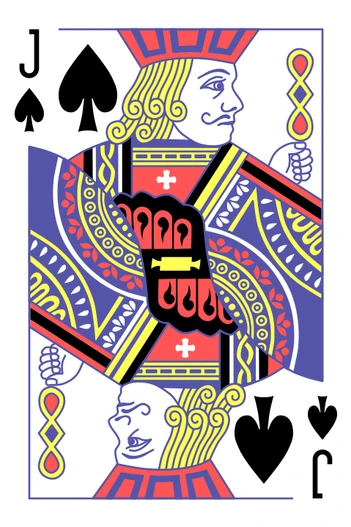
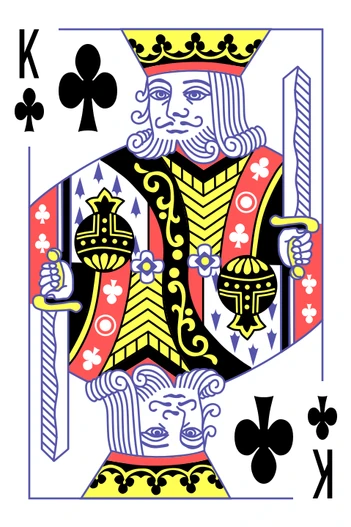
In short. The Jack of Spades leads the theme, and a restless young man with a contested message falls under the hand of the stern business man of the King of Clubs.
When the Jack of Spades falls first and the King of Clubs follows, the spread reads from a young troublemaker toward mature authority. The Jack of Spades sets the tone: chores, small intrigue, a contested talk, a youth you cannot rely on. In this order the King of Clubs becomes the one who judges this fuss from above, a strict boss or a business partner displeased with a careless young man.
General Meaning of the Combination
In this order the Jack of Spades names the theme and the King of Clubs colors it. The airy suit of Spades brings restlessness and idle bickering, while the fiery suit of Clubs turns the matter toward work, responsibility and businesslike sternness. The result is a story about a young man who first raises noise, stirs the water, or carries a contested message, and then a mature man with a firm hand steps in and asks for results. Air and Fire together make friction between a youth's heat and an elder's composure. Most often this is a work scene: a young subordinate has blundered or schemed, and a strict boss is displeased and sets order straight. Not a disaster, but a test in which it matters not to end up on the side of the one who makes noise for nothing.
In Love and Relationships
Here the Jack of Spades brings forward a restless youth or a small quarrel, and the King of Clubs adds the figure of a mature, serious man who treats a relationship like a venture. First comes a falling-out, a cutting talk, or an unreliable young admirer; then an older man enters the story, dependable but reserved with warmth. For a couple the pair says that behind the heat of a young intrusion stands a choice in favor of solid ground. For single people it is advice not to waste the heart on a fickle youth when a grown man ready to take responsibility stands nearby.
In Work and Finances
In work this is a strong combination with a clear direction. The Jack of Spades first brings chores, a dispute with a young colleague, small intrigue, or empty fuss. The King of Clubs then sets a strict boss or a business partner above it: he is displeased with the disorder, asks for results, and brings discipline. For you it is a sign to keep a businesslike tone, refuse to be drawn into someone else's bickering, and prove your reliability through deeds. On money the card promises stability if you stand on the side of order rather than fuss. The advice is simple: less noise, more work.
Reverse Order
If the King of Clubs falls first and the Jack of Spades follows, the figure of the mature boss leads instead of the young troublemaker. Then the spread speaks first of a business man and his authority, into which a restless youth, a contested message, or a subordinate's small intrigue only mixes at the end. The accent shifts from the young man's antics to the elder's reaction. To read that direction, see the page King of Clubs and Jack of Spades.
The Cards' Advice
Keep a businesslike tone and do not take the side of the one who stirs the water. The Jack of Spades warns of fuss and an unreliable youth, while the King of Clubs reminds you that results will be asked of you on the merits. Do not answer provocation, prove your reliability through deeds, and show discipline. The one who holds order leaves this scene with the elder's respect.