Four of Clubs and Two of Spades Playing Card Combination
Combination of Four of Clubs then Two of Spades: shaky support leading to a separation or a hard choice.
In short. Four of Clubs + Two of Spades: First you learn who is not keeping their word, and then you must decide what to do about the split or the hard choice that follows.
Together, the Four of Clubs and the Two of Spades describe a situation where unreliability comes to light first, and then the moment arrives when something has to be decided. The first card shows that support is shaky: a partner, colleague or friend fails to deliver on what they promised, and their words no longer match their actions. The second card shows where this leads, to a separation or to a choice between two paths, neither of which comes without loss.
General Meaning of the Combination
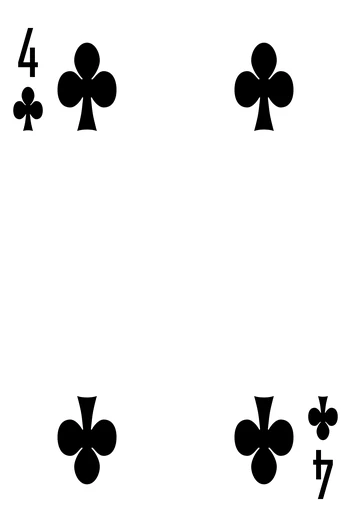
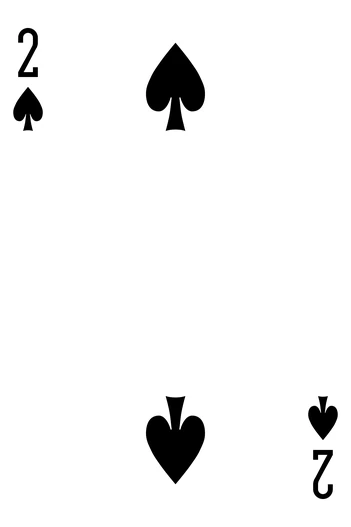
In this pairing, the first card sets the subject. It concerns whom you can trust and what lies behind promises. The Four of Clubs points to caution, to checking facts, and to the fact that people do not always say everything. The second card, the Two of Spades, shows how it ends: a relationship or partnership comes apart, or a hard choice appears in which something must be let go.
The order matters. First comes unreliability, then the decision. The split here is not an accident but the logical outcome of what has built up: unclear money, things left unsaid, promises without proof. The card advises against assuming things will sort themselves out, and against continuing to take on trust what should have been checked.
Love and Relationships
In a relationship, this pairing most often means a partner has been holding something back for a long time. They may be hiding debts, trouble at work, or feelings they are afraid to name. Over time distrust grows, and a conversation follows after which the couple either separates or agrees on a pause. If you are single, the card suggests not starting a new relationship with someone who does not tell you everything about themselves at the outset.
If a separation does happen, it does not always mean an end for good. Sometimes two people need to be apart to see what they want. In that case, agree openly on how long the pause will last and what counts as a breach of trust.
Feelings, Thoughts and Intentions
Feelings. First a wary tension appears, then a heavy sadness. You sense you may have been deceived, which brings hurt and a wish to step back. Later comes the pain of parting or a foreboding of an inevitable split, and the strain does not ease.
Thoughts. You keep asking whether this person can be trusted and what they are really hiding. Then your thinking moves to the choice: what happens if you leave, and what happens if you stay. The old bond may feel like it is breaking, but it is not yet clear which direction to take.
Intentions. You want to check the facts and clear up the situation, even if that leads to a split. You may decide to let go of what no longer works, or step into the unknown rather than standing still. The aim here is honesty, even if it proves bitter.
Career and Work
At work, this pairing can mean a shared project is falling apart because of an unreliable colleague or partner. A project gets split, a team scatters, and agreements go unkept. Before deciding anything, put in writing who is responsible for what, and do not rely on spoken promises alone.
Finances
Money here is tied to losses: deceit or the end of a partnership can cost you part of your funds, through a division of shared property or a partner walking away from obligations. Protect your interests on paper and check every payment carefully.
Health
This pairing points to emotional strain that affects sleep and energy. Constant worry and unfinished conflicts can cause tiredness. Keep a regular routine, rest more, and avoid carrying your feelings alone.
Situation and Question
In the current situation, someone seems to be holding back the full truth, and you are being pushed to choose between two imperfect options. Postponing the decision is becoming harder, and something will have to be left behind.
Reverse Order
In the reverse order, the Two of Spades comes first: the breakup or hard choice arrives before the unreliability of the support becomes clear. The Four of Clubs then reveals that someone did not keep their word and agreements were not confirmed. With the Four of Clubs followed by the Two of Spades, unreliability shows itself first and then leads to a separation or painful decision. Cause and effect remain linked, but become visible in a different sequence. Check the facts early, rather than waiting until everything comes out at the most inconvenient moment. Compare: Two of Spades and Four of Clubs.
The Cards' Advice
Test words against deeds, not the other way round. If someone does not deliver what they promised, do not wait until it is too late. If the question leads toward a separation, it is better to discuss it honestly and promptly than to drag it out and build up resentment.
Four of Clubs Combinations
Everyone Reads at Astralika
Enough theory: time to ask the cards a question of your own. There are 346 readings on love, work, health and more.
Your Birth Card

In cardology every day of the year has its own playing card. Enter your date of birth to see which one is yours and what it says about your character.